Self-Service Stores Revolutionised Shopping

In the 1950s and 60s, self-service stores replaced local shops in town centres throughout North Staffordshire and South Cheshire.

If your family used self-service stores, please share your memories of shopping there with our readers. Tell them how self-service stores differed from High Street and corner shops.

To read the full post, click on “How England’s First Self-Service Store Heralded the Birth of the Modern Supermarket” below the photograph.
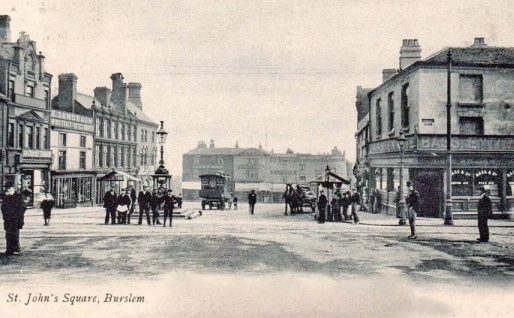
A History of Burslem

There was no M.P. for the town until 1832. The whole of the Potteries was formed into a constituency. It sent two members to Parliament. This early recognition showed that the six municipalities shared common interests. It marked the beginning of nearly eighty years of debate over unifying local government in the district.

To read the whole post, click on “Staffordshire Archives and Heritage” below.

Jenny Lewis StaffordshireRO's avatarStaffordshire Archives and Heritage

by Matthew

Burslem is situated in the north-west of the City of Stoke-on-Trent, one of the six towns which form the City.

When it was recorded in the Domesday Book in 1086, Burslem was called Barcardeslim (Burgweard’s Lyme).  It was not a large village consisting of just four households and one plough team. The other resource mentioned is two acres of alder wood. Its value was 10 shillings.

Through the medieval period, Burslem was not a centre of any importance. It was part of the parish of Stoke on Trent and was subject to the Tunstall manor court. A survey in 1563 reported 30 households for the area served by the chapel of St John. The village was agricultural and did not have good communications. However the occupants of the poor farms had beneath their feet mineral resources, which over the next two centuries produced steady growth turning Burslem into…

View original post 543 more words

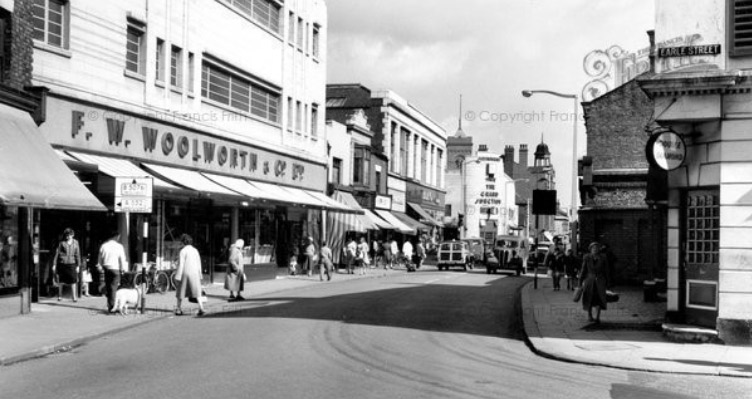
Memory Lane – Woolworth’s Stores

Until they closed in 2009, Woolworth’s stores dominated the High Street in many towns and cities.

Affectionately known as “Woolies”, they sold a wide range of goods. These included children’s toys, ladies’ clothes, chocolate, tins of paint, and cutlery. Prices were reasonable and Woolworth’s attracted customers from all walks of life. Did you and your family shop at a Woolworth’s’ store in North Staffordshire or South Cheshire? Please share your memories of shopping there with us.

Email us at northstaffordshireheritage@outlook.com

To read the whole post, click on “8 Classic Features To Help You Recognise an Old Woolworth’s Store.” You will find it below the photograph.

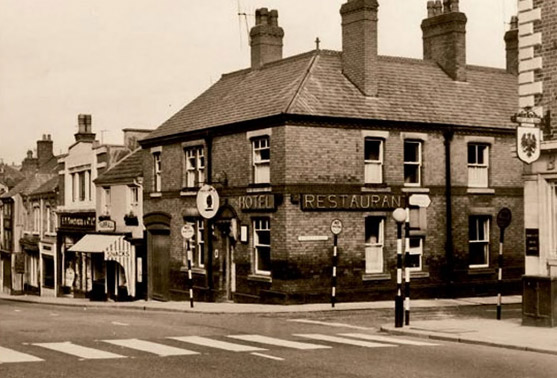
High Street Shopping (1880-1980)

These photographs depict shops, shopkeepers, and shoppers from each decade, from the 1880s to the 1980s.

They illustrate a century of changing shopping habits and shop architecture.

To see these images, click on “100 Years of High Street Shopping from 1880 to 1980” below the photograph.

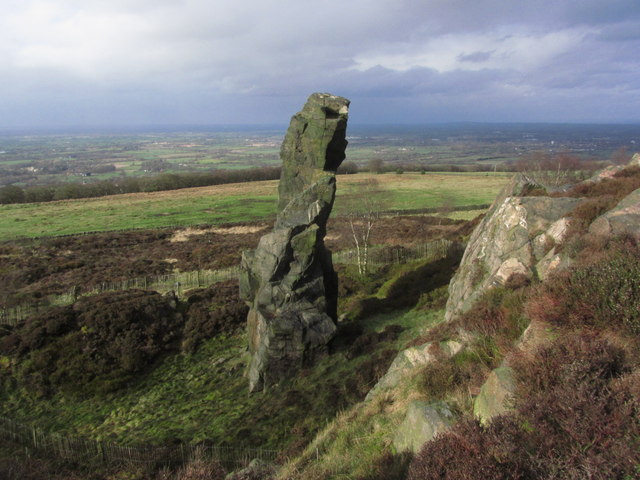
The Old Man of Mow

The Old Man of Mow is a local landmark whose origin is hidden by the sands of time.

In 1907, J. W. Harper wrote Mow Cop and Its Slopes, a local history book about Mow Cop and its surrounding villages. During the coming weeks, North Staffordshire Heritage is posting edited extracts from the book. It is out of print and difficult to obtain from second-hand bookshops.

In the first extract from Mow Cop and its Slopes, we post Harper’s description of The Old Man of Mow.

The Old Man of Mow is a great rock. It stands in a rocky dell. The quarrymen of a former age left it intact. Like many things connected with this hill, why it was left is a matter of conjecture. But there it is. It stands alone, looking down over the Cheshire Plain. It is sombre and black with the years of weather it has seen. It remains a curio unexplained for ages.

The Old Man’s rock’s circumference is 76 feet (ca. 23 m) 7 inches. It is 65 feet (ca. 20 m) 6 inches high. All the approaches to the rock are of the most rugged kind. The location appears to be an ideal rockery. It is pure and simple. There are no shrubs to relieve the monotony of stone.

Visitors to Mow Cop often try to access the rocky dell. Some climb to perilous heights on its steep sides. Few consider their visit to Mow Cop finished without a glimpse of the Old Man.

Photograph: © Copyright Colin Park, licensed for reuse under this Creative Commons Licence.

Post Edited by The History Factory 05.06.2025

Women’s contribution to the war effort

Women from North Staffordshire were “called up” for military service or war work during the Second World War. Some served in the armed forces. Others built Spitfires at Castle Bromwich or worked in munitions factories at Swynnerton and Radway Green.

To read about women’s contribution to the war effort, click “Women Work and War” below.

Memory Lane – Crewe Woolworths

To learn more about Crewe Woolworths, click “Woolies Buildings-Then and Now” below.

sabrina's avatarWoolies Buildings - Then and Now

59 – 67 High Street, Crewe, Cheshire CW1 2HA

Woolworths opened their 199th store in October 1925 in the town of Crewe. The store they built had a grand Art Deco style, as you can see in the photo below. It spanned from numbers 59 to 67 of the High Street.

Crewe Woolworths 1960 Crewe Woolworths 1960

Source: Francis Frith

The store closed in 1984, another casualty of the Kingfisher closures. Today you’ll find Poundland here, and you’ll happy to see the Art Deco frontage is still there, but it seems to have lost the top floor (compare it to the 1960s photo to see!).

Crewe Former Woolworths - Poundland Crewe Former Woolworths – Poundland
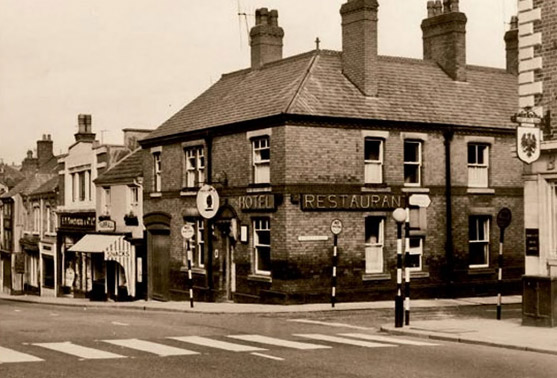
Source: Ballysundriven

View original post

Memory Lane – Congleton Woolworths

There was something for everyone at Woolworth stores. They were located on the High Street in major towns and cities throughout England and Wales.

Affectionately known as “Woolies”, these stores were like Aladdin’s Cave. They were stocked with a wide range of goods. These goods attracted customers of all ages from diverse backgrounds. Among the items Woolworths stocked were toys and games, as well as chocolate and sweets. They also sold pop records, portable radios and car accessories. Other stock included household paint, stationery, and stamps. All stores sold electric fires and fan heaters. The larger ones stocked garden furniture and plants. The list is endless…

Everyone who shopped at Woolworths will have memories of the store they bought from. They will remember its staff and the things they sold. If you and your family shopped at “Woolies”, please share your memories with us and tell us what you bought. Email, northstaffordshireheritage@outlook.com

To learn more about Congleton Woolworths, click “Woolies Buildings-Then and Now” at the top of the extract.

sabrina's avatarWoolies Buildings - Then and Now

35 – 37 High Street, Congleton, Cheshire CW12 1AX

Woolworths opened in Congleton in 1927. It was a small store with a typical Woolworths look to the first floor – see below.

Congleton Woolworths 1956 Congleton Woolworths 1956
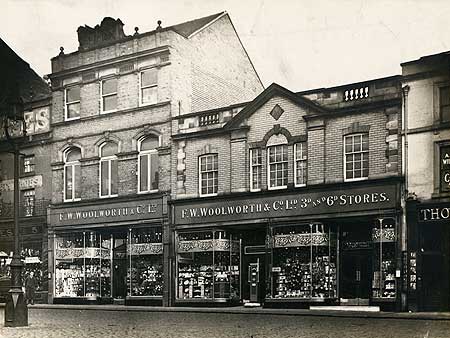
Source: Congleton Through Time, Alcock J.

In 1968 Woolworths bought The Bears Head Hotel and Farrell’s Sweet Shop next door. They were demolished along with Banks Car Garage on Market Street to build a Woolworths superstore. At the time Mr. G. Lamb was the store manager, pictured below with his staff.  These photos were in The New Bond (The House Journal of F. W. Woolworth and Co. Limited) June/July 1970 – kindly sent in by Richard Northover. He says “This was the forerunner of Woolworths/Woolies News, which was all about people and stores – not the political rag that was Woolies News!! It was named after the original head office in New Bond Street London…

View original post 152 more words

Memory Lane – Hanley Woolworths

There was something for everyone at Woolworths, a chain store found on High Streets in England and Wales.

Affectionately known as “Woolies”, Woolworths stocked a wide range of goods. These included toys and games, sweets and chocolate, and record players.

They also sold portable radios, car accessories, household paint, stamps, stationery, electric fires and fan heaters. The larger stores sold garden furniture and plants. If you and your family shopped at Hanley Woolworths, tell us about the shop and the things it sold. Email, northstaffordshireheritage@outlook.com

To learn about Hanley Woolworths, click “Woolies Buildings-Then and Now” at the top of the extract.

NSH.2024

sabrina's avatarWoolies Buildings - Then and Now

7-9 Upper Market Square, Hanley, Stoke-on-Trent, Staffs ST1 1PY

In 1915, World War One did not stop Woolworth expanding and they opened their 55th store on Upper Market Square in Hanley, Stoke-on-Trent. As with many war-time stores, it had a similar design to Kingston-upon-Thames (Store 43), with an open pediment and a Venetian window.

Hanley Woolworths 1920s Hanley Woolworths 1920s
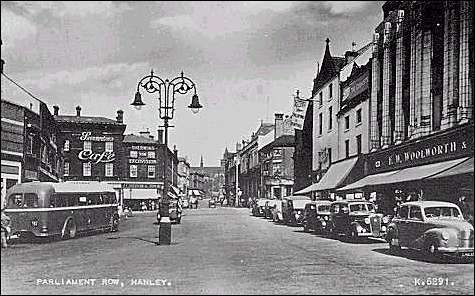
Source: Historic England

In 1937 the store had a makeover, and as it was a long-store, the design was Art Deco with a centrepiece at the top.

Hanley Woolworths 1950s Hanley Woolworths 1950s
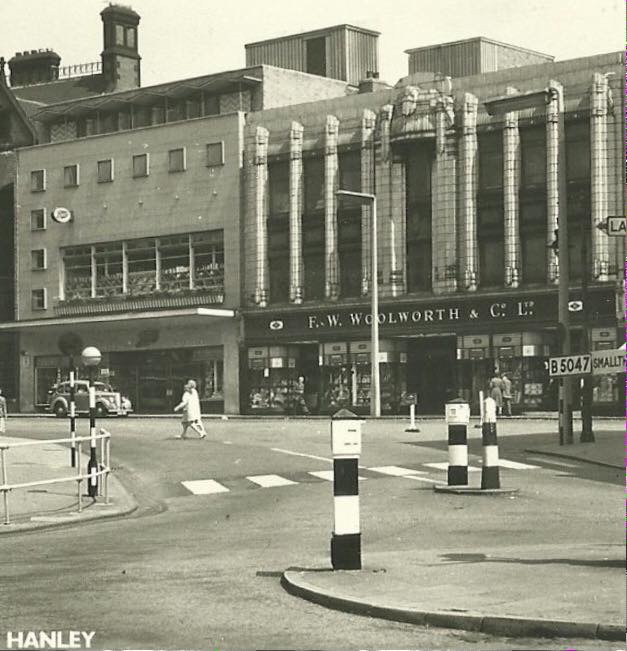
Source: ThePoterries.org

Hanley Woolworths 1950s Hanley Woolworths 1950s

Hanley Woolworths 1958 Hanley Woolworths 1958
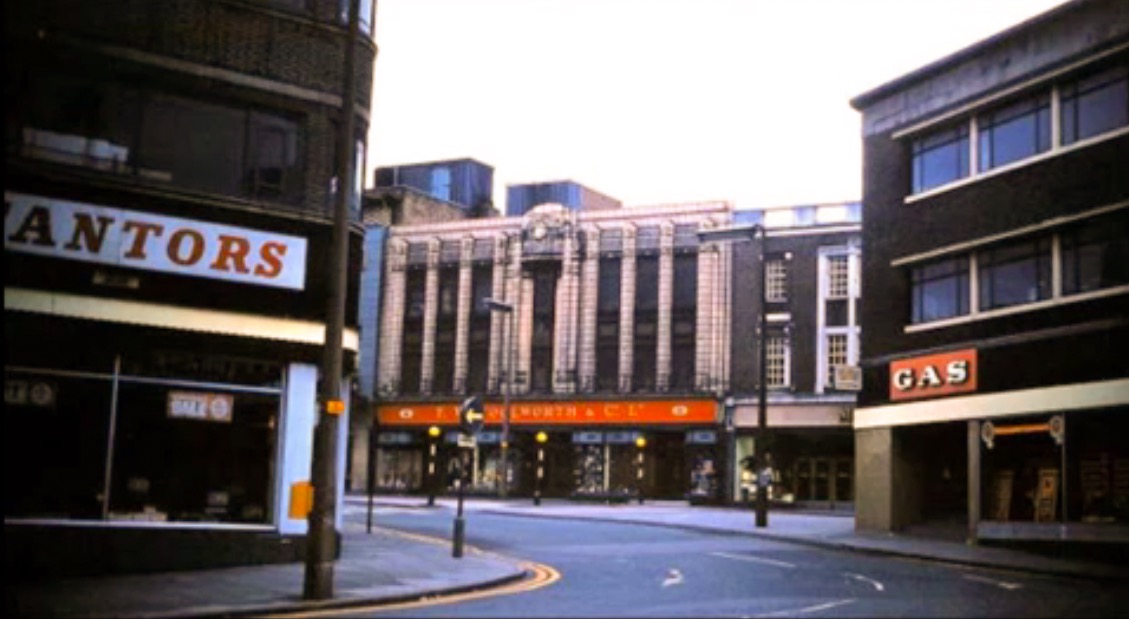
Hanley Woolworths 1960s Hanley Woolworths 1960s

Source: Pinterest

In the 1970s the store was modernised along with the conversion to self-service. A typical frontage design was to have long narrow brick sections alternating with aluminium panels. As for the entrance, the display windows were moved to the sides and a panel of doors installed across the centre.

View original post 63 more words

Memory Lane – Longton Woolworths

sabrina's avatarWoolies Buildings - Then and Now

28 Market Street, Longton, Stoke-on-Trent, Staffs ST3 1BT

Woolworths opened in Longton in 1927, back when it was a rich and thriving town. You can see the store on the left side of this photo, next to Boots.

Longton Woolworths 1950s Longton Woolworths 1950s
Source: Stoke-on-Trent Live

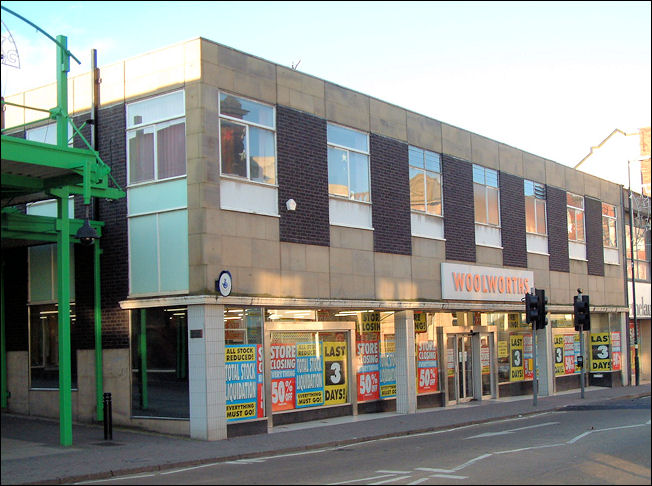
In 1965, a new shopping centre called the Bennett Precinct opened. It still exists today, with a very green look. Woolworths extended in size, taking over Boots, and having a new boxy look. It had a side entrance into the Bennett Precinct. The store lasted until the end, closing in December 2008.

Longton Woolworths 2008 Longton Woolworths 2008

Source: The Potteries

Longton is quite a sad story when you look at it today. This photo is at the exact same angle as the 1950s one at the start of this post. What was once a bustled street is now full of abandoned shops. The only bit still in use…

View original post 88 more words