Stoke-on-Trent’s Proud Heritage

A city that forgets its past is a city without a future.

Reginald Mitchell’s Spitfire

Stoke-on-Trent is a city with a proud heritage.

Its history is a testament to people from the Potteries who have played significant roles on the world stage. 

Stoke-on-Trent’s city council was one of the pioneers of comprehensive education. It defied Conservative and Labour governments to reform secondary education by creating comprehensive schools and a sixth-form college. 

Local art schools, technical schools and colleges of further education were progressive centres of excellence. Reginald Mitchell, who designed the Spitfire, turned down a place at Birmingham University. He wanted to serve an apprenticeship with a firm in Fenton and study engineering at city technical schools. 

By the early 1930s, the North Staffordshire Technical College was a university in everything but name. The college’s worldwide reputation in ceramic research and mining engineering attracted students from Europe, North America and the Commonwealth.

Some argue that the past is dead. They are mistaken. It lives in our collective memory and shapes our destiny. Our city’s proud heritage tells us who we are and why we are unique. A city that forgets its past is a city without a future.

Can You Help Trace These Film Strips?

We hope to show a series of film strips during Stoke-on-Trent’s Centenary Year. Schools in the six towns made these film strips in 1960 to celebrate the 50th anniversary of the County Borough of Stoke-on-Trent’s creation.

North Staffordshire Heritage has the scripts for all these film strips. But we only have one film strip, the Township of Tunstall, made by Highgate Secondary School.

The film strips about Burslem, Hanley, Stoke-upon-Trent, Fenton and Longton are missing. If you can help us trace them, please email northstaffordshireheritage@outlook.com

St. John’s Church, Goldenhill

Heritage at Risk

The Church of St John the Evangelist at Goldenhill is a Grade II Listed Building. Erected 1840-41, it was built in a Byzantine Romanesque style. St. John’s closed in 2014. Since then the church and the churchyard have been vandalized. Like many other heritage buildings in the Potteries, St. John’s faces an uncertain future.

Image: Copyright David Weston Creative Commons Attribution-Share Alike 2.0 Generic license.

A Tunstall Church Could Help Create a World Heritage Site

The Sacred Heart Catholic Church in Tunstall, designed by Father Patrick Ryan and built by unemployed men could help make North Staffordshire’s Industrial Heritage Landscape a World Heritage Site.

The Sacred Heart Catholic Church in Tunstall is one of Stoke-on-Trent’s hidden jewels.

Architectural historians believe it will help make North Staffordshire’s Industrial Landscape a World Heritage Site. The parish priest, Father Patrick Ryan, designed the church, which was built between 1922 and 1930 by unemployed men.

The Churnet Valley Railway

The Churnet Valley Railway is a popular tourist attraction. It will help make North Staffordshire’s Heritage Landscape a World Heritage Site.

The Gladstone Pottery Museum

The Gladstone Pottery Museum is one of Stoke-on-Trent’s heritage assets. It will help make North Staffordshire’s Industrial Landscape a World Heritage Site.

North Staffordshire’s Industrial Landscape Merits World Heritage Site Status

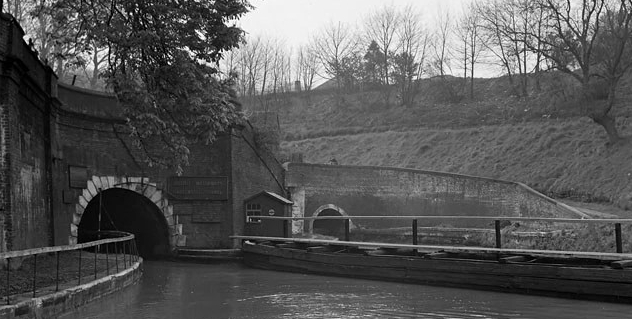
The Harecastle Tunnels on the Trent & Mersey Canal at Kidsgrove

There are no historical reasons to prevent North Staffordshire’s Industrial Landscape from becoming a World Heritage Site.

In the 18th century, North Staffordshire helped to make England “the workshop of the world.” Local entrepreneurs, like Wedgwood and Adams, transformed a group of small towns into an industrial area of international importance.

James Brindley’s Trent & Mersey Canal “kick-started” the Industrial Revolution, which made Britain “the Workshop of the World. The canal and railway tunnels between Kidsgrove and Chatterley are significant feats of civil engineering. They merit World Heritage Site status in their own right.

The Primitive Methodist Church was founded in North Staffordshire by Hugh Bourne and William Clowes. It gave the Potteries its unique culture and a way of life that Arnold Bennett vividly portrayed in his novels.

Burslem’s “old town hall” is one of the finest examples of Victorian civic architecture. The Wedgwood Institute’s terracotta facade is an inspiring tribute to the men, women and children who worked in local industries.

The former colliery at Chatterley Whitfield should have been made a World Heritage Site many years ago.

Making North Staffordshire’s Industrial Landscape a World Heritage Site would encourage economic regeneration and create new employment opportunities.

Tom Brown’s Journey to Rugby

At three o’clock on a cold, frosty February morning in 1834, his father put him on an express stagecoach bound for Rugby. Thomas had an outside seat next to the guard who looked after him during the journey.
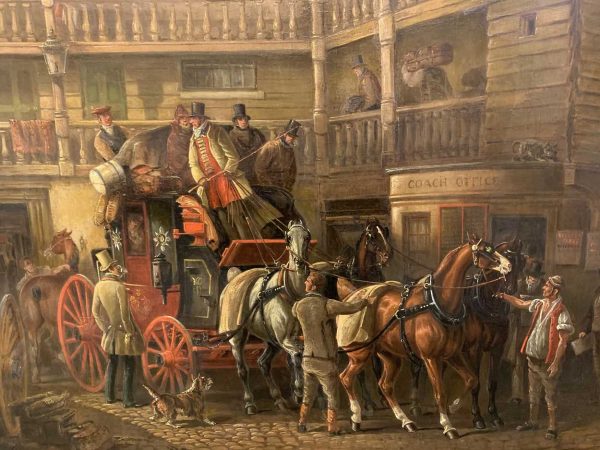
A typical scene at a 19th Century Coaching Inn

Judge Thomas Hughes, who wrote Tom Brown’s Schooldays, presided over County Courts in South Cheshire. The book is an autobiographical novel about his early life.

His father sent him to Rugby School when he was eleven. In the book, he describes his first journey to school.

At three o’clock on a February morning in 1834, his father put him on an express stagecoach bound for Rugby. Thomas had an outside seat next to the guard who looked after him during the journey. It was a bitterly cold and frosty morning. He was given a glass of hot beer and rum to keep out the cold. Yet, he was still half-frozen when the coach stopped for breakfast at a coaching inn.

“Twenty minutes here, gentlemen,” says the coachman as they pull up at half past seven at the inn door.

Have we not endured nobly this morning, and is not this a worthy reward for much endurance? We enter a low, dark, wainscoted room whose walls are hung with sporting prints. A hatstand is by the door, with a whip or two in it. They belong to commercial travellers who are still snug in bed. The room has a blazing fire, casting a warm and inviting glow. There is quaint old glass over the mantelpiece… The table is covered with the whitest of cloths and china dishes full of food. There is a pigeon pie, a ham, cold beef cut from a mammoth ox and a large loaf of bread. The stout head waiter comes, puffing under a tray of hot viands. On the tray are kidneys, roast beef, rashers of bacon, poached eggs, buttered toast, muffins, tea and coffee. The table can never hold it all. The cold meats are taken off the table and put on the sideboard. They were there for show and to give us an appetite. And now fall on gentlemen all.

“Tea or coffee sir?” says the head waiter coming round to Tom.

“Coffee, please,” says Tom, with his mouth full of muffins and kidneys. Coffee is a treat to him; tea is not.

Our coachman has breakfast with us. He eats cold beef and drinks a tankard of ale brought to him by the barmaid.

For breakfast, Tom had kidney and pigeon pie. He drank coffee, and his little skin became ‘as tight as a drum.’ After breakfast, he paid the head waiter and boarded the stagecoach to continue his journey.

Edited by The History Factory (2024)

Making Staffordshire Oatcakes At Home

Oatcake shops used to be small and plentiful, with sales being made through open windows. The last of these shops, the Hole In The Wall in Stoke-on-Trent, closed due to redevelopment. Commercial firms still make oatcakes in batches of six and twelve. They are sold by supermarkets, but the best oatcakes are the ones you make at home.

Staffordshire Oatcakes