Sir Smith Child: Stallington Hall, The Country House That Became a Mental Hospital

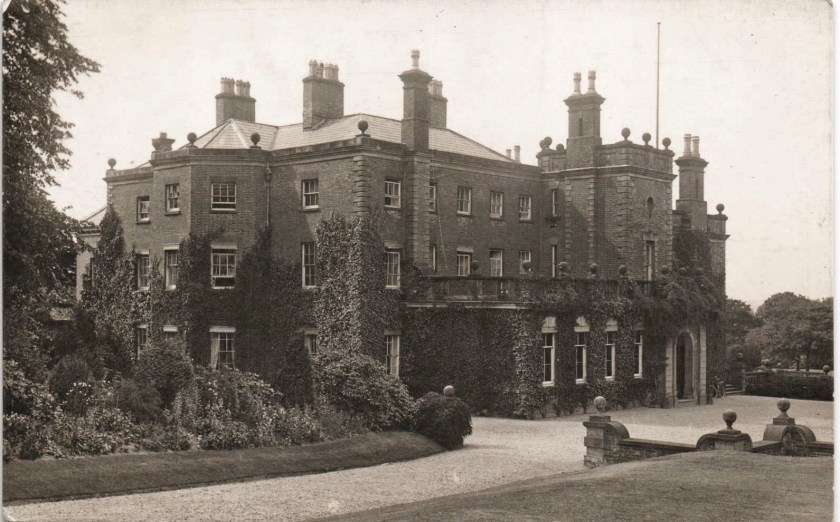
Surrounded by woods and parkland, Stallington Hall, near Blythe Bridge, was a country house that became a mental hospital.

Stallington Hall was a Queen Anne-style mansion built in the 18th century. It was the home of landowner Richard Clarke Hill. His daughter, Sarah, married Smith Child, who lived at Newfield Hall in Tunstall. The couple were married at St Nicholas’ Church, Fulford, in 1835. They lived at Newfield Hall until 1841, when they moved to Rownall Hall, Wetley.

In 1853, Richard Clarke Hill died, and Smith Child and his family went to live at Stallington Hall.

Smith Child, who was a magistrate, became a Member of Parliament. He became a baronet in 1868. His full title was Sir Smith Child, Baronet of Newfield and of Stallington in the County of Stafford, and of Dunlosset (Dunlossat), Islay, in the County of Argyll.

Sir Smith Child died at Stallington Hall on 27th March 1896. His grandson, Sir Smith Hill Child, inherited the estate.

Sir Smith Hill Child was educated at Eton and Christ Church College. He became a professional soldier and fought in the Boer War. In 1910, he became the commanding officer of the 2nd North Midland Brigade (Royal Field Artillery.

On 3 August 1914, Germany declared war on France. German troops invaded Belgium, a country Britain had promised to defend against German aggression. On 4 August, Britain declared war on Germany. The First World War had begun, and the brigade was sent to France. where it fought at Loos and on the Somme.

Sir Smith Hill Child was mentioned three times in dispatches. He was awarded the Distinguished Service Medal and made a Companion of the Order of St Michael and St George. Promoted to Brigadier General, he was given command of the Royal Artillery’s 46th Division. On 29 September 1918, the Division crossed the St Quentin Canal and broke through the Hindenburg Line, taking 4,000 prisoners. The French Government awarded him the Croix de Guerre.

When he returned home, Sir Smith Hill Child stood for Parliament. His election campaign was successful, and he represented Stone from 1918 to 1922. In 1925, he married Barbara Villiers. Shortly after their marriage, they left Stallington Hall. The couple had two daughters, Teresa and Mary.

The hall and its grounds were sold to the City of Stoke-on-Trent, which converted it into a mental hospital.

The conversion cost £20,000. Lady Aspinall opened the hospital on 18 September 1930. Miss M. A. Cahill was the matron. The hospital accommodated 81 patients and possessed an operating theatre and a dental surgery.
Bygone Days: Britain’s Coal Mining Industry

An optimistic view of the coal mining industry’s future in 1981. By the end of the 20th century, the industry had ceased to exist.

Historic Tunstall: Newfield Hall

Newfield_Hall_Tunstall_

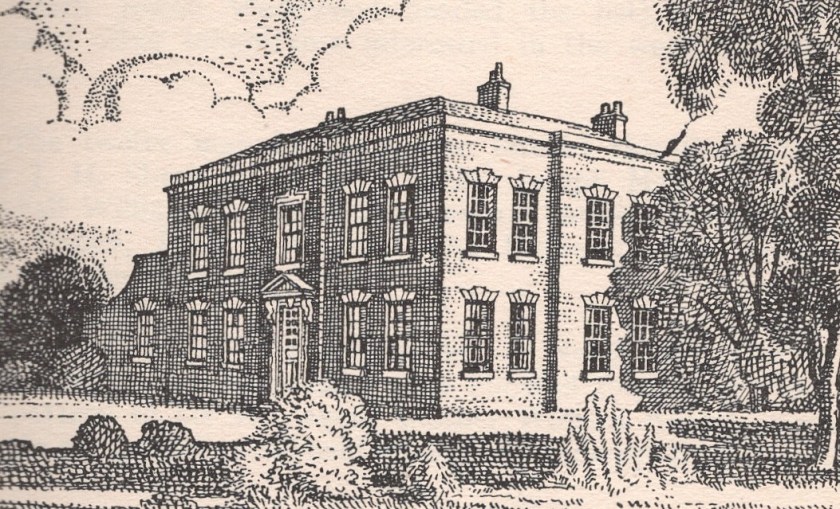
In 1770, Admiral Smith Child inherited the Newfield estate in Tunstall from his uncle Thomas Baddeley. He built Newfield Hall and died there in 1813. Admiral Child’s grandson, Sir Smith Child, inherited the estate.

Heritage NewsDesk: Tunstall’s Clock Tower Chimes Again

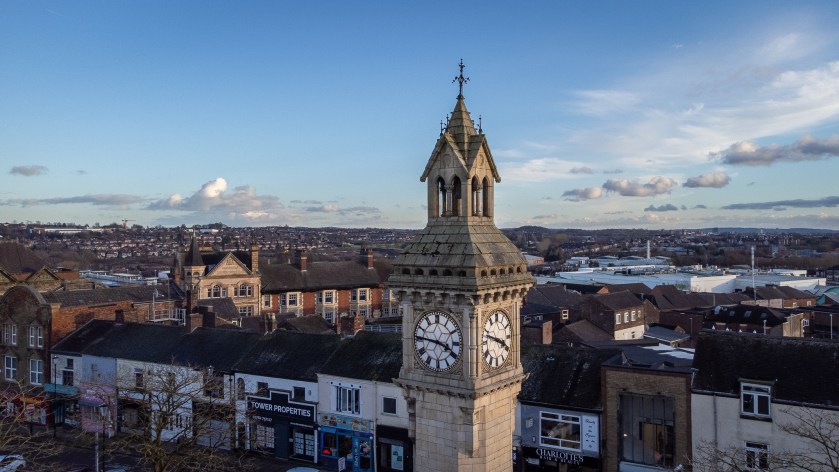
Stoke-on-Trent City Council has repaired Tunstall’s historic clock tower, and its chimes ring again.

The Grade II listed Clock Tower in Tower Square was erected in 1893. Its chimes, which fell silent in November 2024, are working again. The clock tower was built to honour local philanthropist Sir Smith Child. It features a life-size bust of him that was paid for by the Ladies of Tunstall.

The project that restored the chimes is part of a major improvement scheme aimed at regenerating Tunstall.

Councillor Finlay Gordon-McCusker, the cabinet member for regeneration, infrastructure and transport at Stoke-on-Trent City Council, said:

The Clock Tower is an essential part of Tunstall’s story and a visible reminder of the civic pride that built the town. When a landmark like this falls silent, something important is lost. Restoring the chimes is a statement of intent: that Tunstall’s heritage matters, and that we will look after what previous generations built.

Tunstall School Treated Boys Like Little Soldiers

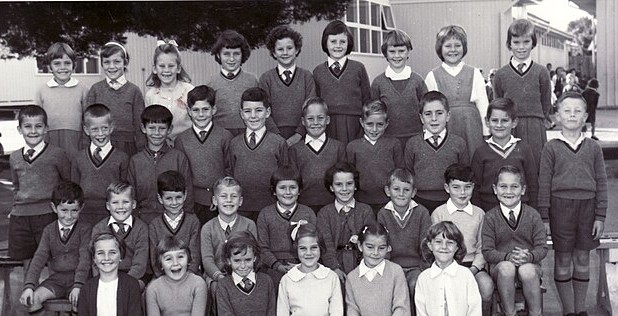
High Street School in Tunstall was demolished in 1994.

About two years later, Robert Turner, a teacher at the school from 1953 to 1963, was interviewed by Tunstall History Society.

Robert, who taught Art, Physical Education and Games, said:

It was a small school facing High Street, nestling between factories and rows of small, terraced houses. Tunstall reminded me of a T. S. Lowry painting, with small figures moving about.

The building housed two schools: a co-educational infants’ school and a boys’ secondary modern school. The infants’ school was on the ground floor, and the boys’ school was on the first floor. There were about 200 boys in the secondary modern. They were treated like little soldiers. Order and discipline prevailed. Every teacher kept a cane in their classroom. They used it when boys talked in class or ran along the corridor.

The boys were marched in lines two abreast to the swimming pool in Greengates Street or along Pickle Onion Entry to the park, where they played football and cricket.

At the start of school, a teacher blew a whistle. The boys stood still in the playground. The teacher blew his whistle again, and they walked to their designated lines, waiting silently for the whistle to blow a third time. When it blew, the boys marched into school, supervised by prefects

The school hall had a flat roof, which was used for physical training and by boys who were members of the art club. The roof gave them a wonderful pictorial vantage point, enabling them to paint and sketch views of Tunstall’s pottery factories with their bottle ovens and kilns, churches, shops and terraced houses. 

Members of the art club won many prizes for their paintings. In 1962, they starred in a BBC film. It was shown in the United Kingdom and throughout Europe by Eurovision.

If you were a pupil at High Street School, please visit Share Your Story: Who Was Your Favourite Teacher? and tell us about your school days there.   

.

NewsDesk: Potteries Museum Launches Appeal to Keep Ellastone Fastener in Staffordshire


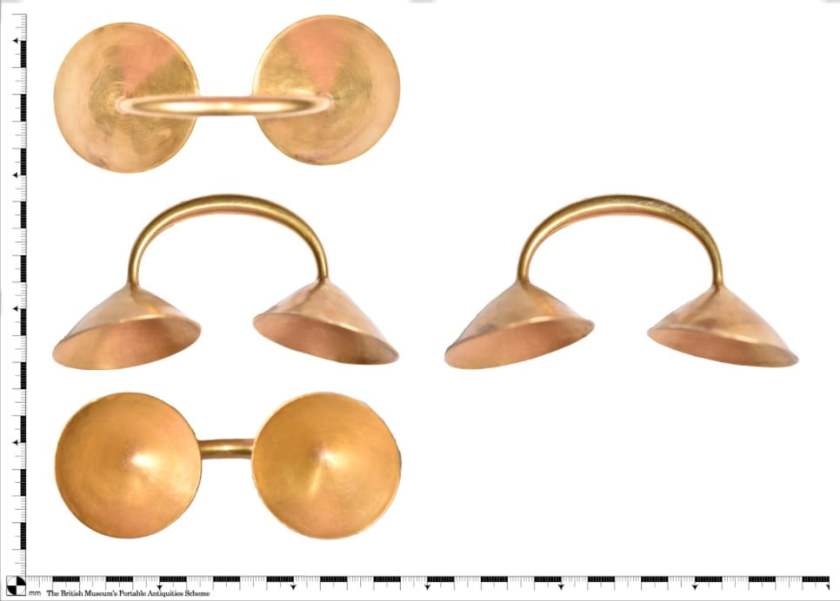
The Potteries Museum and Art Gallery has launched a £150,000 appeal to keep the Ellastone Fastener in Staffordshire.

A Bronze Age treasure, the gold fastener was discovered in the region.

To keep it here, the museum needs your help.

For more information and to donate, please visit www.stokemuseums.org.uk/pmag/help-save-the-ellastone-fastener/.
Visit the Potteries Museum and Art Gallery website and discover the City of Stoke-on-Trent’s unique history and heritage.

Share Your Story: Who Was Your Favourite Teacher?

We all remember that one teacher who made a lasting difference – the one who inspired us, encouraged us, or simply made school a little brighter. Maybe they sparked your love of a subject, believed in you when you doubted yourself, or had a way of making lessons fun.

We’d love to hear your stories. Tell us about your favourite teacher and what made them special. Was it their kindness, their humour, their passion for teaching, or something they did that you’ve never forgotten?

Your memories can help celebrate the people who shaped our lives and remind us of the power a great teacher can have.

If you went to school in North Staffordshire, you can share your story in Leave a Comment below. Alternatively, you can email it, with or without images, to northstaffordshireheritage@outlook.com

We are sure everyone will enjoy reading your memories of your favourite teacher.