Tunstall’s Wesley Place Chapel

Tunstall’s Wesleyan Methodist Chapel in Wesley Place (now Wesley Street)

The Wesleyan Methodist Chapel in Wesley Place (now Wesley Street), Tunstall, replaced a chapel built near America Street in the 18th century.

Opened in 1835. the Chapel in Wesley Place was a large brick building with a portico supported by four stone pillars. It could accommodate over 1,000 worshipers and was lit by gas lamps.

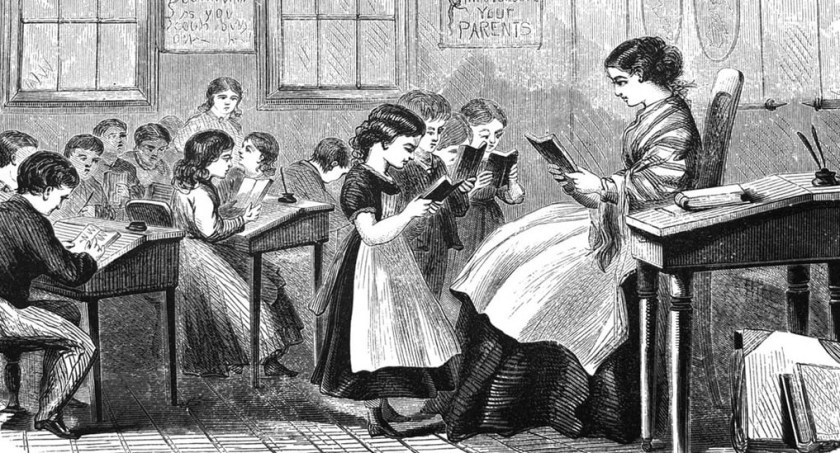
In 1838 a Sunday School was erected on land behind the chapel. Five or six years later, a Wesleyan Day School opened in the building. The day school became a Board School in 189o. It closed four years later when Wolstanton School Board opened High Steet Schools.

Tunstall’s Windmill

Tunstall Windmill

Tunstall’s windmill stood in a field that became known as Millfield. The field overlooked Roundwell Street and America Street. A track that is now Pierce Street led from America Street to the mill.

The only houses near the mill were three one-storey working men’s cottages.

At one time, a man and his wife lived at the mill. There was a disused mine shaft full of water nearby. One evening the couple had an argument. The wife walked out and did not return. The next morning, her body was found in the mine shaft. She had committed suicide.

When the mill closed, Tunstall’s Drum and Fife band used it as a practice room.

The mill was demolished in the mid-1850s.

Tunstall’s First Methodist Chapel

Tunstall’s first Methodist Chapel was built in 1788 by the Wesleyan Methodists.

It cost £650 and was erected on sloping ground adjacent to ‘the old lane’ that later became America Street. Charles Lawton, a Newcastle builder, and his brother Samson, who came from Tunstall, built the chapel which was forty-five feet long by forty feet wide.

John Wesley Comes to Tunstall

John Wesley

In a pamphlet, called ‘Introduction and Progress of Wesleyan Methodism in Tunstall’ published in 1842, Thomas Leese and Thomas Mores describe John Wesley’s visit to the town’s first Wesleyan Chapel in America Street.

“On March 29th, 1790, Mr Wesley preached in the new chapel at Tunstall, at nine o’clock in the morning, for the first and last time. He was then in his 87th year and died 11 months later, aged 88 years.

“His text on that occasion was ‘Let us go on to perfection.’ There was something very remarkable in his appearance that was calculated to impress the beholder with awe and veneration. Wesley seemed like a messenger from heaven. His pale heavenly countenance and penetrating eye, made him appear as if he was about to be ushered into the company of ‘angels, and the spirits of just men made perfect.’

“Wesley’s voice was weak and feeble, but his expression was clear and distinct. His hearing was remarkable, for although he knew, in general, all the hymns, there were times when he was at a loss for a starting word or two. On these occasions, Mr Joseph Bradford, who travelled with him, whispered the required word to him, which he would immediately catch, and proceed without it being observed by the generality of the congregation.

“He did not use glasses, and it would have been easy for him to have gone through the whole service without either a bible or hymn book.”

Edited by David Martin

Tunstall was a major shopping centre

Between 1738 and 1800, the township’s population rose from 200 to 800. By 1811 it had risen to 1,677. In 1821, the population was 2,622. Between 1831 and 1841 it increased from 3,673 to 6,979. Tunstall was no longer an industrial village. It had become a town with shops and markets that attracted customers from Butt Lane, Kidsgrove, Mow Cop, Harriseahead, Biddulph, Brindley Ford, Packmoor, Chell and Goldenhill. 

Tunstall’s 18th Century Pottery Industry

Some jasper made at Adams’ Greengates Pottery in Tunstall was equal to, if not superior to, jasper made by Wedgwood at Etruria

William Adams’ Greengates Pottery in Tunstall.

During the 18th century, the Industrial Revolution changed the face of Britain, making it the ‘workshop of the world’. 

Earthenware factories were built in Tunstall, a township that included Sandyford, Newfield and Furlong. At the end of the 18th century, there were seven factories making pottery. Small coal and ironstone mines were scattered throughout the district. Blue bricks and tiles were made in the Chatterley Valley. 

As early as 1735, William Simpson was making earthenware in the township. By 1750, Enoch Booth had a factory near a field called Stony Croft. The factory made cream coloured ware glazed with a mixture of lead ore and ground flint. 

In 1763, Admiral Smith Child built Newfield Pottery, where he produced earthenware. By the 1780s, two brothers, Samuel and Thomas Cartlich, were making pottery and mining coal at Sandyford. There were brick kilns, coal mines, a flint mill and a crate maker’s workshop at Furlong. 

During the 1740s, George Booth and his son Thomas leased a pottery factory. on an estate called Will Flats, next to Furlong Lane. In 1779, Burslem pottery manufacturer William Adams rented the factory and part of the estate.

On 1 March 1784, William purchased the factory and the land he had been renting. He changed the estate’s name from Will Flats to Greengates and demolished the old factory.

William built Greengates Pottery (shown above), where he made high-quality stoneware and jasper ornaments for the luxury market. He employed Swiss modeller Joseph Mongolot. Joseph helped him create models for moulds to produce the bas-reliefs for jasper and stoneware. 

Pottery produced by William was sold to wealthy customers. Some purchased ware from his showrooms in Fleet Street, London. Others visited the Greengates factory’s showrooms where they bought tea sets, dinner services, jasper, and stoneware ornaments.  

In his book, Marks and Monograms on Pottery and Porcelain, William Chaffer mentioned the quality of Adams’ jasper. He said some of it was “equal to, if not superior to” jasper made at Etruria by Wedgwood.

Revised: July 2025

St. John’s Church, Goldenhill

After watching this video, we are asking ourselves whether Stoke-on-Trent City Council cares about our city’s heritage or realises the role heritage buildings can play in revitalising the declining economy of a post-industrial area?

The Great Wind (1839)

The Great Wind
The Great Wind brought destruction and death to the Mersey Estuary.

Between Sunday, January 6th and Thursday, January 10th, 1839, a hurricane known as ‘the great wind’ swept across the British Isles leaving a trail of death and destruction.

Small boats and ocean-going sailing vessels were blown onto sandbanks in the Mersey Estuary. Many were broken up by high waves before steam tugs could reach them. Passengers and crews were forced to take to the lifeboats. Most were rescued, but over 100 men, women and children were drowned.

As it swept across Cheshire, the hurricane destroyed farmhouses and uprooted trees. Particles of salt were blown along village streets. Buildings, hedgerows and fields were covered with a layer of white salt, giving the impression that there had been a heavy frost.

When the hurricane hit North Staffordshire, gale-force winds caused extensive damage.

A 130-foot-high chimney at Apedale was blown down. Streets in Newcastle-under-Lyme were blocked by falling masonry, and windmills in the Potteries lost their sails.

The galleries in Christ Church, Tunstall, were destroyed when pinnacles on the church tower were blown down and fell through the roof. At Chell, the wind blew the roof off the new workhouse that was being built for the Wolstanton and Burslem Union.

Note: The Great Wind is one of a series of articles written by Betty Martin before her death. Other articles from the series will be posted from time to time.

Mrs McQuire’s Oatcakes

During the 1930s and 40s, the best oatcakes in Tunstall were made by an elderly couple, Mr and Mrs McQuire, who lived in Queen Street. Their home was a terraced house and they made oatcakes in the kitchen every Sunday morning.

On Sunday mornings, the front door was always open. Customers came to the house to buy oatcakes. They walked into the parlour and joined a queue that went through the living room into the kitchen, where the McQuires were making and selling oatcakes.

Mrs McQuire stood in front of a hot iron plate, called the backstone, that was laid across the top of the gas oven. There was a large bowl at her side, which contained oatmeal mixture. To make oatcakes, Mrs McQuire dipped her scoop into the mixture. When it was full, she ladled the mixture onto the backstone, swirling the scoop to create perfect circles. As soon as they were cooked on one side, she turned the circles over and cooked them on the other.

When the circles had browned to perfection and become oatcakes, Mrs McQuire scooped them off the backstone and threw them onto a wire tray. She wiped the backstone clean and began the process again.

Mr McQuire sold the oatcakes and wrapped them in newspaper. While serving he kept up a warm, friendly conversation with his customers.

The McQuires’ backyard gate was kept open enabling people living in John Street to come into the yard and be served at the kitchen window.

Mrs McQuire’s oatcakes cost a halfpenny each. They were delicious. Men, women and children came from all parts of Tunstall to buy them to eat with their breakfast, which was either bacon and egg or bacon, cheese and tomatoes.

Discos in the Town Hall

Tunstall Town Hall

Did you go to the discos held in Tunstall town hall during the 1970s and 80s?

These discos were designed for young people; only light refreshments and soft drinks were sold. When they started in 1974, discos were held on Saturday nights. The discos were popular with teenagers. By 1977, they were being held on Monday and Friday nights.

David Martin and Lee Wanger are writing a book about Tunstall Town Hall and Market. They would like to know more about these discos. If you went to the discos, share your memories with David and Lee. You can email David at davidmartin227@outlook.com