Memory Lane – Burslem Woolworths

sabrina's avatarWoolies Buildings - Then and Now

17-19 St John’s Square, Burslem, Stoke on Trent, Staffordshire ST6 3AN

Woolworths opened in Burslem in September 1929 in a purpose-built two-storey building. According to the book Burslem Through Time by Mervyn Edwards, the first store manager was L.H. Hewitt. This branch of Woolworths stocked a range of locally manufactured china and pottery items.

Burslem Woolworths 1930s Burslem Woolworths 1930s

Source: Historic England

In 1966 the store was modernised – this photo was taken just after the store reopened. Doors were moved to the left, and inside you can see signage on the walls saying ‘Quality Foods’ and ‘Frozen Foods’. The store was quite long inside.

Burslem Woolworths 1966Burslem Woolworths 1966

Source: Seaton, P.

Burslem Woolworths 1994 Burslem Woolworths 1994

Source: Burslem Through Time – Edwards, M.

Burslem Woolworths 2000 Burslem Woolworths 2000

Source: The Potteries

The store lasted until the end, closing on 2nd January 2009.

Burslem Woolworths 2008 Burslem Woolworths 2008

Source: The Potteries

It became a Poundstretcher for a few years…

View original post 27 more words

Memory Lane – Leek Woolworths

Woolworths stores were located on the High Street in towns and cities throughout North Staffordshire and South Cheshire. Affectionately known as “Woolies,” they were like an Aladdin’s Cave and carried a wide range of stock at reasonable prices.

sabrina's avatarWoolies Buildings - Then and Now

13 Market Place, Leek, Staffs ST13 5AA

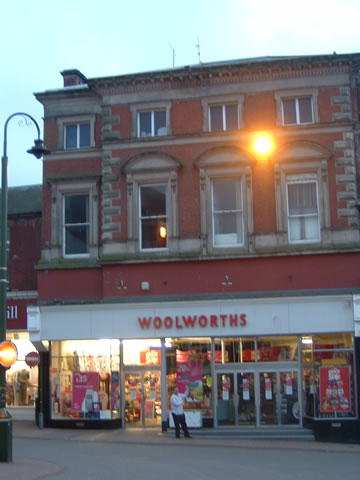
Woolworths opened in Leek in 1931 in a former hotel. You can see it in the below photo from the 1990s. If you are wondering what is going on it this photo, it’s the Leek Fire Brigade attempting a Guinness book of records event. They had to cut a car up and pass each piece through a tyre in the quickest time.

Leek Woolworths 1990s Leek Woolworths 1990s
Source: Maycock, N.

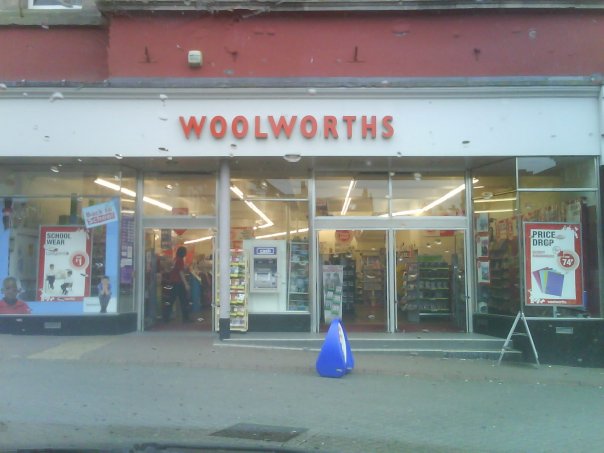
Leek Woolworths 2004 Leek Woolworths 2004
Source: Emily and James

This Woolworths lasted until the end, closing in December 2008.

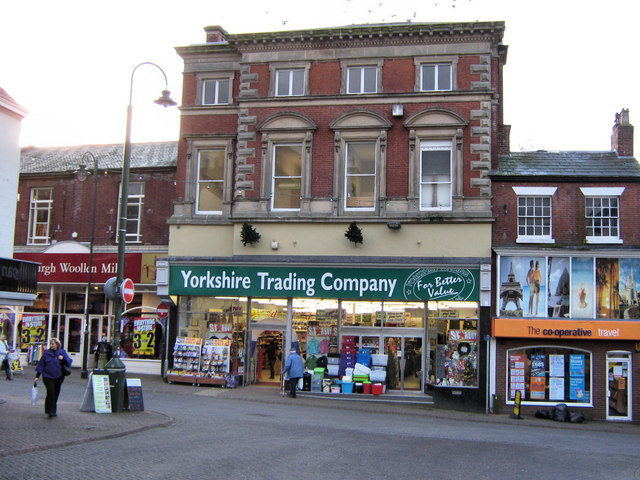
Leek Woolworths 2008 Leek Woolworths 2008
Source: Kidd, C.

It became Yorkshire Trading Company, and if you look a bit closer you will spot the Woolworths doors still in use.

Leek Former Woolworths Leek Former Woolworths

Source: Kington, J.

View original post

Memory Lane – Uttoxeter Woolworths

sabrina's avatarWoolies Buildings - Then and Now

16 – 18 High Street, Uttoxeter, Staffordshire ST14 7HY

Woolworths opened in Uttoxeter in 1932 in a purpose-built store on the High Street.

Uttoxeter Woolworths c1955 Uttoxeter Woolworths c1955

The store manager from 1933 was Mr Slade, and this photo was sent in by Richard Northover who actually met him many decades later. He shares his memories with us below.

Uttoxeter Store Manager 1930s Uttoxeter Store Manager 1930s

“His name is Mr R J Slade known as ‘Jim’ who retired from Store 60 Cheltenham in the early 1960s. I met him in 1979 when I was a trainee manager at Store 60. I got to know him when another trainee manager at the store was going out with a couple of the girls who worked in the store, one of whom was his granddaughter Vanessa who later married the other trainee. We used to talk when he came into the store, a kindly old gentleman talking to…

View original post 267 more words

Memory Lane – Stone Woolworths

sabrina's avatarWoolies Buildings - Then and Now

32 High Street, Stone, Staffs ST15 8AW

Woolworths opened in Stone in 1934. It opened in an existing building on the High Street.

Stone-Woolworths-1965 Stone Woolworths 1965

Source: Francis Frith

They traded from this location for 74 years until the end in December 2008. The pillar at the front looks really thin.

Stone-Woolworths-2009 Stone Woolworths 2009

It became a Heron Foods.

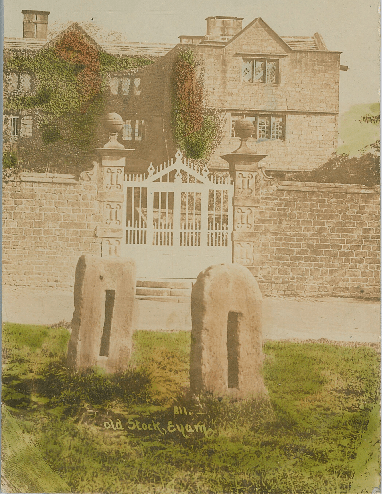
Stone Former Woolworths Stone Former Woolworths
View original post

Tomato to the Face: The Use of Stocks in Derbyshire

There were two sets of stocks in Tunstall in the 1840s. One set was in front of the steps leading to the market hall on the ground floor of the Courthouse in Market Square (Tower Square). The other set of stocks was outside the Police Station in High Street.

tameracarrington's avatarBuxton Museum and Art Gallery

As a Museum Assistant who once got sent outsideof her primary school classroom for making a full stop too big, I am well-versed with just and fair punishment. With this in mind, this blog will be exploring the past use of stocks in towns and villages near Buxton to deter misbehaviour and facilitate punishment.

Derbyshire is home to several village stocks,scattered throughout its picturesque villages. The stocks at Chapel-en-le-Frith, for instance, are said to date from the Cromwellian period and are located on the town’s historic Market Place. The stocks currently viewable to visitors and residents, however, date from the eighteenth century. As the stocks are made from woodthey are naturally subject to decay and rotting, thus have been replaced overtime.

Photograph of the Old Stocks at Chapel-en-le-Frith. Acc. No. DERSB : PC 436.

Since the medieval period to the nineteenth century, stocks have been used to…

View original post 507 more words

Hanley’s First Library

A bookseller, James Strapham, opened Hanley’s first library in 1790.

Called the Pottery Subscription Library, the library was a commercial venture which James ran from his bookshop. He charged customers two guineas to join the library and a guinea a year to borrow books.

In 1796, James sold the bookshop and the library to John Allbut, whose son Thomas acquired them at the beginning of the 19th century. Thomas ran the library until he retired on December 31st, 1852 when its books were transferred to the Mechanics Institution’s library in Gitana Street.

Shortly afterwards, the Mechanics Institution left Gitana Street and moved to new premises in Pall Mall.

Memory Lane – Tunstall Woolworths

Until they closed in 2009, Woolworths stores dominated the High Street in Britain’s small towns and cities.

Affectionately known as “Woolies”, they sold a wide range of goods ranging from children’s toys and sweets to tins of paint and cutlery. Prices were reasonable and Woolworths attracted customers from all walks of life. If you and your family went shopping at Woolworths in Tunstall, please share your memories of shopping there with us. We look forward to hearing from you. Our email address is northstaffordshireheritage@outlook.com

Newcastle-under-Lyme Workhouse

George Gilbert Scott (1811-1878) was an English architect. He began his career designing workhouses. Between 1835 and 1845, George and his partner, William Moffatt, designed over 40 workhouses including the one at Newcastle-under-Lyme.

One of Victorian England’s leading architects, George Gilbert Scott, designed Newcastle-under-Lyme’s workhouse.

Born at Gawcott in Buckinghamshire on July 13th, 1811, George was the third son of the Rev. Thomas Scott and his wife, Euphemia.

Educated at home by his father, George became an architect. He went into partnership with William Bonython Moffatt. The firm specialised in building workhouses, and George designed Newcastle-under-Lyme workhouse. which accommodated 300 inmates.

The workhouse opened in 1840. An Elizabethan-style building in Keele Road, it cost £6,000. The workhouse was enlarged a few years later when an infirmary, workshops and a laundry were erected. Casual wards for vagrants were constructed in 1878.

During the 1880s, a hospital was built on land behind the workhouse.

New life for an old building

Ambitious plans for the Queen’s Theatre

Ambitious plans have been made to save “Burslem’s new town hall”, a listed heritage building that houses the Queen’s Theatre and the Prince’s Hall.

The proposals made in a report prepared for Stoke-on-Trent City Council by architectural consultants Affinity Design and Management would cost over 12 million pounds to implement.

The theatre and the hall were abandoned many years ago, and it will cost about £320,000 to make the building safe.

If the council accepts them, the proposals could make the theatre a conference centre, an exhibition hall or a venue for Asian weddings and the foyer could become a bar or restaurant.

The Prince’s Hall would be turned into retail shops or become one or two-bedroom flats with a shared roof garden.

Can You Help Sandra?

How Did Pickle Onion Entry Get Its Name?

Sandra, who grew up in Tunstall during the 1970s, remembers Pickle Onion Entry. The entry ran on the north side of a pottery factory in Scotia Road to Wardle Street, a cul-de-sac leading to The Boulevard.

Sandra can’t remember the factory’s name. She recalls that Barbers Palace backed onto the north side of the entry which was long and straight with high walls on either side. If you can remember the entry or know how it got its name, please get in touch and share your memories.

Our email address is northstaffordshireheritage@outlook.com

The name Pickle Onion Entry must be unique.

Like Sandra, we should like to know how the entry got its name and look forward to receiving your emails.

Note: Sandra contacted us a year ago. Although people can remember the entry no one has been able to tell us how it got its name. Can you solve the mystery?