During the week, we have learned how to use a new scanner that can scan books without damaging them.
We have completed the first stage of our research into the growth of further and higher education in the Potteries. The research program examined vocational training from the early 19th to the end of the 20th century. It traced the history of Staffordshire Polytechnic and Stoke-on-Trent College.
During the project’s second stage, we will look at university and further education since the end of the 20th century.
Have a relaxing and enjoyable weekend. Stay safe and we’ll see you again on Monday.
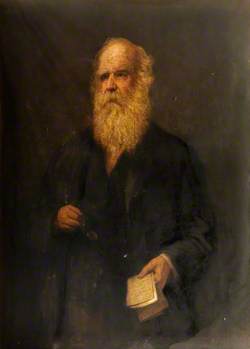
During the 19th century, Sir Smith Child was the most generous philanthropist in North Staffordshire. He used his vast wealth to support hospitals, build schools and churches, fight poverty and help handicapped children.
Although many historians think that his family name was Smith Child, it wasn’t. Smith was his Christian name and Smith was his surname. Smith Child was born at Newfield Hall, Tunstall, on 5 March 1808. His grandfather was Admiral Smith Child, who was a partner in Child & Clive. The firm owned Newfield Pottery and Clanway Colliery, where it mined coal and ironstone.
Smith’s parents were John George and Elizabeth Child, née Parsons. When his father died in 1811, he became heir to the Newfield estate and other estates owned by his grandfather.
Smith was educated at St. John’s College, Cambridge.
On 28 January 1835, he married Sarah Hill, an heiress, at Fulford Church. The couple had three children – two boys and a girl. The family lived at Newfield Hall until 1841, when they moved to Rownall Hall, Wetley. Sarah’s father, Richard Clarke Hill, who owned Stallington Hall, died in 1853, and the Childs decided to live there.
Smith took a keen interest in politics. He was a Conservative. In 1851, he became the Member of Parliament for North Staffordshire and held the seat until 1859.
In 1868, Smith was made a baronet.
He stood for Parliament again. He won the election and was returned to Westminster as the Member for West Staffordshire. A seat he held until 1874, when he retired from politics.
Smith was a philanthropist who took a keen interest in the welfare of disadvantaged individuals. He used his wealth to support local charities that were helping those in need.
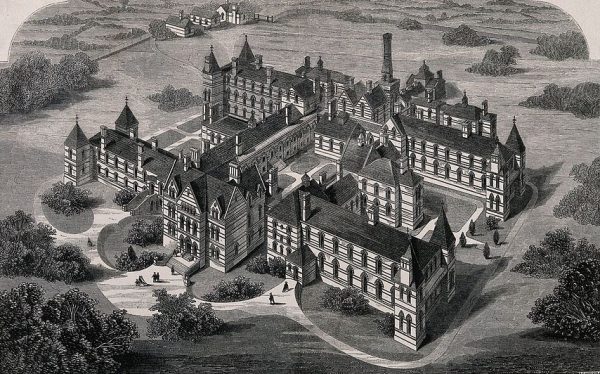
North Staffordshire’s new infirmary at Hartshill. Smith Child gave £1,500 towards the cost.
He provided financial assistance to the North Staffordshire Infirmary at Etruria and made an annual donation to its general fund. Smith was a member of the hospital’s management committee and served as its president on three occasions. As well as making an annual donation, he contributed to the infirmary’s special funds. The management committee decided to close the infirmary at Etruria and build a new one at Hartshill. It launched a public appeal to raise money to finance the project. A building fund was created, and Smith contributed £1,500. When the Victoria Wards were being erected, he gave £250 towards the cost.
After one of his sons died, Smith built and endowed the Smith Hill Child Memorial Hospital. The hospital, erected in the grounds of the infirmary, was designed to care for patients who were incurable. The infirmary did not have the resources to care for incurable patients, and the project was abandoned. The building was used as a nurses’ home until 1877, when it was converted into a children’s hospital.
In 1875, Smith founded a charity that sent patients who were convalescing to convalescent homes. He endowed the charity with £6,500. The money was invested in securities. The income from these securities was used to send hundreds of men, women and children to seaside convalescent homes.
Smith realised that the pottery industry’s future depended on vocational training.
He was one of the founders of the Wedgwood Institute and organised competitions that awarded prizes to industrial designers. To encourage sales representatives to study foreign languages, he gave prizes to those learning to speak French, German or Spanish.
Although he left Newfield Hall in 1841, Smith retained an interest in Tunstall and its citizens’ welfare. He always referred to people living there as his friends and neighbours.
St. Mary’s Church and School in Lime Street, Tunstall. Both the church and the school were demolished many years ago.
His first gift to Tunstall was £100, which was given to help finance the construction of Christ Church. He gave £50 when the church appealed for money to build a National School. The appeal was successful, and the school was built in King Street (Madison Street). When St. Mary’s Church launched an appeal to raise money to build a school, he gave £100.
Smith built the church schools in Goldenhill and created a charity to support all church schools in Tunstall and Goldenhill. He helped finance the construction of St. John’s Church in Goldenhill and endowed it with £1,000.
During the 1880s, he made donations to help regenerate Christ Church and St. Mary’s Church. In 1884, he established a workingman’s temperance club at Calver House in Well Street (Roundwell Street).
Six years later, in 1890, he founded the Tunstall Nursing Association. The association was a charity. It employed trained community nurses, who provided free medical care to patients being treated at home.
Tunstall publicly recognised Smith’s generosity in 1893. The clock tower in Market Square (Tower Square) was erected to make sure that he would never be forgotten.
Smith was to ill to attend the tower’s unveiling ceremony. His health continued to decline. He died three years later and was buried in Fulford churchyard
If you and your family worshipped at St. Mary’s or you were at pupil at the school, please use Comments to share your memories with us.
Sir Smith Child (1808-1896) was written by Betty Martin before she died in 2023. More articles she wrote posted periodically.
Daydreaming is Stoke-on-Trent College’s 2025 end of year art exhibition at the Potteries Museum & Art Gallery. A vibrant mixture of students’ work will take you into a world of surrealism, imagination and different perspectives.
Short films created by students will be shown. A presentation, “The Plastic Ocean”, will raise your awareness of plastic pollution and highlight its impact on marine ecosystems.
William Scarratt remembers his schooldays in Tunstall.
In his book Old Times in the Potteries, published in 1906, William Scarratt recalls his schooldays in Tunstall.
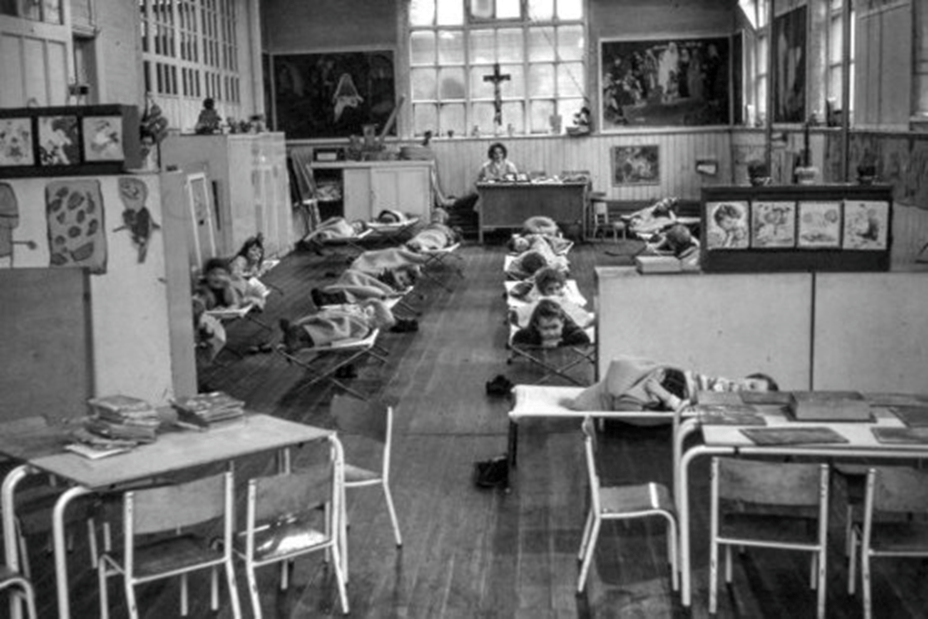
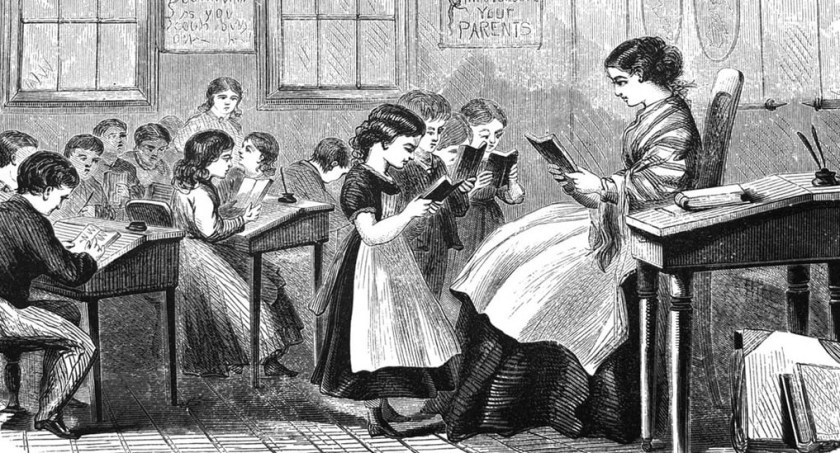
A 19th Century Classroom
There were three schools for primary education in Tunstall. There was one Church of England school (Christ Church National School), two Methodist Church schools and a few dame schools.
In the 1840s, Mr Lambert was the headteacher of the Church of England school I attended. The school was surrounded by fields. I was one of the ‘little ones’ when I saw my first barring out day.
The headteacher came to school at the usual time. He found hewas locked out of the building. The older boys had locked him out. There was great excitement inside the school. The big boys opened the windows.
They held the keys out of a windowon the end of a long pole, which was held so high that he could not reach them.
The headteacher and his staff had been barred out.
Good-natured bantering occurred between the boys and the head until he agreed to give them a holiday.
Ho! The triumph of the victors. The big boys said they were going to keep the doors locked all afternoon if he had refused to give them a holiday.
We had an all-around education that was not restricted to the three Rs. When the school day started, a hymn was sung. My heart filled with joy when we sang, ‘Awake my soul and with the sun’.
After singing the hymn, we learned the creed before lessons began. It was a pleasant school. Sometimes, the curate would take us to an adjacent field for games. I saw my first cricket match played there.
Pupils attended school on Saturday mornings. On Wednesday afternoons, there were recitations at one Methodist school. On Wednesday mornings, pupils who went to Christ Church National School were taken to a service in the church.
Labour claims the government undervalues the importance of cultural education. It asserts that the government’s policies are reducing the number of people qualified to work in Britain’s expanding cultural industries.
Last year, Sheffield Hallam University suspended its degree course in English Literature.
The government believes the “arts and humanities” are low-level courses. They think these courses do not lead to employment. As a result, universities have reduced the number of students taking these subjects.
Since 2010, the number of students taking arts GCSEs has fallen by 40%. The music industry contributed £4bn to Britain’s economy in 2021. Nevertheless, the number of students taking music has fallen by 27%.
Commenting on the government’s policy, the shadow arts minister, Barbara Keeley, is reported as saying:
“The government’s squeeze on arts, culture and creative subjects is self-defeating. The arts clearly help young people and the creative economy. Despite this, arts subjects and experiences have been systematically excluded. They have been downgraded within the state-funded education system.”
She stated that the government was denying young people the opportunity to reach their full potential. It was not right that these subjects were reserved for children whose families afford fee-paying schools.