It’s Friday again…

Another working week is almost over. It will soon be time to close the office for the weekend.

North Staffordshire Heritage welcomed the news that the Heritage at Risk Fund has given £1.5 million to help save Bethesda Church and Burslem’s Indoor Market.

We are still concerned about the future of the former colliery at Chatterley Whitfield.

If Chatterley Whitfield had been on the South Wales Coalfield, it would have been made a World Heritage Site many years ago.

It is not too late to save Chatterley Whitfield and make it an international tourist attraction. Regenerating the site and breathing new life into its derelict buildings would revitalise Tunstall, Burslem, Biddulph and Kidsgrove.

With imagination and initiative, Chatterley Whitfield can be the starting point of a North Staffordshire Tourist Trail. A circular trail linking Middleport Pottery, Burslem’s Historic Town Centre, Ford Green Hall and Biddulph Grange with Mow Cop, the Trent & Mersey Canal and the Harecastle Tunnels at Kidsgrove.

We hope you have an enjoyable weekend. Take care and keep safe. See you again on Monday.

Lancashire Mining Museum given £360,000 to save historic winding house

The Lancashire Mining Museum has been given over £360,000 to save its ‘unique’ winding house.

The Lancashire Mining Museum at Astley, Wigan, has been given about £200,000 by the National Lottery Heritage Fund.

The money will be used to safeguard the ‘unique’ winding house, which is a prominent feature in the area.

More money to save the building has been given by the Association for Industrial Archaeology, the Arts Council, Awards for All, the Pilgrim Trust and Wigan Council, making a total of over £360,000.

Opened in 1908, the colliery closed in 1970. A large number of written and photographic records have survived. The site includes a winding headgear, winding engine, colliery cottages and a miner’s canteen.

More details about the museum can be obtained from: https://lancashireminingmuseum.lexington-staging-site.co.uk/visit-

Chatterley Whitfield

Chatterley Whitfield is a former colliery facing an uncertain future. We believe it merits World Heritage Site Status. Can this historic site be saved? Using the Comments section below, tell us what you think should happen to Chatterley Whitfield.

Josh knows why Staffordshire History Centre needs volunteers

On the first day, I was placed with the Monday Volunteer Group to create boxes and envelopes that will be used in future to store documents. Later in the week, I was also allowed to meet some of the volunteer group that works on the transcription of records in the archive. These helped me understand the importance of volunteers and how they contribute to the centre and finish tasks that the staff can’t focus on. The experiences also allowed me to gain a deeper understanding of the importance of working with volunteers and how vital it is to run a history/archive centre, as without them, many tasks would take far too long to finish.

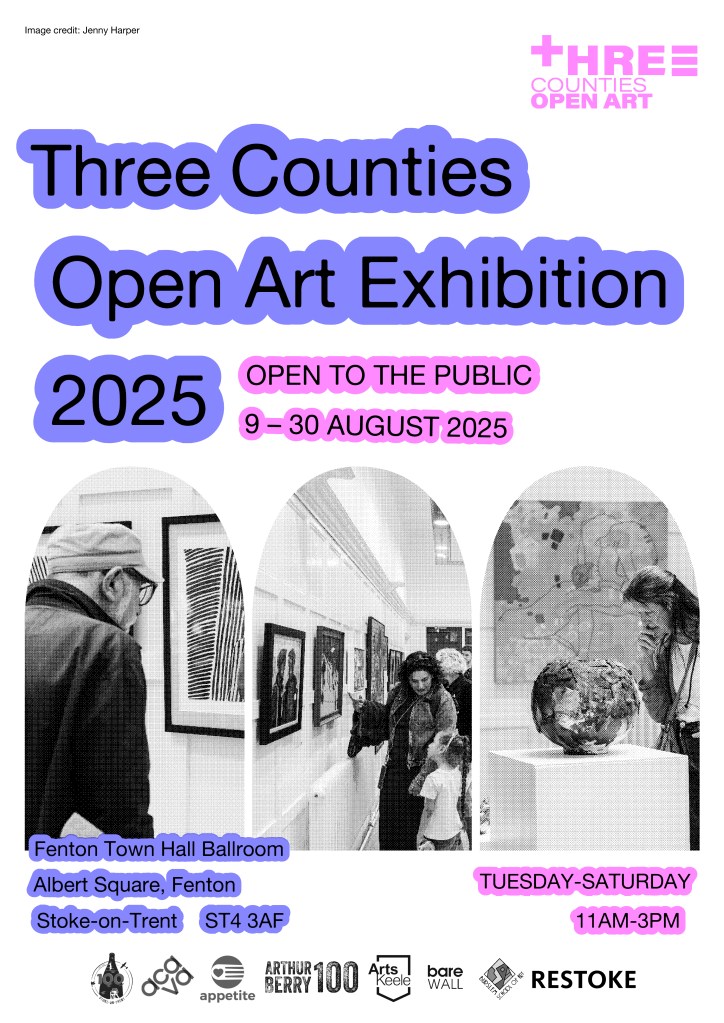
The Three Counties Open Art Exhibition

This year’s Three Counties Open Art Exhibition is being held in the ballroom at Fenton Town Hall. The exhibition runs from Saturday, August 9th, until Saturday, August 30th. It will be open on Tuesdays, Wednesdays, Thursdays, Fridays and Saturdays.

Artists from Staffordshire, Shropshire, and Cheshire are exhibiting their work, which includes paintings, drawings, sculptures, and moving images.

The cafe in the town hall will be open for refreshments and light bites.

More details can be obtained from open.art@keele.ac.uk

The end of a busy week

It’s late Friday afternoon. We have come to the end of a busy week. New apps have been installed on the computer, and specialist scanners have been acquired for the office. A major new research project starts on Monday. It will look at life in the Middle Ages, with special reference to the administration of justice. Have a relaxing and enjoyable weekend. Stay safe.

Staffordshire History Centre – A Volunteer’s View

I am a new volunteer. I have loved local history since I was a child. This place is my idea of a haven. From Lotus Shoes and Evode to William Palmer in the main exhibition space, through to the beautiful rooms of the William Salt Library, our collection spans many centuries, highlighting how Staffordshire has contributed to the UK and the wider world over and over again.

OatcakeWorld: Staffordshire Oatcakes

Staffordshire oatcakes are a traditional British food from the Potteries. They differ from Scottish or Irish oatcakes, which are more biscuit-like. The Staffordshire oatcakes are like pancakes or crepes. They are made from batter that includes oatmeal, which gives them their unique texture and flavour. Other ingredients include whole wheat or plain flour, salt, sugar, yeast, warm water, and warm milk. These ingredients are mixed to form a batter. The batter is cooked like pancakes in a frying pan on a griddle or a bakestone.

Staffordshire oatcakes were originally a staple food for the working class in the Staffordshire region. They were traditionally eaten by workers in the pottery and mining industries. Oatcakes can be eaten hot or cold. Popular fillings include cheese, bacon, sausage, and eggs. When they want a quick snack, many people spread butter and jam on them.

Etruria Industrial Museum

This video showcases Etruria Industrial Museum. The museum is housed in a 19th century steam powered potter’s bone and flint mill. Built in 1857, the mill is a Grade II* listed building.

The museum is at Etruria Junction, where the Caldon Canal joins the Trent & Mersey Canal.

There is a statue of James Brindley (1716–1772) at the junction, which was the site of Etruria Wharf. A tramway ran from the wharf to Hanley/City Centre. The site of Stoke-on-Trent’s first public hospital is near the museum. Built in 1803, the hospital was called the Dispensary and House of Recovery.

Conserving the Clough Hall Estate Plan

Conservation volunteer Janet Wheeler, working with Lisa Williams, the Conservator at Staffordshire’s Archives and Heritage Service, conserved a plan of the Clough Hall Estate.

Their aim was to make the plan accessible for public use. 

The paper was very soft and friable, particularly along the folds. The edges, showed significant damage from handling and ingress of water as well as previous storage conditions.  Cleaning the document before repair was a key stage in the process. It allowed the surface fibres to open and release as much dirt as possible. This was done very carefully with a soft brush and a Smoke sponge.