OatcakeWorld: Staffordshire Oatcakes

Staffordshire oatcakes are a traditional British food from the Potteries. They differ from Scottish or Irish oatcakes, which are more biscuit-like. The Staffordshire oatcakes are like pancakes or crepes. They are made from batter that includes oatmeal, which gives them their unique texture and flavour. Other ingredients include whole wheat or plain flour, salt, sugar, yeast, warm water, and warm milk. These ingredients are mixed to form a batter. The batter is cooked like pancakes in a frying pan on a griddle or a bakestone.

Staffordshire oatcakes were originally a staple food for the working class in the Staffordshire region. They were traditionally eaten by workers in the pottery and mining industries. Oatcakes can be eaten hot or cold. Popular fillings include cheese, bacon, sausage, and eggs. When they want a quick snack, many people spread butter and jam on them.

Etruria Industrial Museum

This video showcases Etruria Industrial Museum. The museum is housed in a 19th century steam powered potter’s bone and flint mill. Built in 1857, the mill is a Grade II* listed building.

The museum is at Etruria Junction, where the Caldon Canal joins the Trent & Mersey Canal.

There is a statue of James Brindley (1716–1772) at the junction, which was the site of Etruria Wharf. A tramway ran from the wharf to Hanley/City Centre. The site of Stoke-on-Trent’s first public hospital is near the museum. Built in 1803, the hospital was called the Dispensary and House of Recovery.

Conserving the Clough Hall Estate Plan

Conservation volunteer Janet Wheeler, working with Lisa Williams, the Conservator at Staffordshire’s Archives and Heritage Service, conserved a plan of the Clough Hall Estate.

Their aim was to make the plan accessible for public use. 

The paper was very soft and friable, particularly along the folds. The edges, showed significant damage from handling and ingress of water as well as previous storage conditions.  Cleaning the document before repair was a key stage in the process. It allowed the surface fibres to open and release as much dirt as possible. This was done very carefully with a soft brush and a Smoke sponge.  

Llandudno

Llandudno is a popular seaside resort on the North Wales Coast. In the 20th century, many Potters and their families went to Llandudno during Wakes Week for their annual summer holiday. If you went to Llandudno for your summer holiday, please use the Comments Section to tell us about your holiday.

Daydreaming at the Potteries Museum & Art Gallery

Daydreaming is Stoke-on-Trent College’s 2025 end of year art exhibition at the Potteries Museum & Art Gallery. A vibrant mixture of students’ work will take you into a world of surrealism, imagination and different perspectives.

Short films created by students will be shown. A presentation, “The Plastic Ocean”, will raise your awareness of plastic pollution and highlight its impact on marine ecosystems.

The exhibition runs until Sunday, 31st August.

Work Experience at the History Centre

“I enjoy history on every level imaginable, and this experience has only enhanced my adoration.  This work experience was everything I hoped it would be and more, it showed me the ins and outs of running a history centre whilst giving me hands-on experience with actual artifacts and interacting with customers.”

The History of Women’s Football in England

In 1895, the first known women’s association football team, the British Ladies Football Club, was formed in London. Nettie Honeyball was the team’s captain, and Lady Florence Dixie (a Scottish aristocrat, writer and feminist) was the club’s patron.

Our photograph shows a ladies’ football team in the 1950s.

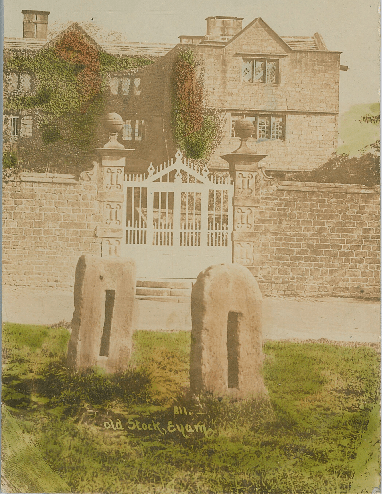
Tomato to the Face: The Use of Stocks in Derbyshire

There were two sets of stocks in Tunstall in the 1840s. One set was in front of the steps leading to the market hall on the ground floor of the Courthouse in Market Square (Tower Square). The other set of stocks was outside the Police Station in High Street.

tameracarrington's avatarBuxton Museum and Art Gallery

As a Museum Assistant who once got sent outsideof her primary school classroom for making a full stop too big, I am well-versed with just and fair punishment. With this in mind, this blog will be exploring the past use of stocks in towns and villages near Buxton to deter misbehaviour and facilitate punishment.

Derbyshire is home to several village stocks,scattered throughout its picturesque villages. The stocks at Chapel-en-le-Frith, for instance, are said to date from the Cromwellian period and are located on the town’s historic Market Place. The stocks currently viewable to visitors and residents, however, date from the eighteenth century. As the stocks are made from woodthey are naturally subject to decay and rotting, thus have been replaced overtime.

Photograph of the Old Stocks at Chapel-en-le-Frith. Acc. No. DERSB : PC 436.

Since the medieval period to the nineteenth century, stocks have been used to…

View original post 507 more words

Hanley’s First Library

A bookseller, James Strapham, opened Hanley’s first library in 1790.

Called the Pottery Subscription Library, the library was a commercial venture which James ran from his bookshop. He charged customers two guineas to join the library and a guinea a year to borrow books.

In 1796, James sold the bookshop and the library to John Allbut, whose son Thomas acquired them at the beginning of the 19th century. Thomas ran the library until he retired on December 31st, 1852 when its books were transferred to the Mechanics Institution’s library in Gitana Street.

Shortly afterwards, the Mechanics Institution left Gitana Street and moved to new premises in Pall Mall.

Can You Help Sandra?

How Did Pickle Onion Entry Get Its Name?

Sandra, who grew up in Tunstall during the 1970s, remembers Pickle Onion Entry. The entry ran on the north side of a pottery factory in Scotia Road to Wardle Street, a cul-de-sac leading to The Boulevard.

Sandra can’t remember the factory’s name. She recalls that Barbers Palace backed onto the north side of the entry which was long and straight with high walls on either side. If you can remember the entry or know how it got its name, please get in touch and share your memories.

Our email address is northstaffordshireheritage@outlook.com

The name Pickle Onion Entry must be unique.

Like Sandra, we should like to know how the entry got its name and look forward to receiving your emails.

Note: Sandra contacted us a year ago. Although people can remember the entry no one has been able to tell us how it got its name. Can you solve the mystery?