Research in North Staffordshire led us to believe that Smith’s parents, John George Child and Elizabeth Child (nee Parsons), were married in 1806 at St. Margaret’s Church, Wolstanton.
Recent research into Elizabeth’s life shows that the couple were married in the United States of America.
Elizabeth was born in Wiscasset, Lincoln County, Maine, in 1780.
American records* show that John and Elizabeth were married in Wiscasset, where John was living at the time, by the Rev Hezekiah Packard on 15 May 1806.
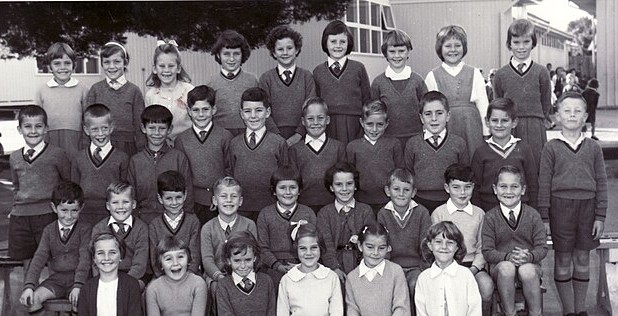
We all remember that one teacher who made a lasting difference – the one who inspired us, encouraged us, or simply made school a little brighter. Maybe they sparked your love of a subject, believed in you when you doubted yourself, or had a way of making lessons fun.
We’d love to hear your stories. Tell us about your favourite teacher and what made them special. Was it their kindness, their humour, their passion for teaching, or something they did that you’ve never forgotten?
Your memories can help celebrate the people who shaped our lives and remind us of the power a great teacher can have.
If you went to school in North Staffordshire, you can share your story in Leave a Comment below. Alternatively, you can email it, with or without images, to northstaffordshireheritage@outlook.com
We are sure everyone will enjoy reading your memories of your favourite teacher.
In 1986, Joan Baggaley, who wrote The City of the Six Towns: Stoke-on-Trent and Seven Pillars of Wisdom, visited Tunstall. She had come to see The Coach and Horses, an inn on Oldcourt Street, which overlooked the Chatterley Valley.
On the opposite side of the street, there were houses, bungalows and a school. This side of the street had recently been developed. There were still traces of the terraced houses that had been demolished, along with the cobblestone back entries behind them.
The sun was shining, and Joan looked westward across the valley. In the distance, she saw Bradwell Wood and the hills behind Newcastle.
The inn was open, and Joan was welcomed by the landlady, who took her inside. They went into the lounge, which had been created when two small rooms had been enlarged.
Many years ago, the inn had been a coach house and a resting place for horses. On the north side of the inn, there was a large yard with stables and a hay loft. The stables and the hay loft had been converted into a room where dances and wedding receptions were held. On the east side of the inn was a former school building that was occupied by social services.
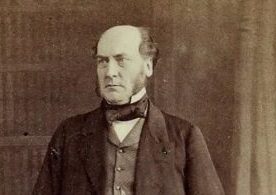
George Gilbert Scott (1811-1878) was one of England’s leading architects. Between 1835 and 1845, George and his partner, William Moffatt, designed over forty workhouses.
One of Victorian England’s leading architects, George Gilbert Scott, designed Newcastle-under-Lyme workhouse.
Born at Gawcott in Buckinghamshire on July 13th, 1811, George was the third son of the Rev. Thomas Scott and his wife, Euphemia.
Educated at home by his father, George became an architect. He went into partnership with William Bonython Moffatt. The firm specialised in building workhouses, and George designed the Newcastle workhouse to accommodate 300 inmates.
Newcastle-under-Lyme workhouse opened in 1840. An Elizabethan-style building in Keele Road, it cost £6,000. The workhouse was enlarged a few years later when an infirmary, workshops and a laundry were erected. Casual wards for vagrants were constructed in 1878.
During the 1880s, a hospital was built on land behind the workhouse.
Newcastle-under-Lyme is a historic market town rich in heritage and modern charm. This video shows the winding streets of the town centre, where markets have been held for centuries, Queen’s Gardens and Brampton Park. It is a vibrant town, where tradition blends with innovation.
Newcastle-under-Lyme will help to make North Staffordshire’s Industrial Landscape a World Heritage Site.
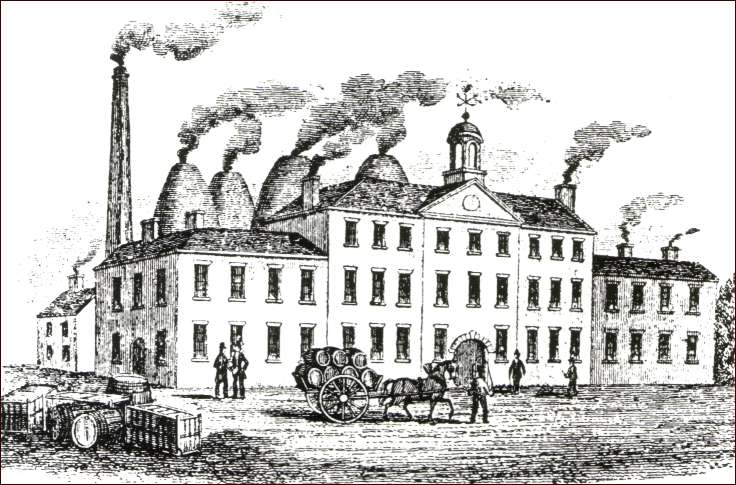
This image shows Wood & Caldwell’s Fountain Place Works in Burslem. In the 1790s the company made Staffordshire figures, earthenware and stoneware. Enoch Wood and James Caldwell were partners in the firm.The firm owned Bycars Colliery, where it mined coal to fire the factory’s bottle ovens and kilns.
A Description of the Country From Thirty to Forty Miles Round Manchester, a book published in 1795, was compiled by Dr John Aikin. The book tells us about Newcastle-under-Lyme and North Staffordshire’s pottery towns and villages in the 179os
This edited extract from the book describes Burslem and Cobridge as they were in the 1790s.
Burslem
Burslemis the home of North Staffordshire’s pottery industry. Earthenware has been made there for many centuries. Dr Plot, in his History of Staffordshire, written in 1686, said that the factories making pottery in Burslem were the largest in the district…
The town has two weekly markets. A large market is held on Monday, and a smaller one is held on Saturday. Four or five years ago, cattle markets were established. These markets are well attended by cattle dealers and butchers.
Burslem is a parish in its own right. The parish church, St John’s, has a good organ. The church has recently been enlarged and regenerated.
There are a large number of [Wesleyan] Methodists in the district. The Methodists have built a large chapel in Burslem and erected chapels in several pottery towns and villages. There are many other religious sects in the Potteries. Few areas have such a great diversity of sincerely held religious opinions.
Cobridge
Cobridgeis an industrial village where earthenware is made. It is partly in Burslem Parish and partly in Stoke Parish.
Staffordshire History Festival celebrates the county’s rich and diverse heritage. During the two-month festival, which ends on October 31, local history talks and exhibitions will be held at libraries and heritage sites throughout Staffordshire.
Councillor Hayley Coles, Cabinet Member for Communities and Culture said:
The Staffordshire History Festival is a brilliant chance to explore the stories that shape our communities. Whether you are interested in exhibitions, film screenings or hands-on workshops, there’s something for everyone. No matter where you are in the county, history is just around the corner – so get involved and discover what makes Staffordshire so truly special.
An exhibition, Staffordshire and Slavery, opens on September 16 at the Staffordshire History Centre. A film about the life of Fanny Deakin will be shown at Newcastle Kidsgrove and Biddulph Libraries. For more details of these and other events, please contact the Staffordshire History Centre or your local library.
A special talk on the Bottle Ovens of Staffordshire will be given by Phil Rowley, a local historian and ceramics expert. The talk will take place at Newcastle-under-Lyme’s Brampton Museum on Sunday 7 September at 2.00 pm. Admission £5. For more details, please contact the Museum.
Two Film Shows at the Brampton Museum in September, telling the story of North Staffordshire’s Pottery and Textile Industries.
There are two film shows at Newcastle-under-Lyme’s Brampton Museum in September.
The first film, The Pottery Industry – 20th Century to Today, will be shown on Sunday, 14 September at 2.00 pm. Admission Free.
The second film, Leek and the Story of Silk Twisting, will be shown on Thursday, 18 September at 2.30 pm. Admission £5. The film marks the start of an autumn programme called Textile Take Over at the Brampton Museum. The programme will include exhibitions, talks and events relating to North Staffordshire’s textile industry.
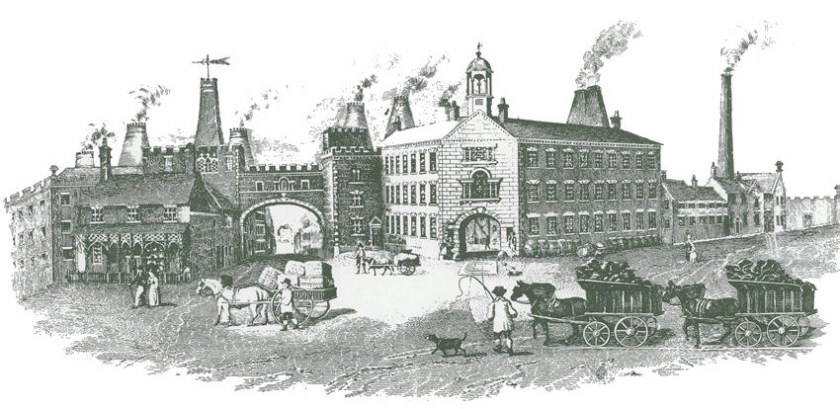
The sketch above shows William Adams’ Greengates Pottery in Tunstall. The factory built between 1779 and 1781 was one of the largest in the Potteries. It manufactured tableware, stoneware and jasper ornaments for the luxury market. William Chaffer, the author of ‘Marks and Monograms on Pottery and Porcelain’, said some of the jasper made at Greengates was ‘equal to, if not superior’ to that produced by Josiah Wedgwood at Etruria.
A Description of the Country From Thirty to Forty Miles Round Manchester, a book published in 1795, was compiled by Dr John Aikin. The book tells us about Newcastle-under-Lyme and North Staffordshire’s pottery towns and villages in the 1790s.
This edited extract from the book describes Tunstall as it was in the 1790s.
Tunstall is the pleasantest village in the Potteries. It stands on high ground, commanding extensive views of the surrounding countryside. Pottery manufacturers in the village produce good-quality ware and do considerable business. There was a church here, and human bones have been dug up. But such is the effect of time that no trace of either the church or the bones remains today. A small chapel has recently been built here. There is a considerable number of brick and tile works. They use local clay to make blue bricks, which look as well on the roofs of houses as moderate slate. Tunstall is four miles from Newcastle-under-Lyme and nine miles from Congleton. The turnpike road from Lawton to Newcastle-under-Lyme runs through Tunstall, where the turnpike road to Bosley in Cheshire begins [near the Wheatsheaf Inn].

 North Staffordshire Heritage