Chatterley Whitfield is a former colliery facing an uncertain future. We believe it merits World Heritage Site Status. Can this historic site be saved? Using the Comments section below, tell us what you think should happen to Chatterley Whitfield.
Category: North Staffordshire Coalfield
Newfield and Smithfield in the 1790s
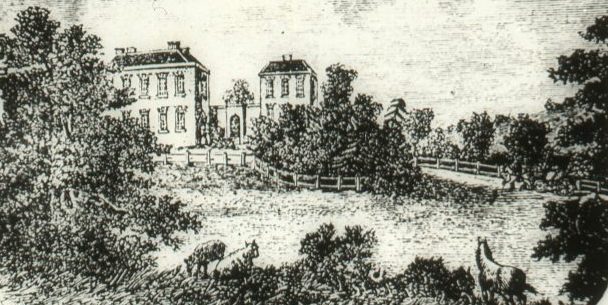
Smithfield Hall, which is shown above, was built in 1791 by Burslem pottery manufacturer, Theophilus Smith. In 1793, he built an industrial hamlet called Smithfield near the hall. Theophilus was declared bankrupt in 1800. He attempted to murder John Wainwright and was remanded to Stafford prison to await trial. When his wife and daughter visited him there, he murdered them and committed suicide. In 1801, the hall was bought by Jesse Breeze, who renamed it Greenfield Hall.
A Description of the Country From Thirty to Forty Miles Round Manchester, is a book published in 1795, compiled by Dr John Aikin. It describes Newcastle-under-Lyme and North Staffordshire’s pottery towns and villages as they were in the 1790s.
This edited extract from the book tells us what Newfield and Smithfield, two hamlets in the Township of Tunstall, were like in the 1790s.Newfield
Newfield is well situated for manufacturing purposes because there is plenty of coal nearby.
The hamlet belongs to Admiral Smith Child. He has a handsome estate there and lives at Newfield Hall. Smith Child owns Newfield Pottery. He is unlikely to allow more factories to be built in the hamlet in the foreseeable future.
Smithfield is the best place in the Potteries to manufacture earthenware. There are several strata of coal and clay, which are needed to make pottery. Smithfield belongs to Theophilus Smith. He owns a pottery and coal mines there. It is unlikely that there will be further industrial development in the hamlet.
OatcakeWorld: Staffordshire Oatcakes
Staffordshire oatcakes are a traditional British food from the Potteries. They differ from Scottish or Irish oatcakes, which are more biscuit-like. The Staffordshire oatcakes are like pancakes or crepes. They are made from batter that includes oatmeal, which gives them their unique texture and flavour. Other ingredients include whole wheat or plain flour, salt, sugar, yeast, warm water, and warm milk. These ingredients are mixed to form a batter. The batter is cooked like pancakes in a frying pan on a griddle or a bakestone.
Staffordshire oatcakes were originally a staple food for the working class in the Staffordshire region. They were traditionally eaten by workers in the pottery and mining industries. Oatcakes can be eaten hot or cold. Popular fillings include cheese, bacon, sausage, and eggs. When they want a quick snack, many people spread butter and jam on them.
Daimler buses ran from Mow Cop to Tunstall
After the First World War, former soldiers and sailors set up small bus companies and ran bus services from towns and villages on the North Staffordshire Coalfield to Tunstall.

In 1914, the Potteries Electric Traction Company started running bus services from Biddulph and Mow Cop to Tunstall, using forty-horsepower Daimler Buses.
During the First World War (1914-1918), the government requisitioned the buses and services were suspended. The buses were sent to France, where they were used to take troops to the front line. When the war ended, the buses were returned to the company, and the services resumed.
After the First World War, former soldiers and sailors formed bus companies. The companies ran services to Tunstall that competed with those run by the Potteries Motor Traction Company.
Rowbotham’s was a bus company with a garage in Sands Road, Harriseahead. The firm ran a service from The Bank, a hamlet in South Cheshire, to Tunstall. Its buses ran through Mount Pleasant, Dales Green, The Rookery, Whitehill, Newchapel Packmoor, Chell and Pitts Hill.
The Potteries Electric Traction Company operated another service from The Bank to Tunstall. Its route ran through Mount Pleasant, Dales Green, The Rookery, Whitehill, Kidsgrove, Goldenhill and Sandyford.
Stanier’s was a bus company based in Newchapel. It ran a service from Mow Cop to Tunstall via Harriseahead, Newchapel, Packmoor, Chell and Pitts Hill.
 North Staffordshire Heritage