Historic Tunstall: Absalom Read Wood (1851-1922)

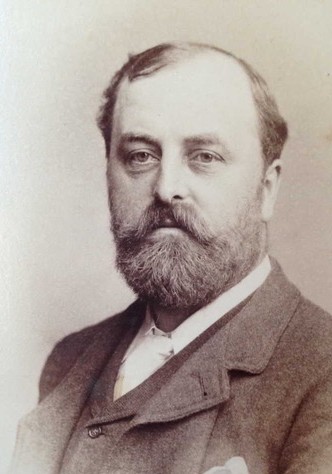
Absalom Reade Wood was one of North Staffordshire’s leading Architects. He created Tunstall’s unique Victorian Civic Centre.

When Absalom Reade Wood died in 1922, North Staffordshire lost one of its leading architects. During his long life, Absalom had created numerous churches and chapels, houses and factories, schools and civic buildings throughout the district.

He was born at Burslem in 1851, and attended the town’s Wesleyan Day School. When he left school, Absalom was articled to Shelton architect Robert Scrivener.

Absalom was a small man, with ‘a comfortable, neat figure and a short beard’ and a warm, friendly personality that gave him an optimistic outlook on life. He was a keen sportsman who enjoyed cycling, swimming, and playing cricket, tennis, and golf.

He became an architect during the early 1870s and established his own practice in Tunstall in 1874.

A year later, Absalom became the town’s part-time surveyor, a position he held until the creation of the County Borough of Stoke-on-Trent in 1910. Working closely with John Nash Peake and the town clerk, Arthur Llewellyn, he modernised Tunstall’s market hall. He created the town’s unique late Victorian Civic Centre containing his piece de resistance the town hall, which opened in 1875.

Other civic buildings Absalom designed included Kidsgrove’s town hall and Longton’s Sutherland Institute. Burslem School Board employed him to build Jackfield, Park Road and Longport Schools.

Absalom married Mary Holdcroft, the daughter of pottery manufacturer William Holdcroft. The couple had five children – two boys and three girls. The Wood family were Methodist. They worshipped at Hill Top Methodist Church in Burslem. In 1889, Absalom was employed to enlarge and modernise the church.

Absalom’s best-known building in Burslem is the Art School in Queen Street. Situated on land opposite the Wedgwood Institute, which was given by Thomas Hulme, the school cost £8,500. The school opened in 1907, and one of its most famous alumni was pottery designer Clarice Cliff.

Clarice was born in Meir Street, Tunstall, on 20 January 1899. Before going to Burslem Art School, she attended High Street School, Tunstall, Summerbank Road School, Tunstall and Tunstall Art School, which was housed in the Jubilee Buildings in Station Road (now The Boulevard). High Street and Summerbank Road Schools were designed by Absalom, as were the Jubilee Buildings.

Absalom died at his home Hillcrest, Woodland Avenue, Wolstanton on 21 December 1922.

Absalom Reade Wood (1851-1922) is one of a series of articles about North Staffordshire’s history written by Betty Martin before her death. Other articles from the series will be posted from time to time.
A Walk from Kidsgrove to Biddulph via Mow Cop

Mow Cop’s craggy high point is crowned with Mow Cop Castle, an artfully ruined folly, constructed on the instruction of Randle Wilbraham, the lord of nearby Rode Hall ,in 1754. Since 1937 the castle and the gritstone rocks it sits upon have been owned and managed by the National Trust. These days the site is a country park.

Beneath Mow Cop Castle, it is very evident where gritstone was quarried over the centuries. These days, the village appears to be a quietly affluent place, but historically, quarrying meant that it was once an industrial hub.

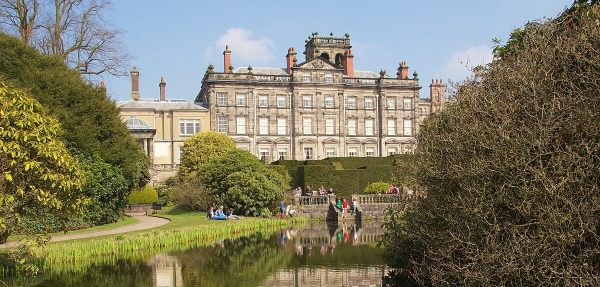
Mow Cop, the birthplace of the Primitive Methodist Church, and Biddulph Grange Gardens will help to make North Staffordshire’s Industrial Landscape a World Heritage Site.

Kidsgrove: Images of bygone days

Bygone Kidsgrove

The Trent & Mersey Canal and the Harecastle Tunnels will help to make North Staffordshire’s Industrial Landscape a World Heritage Site.

Staffordshire History Festival

Staffordshire History Festival celebrates the county’s rich and diverse heritage. During the two-month festival, which ends on October 31, local history talks and exhibitions will be held at libraries and heritage sites throughout Staffordshire.

Councillor Hayley Coles, Cabinet Member for Communities and Culture said:

The Staffordshire History Festival is a brilliant chance to explore the stories that shape our communities. Whether you are interested in exhibitions, film screenings or hands-on workshops, there’s something for everyone. No matter where you are in the county, history is just around the corner – so get involved and discover what makes Staffordshire so truly special.

An exhibition, Staffordshire and Slavery, opens on September 16 at the Staffordshire History Centre. A film about the life of Fanny Deakin will be shown at Newcastle Kidsgrove and Biddulph Libraries. For more details of these and other events, please contact the Staffordshire History Centre or your local library.

Friday NewsDesk

Friday NewsDesk is a new regular weekly post that will tell you about North Staffordshire Heritage’s activities.

Worldwide interest has been shown in Chatterley Whitfield’s future. The creation of a circular heritage tourist trail linking Burslem, Ford Green Hall, Chatterley Whitfield and Biddulph Grange with Mow Cop and Kidsgrove.

North Staffordshire Heritage is continuing to research Mercia and its legal system. This is a long-term project, which is expected to last for eight or nine months.

Our new series of posts about the Township of Tunstall starts in September, and we will give you more details at the end of August.

We hope you all have a relaxing and enjoyable weekend. Take care and stay safe. We’ll see you again on Tuesday.

Image of Biddulph Grange Creative Commons Attribution-Share Alike 4.0 International license. Photograph by Mike Peel (www.mikepeel.net)

It’s Friday again…

Another working week is almost over. It will soon be time to close the office for the weekend.

North Staffordshire Heritage welcomed the news that the Heritage at Risk Fund has given £1.5 million to help save Bethesda Church and Burslem’s Indoor Market.

We are still concerned about the future of the former colliery at Chatterley Whitfield.

If Chatterley Whitfield had been on the South Wales Coalfield, it would have been made a World Heritage Site many years ago.

It is not too late to save Chatterley Whitfield and make it an international tourist attraction. Regenerating the site and breathing new life into its derelict buildings would revitalise Tunstall, Burslem, Biddulph and Kidsgrove.

With imagination and initiative, Chatterley Whitfield can be the starting point of a North Staffordshire Tourist Trail. A circular trail linking Middleport Pottery, Burslem’s Historic Town Centre, Ford Green Hall and Biddulph Grange with Mow Cop, the Trent & Mersey Canal and the Harecastle Tunnels at Kidsgrove.

We hope you have an enjoyable weekend. Take care and keep safe. See you again on Monday.

Memories of Kidsgrove: Share Your Stories

How many buildings and places featured in this video can you remember? If you lived in Kidsgrove, please share your memories with us in the Comments section below. Let us know about your family and friends, the schools you went to, the games you played and your hobbies. Tell us about your first job and your working life.

Conserving the Clough Hall Estate Plan

Conservation volunteer Janet Wheeler, working with Lisa Williams, the Conservator at Staffordshire’s Archives and Heritage Service, conserved a plan of the Clough Hall Estate.

Their aim was to make the plan accessible for public use. 

The paper was very soft and friable, particularly along the folds. The edges, showed significant damage from handling and ingress of water as well as previous storage conditions.  Cleaning the document before repair was a key stage in the process. It allowed the surface fibres to open and release as much dirt as possible. This was done very carefully with a soft brush and a Smoke sponge.  

A Polluted Stream at Birchenwood

Showing a stream polluted by water from old coal and iron stone mines and fly tipping next to the route followed by the North Staffordshire Railway's 'loop line' at Birchenwood nr. Kidsgrove (1994).

This image was taken at Birchenwood near Kidsgrove in 1994. It shows a polluted stream. The stream ran next to the route followed by the North Staffordshire Railway Company’s ‘loop line’. The line closed in the 1960s. It ran from Etruria to Kidsgrove. There were stations at Hanley, Waterloo Road, Cobridge, Burslem, Tunstall, Pitts Hill and Goldenhill.