Two Film Shows at the Brampton Museum in September, telling the story of North Staffordshire’s Pottery and Textile Industries.
There are two film shows at Newcastle-under-Lyme’s Brampton Museum in September.
The first film, The Pottery Industry – 20th Century to Today, will be shown on Sunday, 14 September at 2.00 pm. Admission Free.
The second film, Leek and the Story of Silk Twisting, will be shown on Thursday, 18 September at 2.30 pm. Admission £5. The film marks the start of an autumn programme called Textile Take Over at the Brampton Museum. The programme will include exhibitions, talks and events relating to North Staffordshire’s textile industry.
Friday NewsDesk is a new regular weekly post that will tell you about North Staffordshire Heritage’s activities.
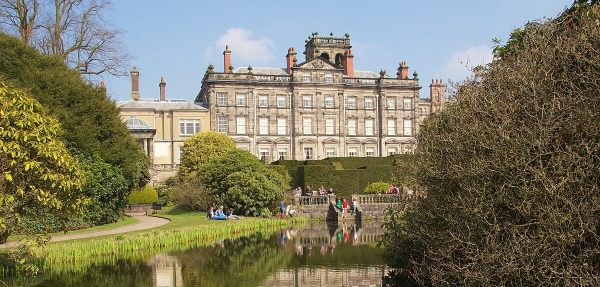
Worldwide interest has been shown in Chatterley Whitfield’s future. The creation of a circular heritage tourist trail linking Burslem, Ford Green Hall, Chatterley Whitfield and Biddulph Grange with Mow Cop and Kidsgrove.
North Staffordshire Heritage is continuing to research Mercia and its legal system. This is a long-term project, which is expected to last for eight or nine months.
Our new series of posts about the Township of Tunstall starts in September, and we will give you more details at the end of August.
We hope you all have a relaxing and enjoyable weekend. Take care and stay safe. We’ll see you again on Tuesday.
Something had indeed gone badly wrong. High in the sky above North Staffordshire, a scene of high drama was unfolding. It was away from the eyes of the assembled spectators. Even the excitement and danger of a normal parachute drop paled in comparison.
Another working week is almost over. It will soon be time to close the office for the weekend.
North Staffordshire Heritage welcomed the news that the Heritage at Risk Fund has given £1.5 million to help save Bethesda Church and Burslem’s Indoor Market.
We are still concerned about the future of the former colliery at Chatterley Whitfield.
It is not too late to save Chatterley Whitfield and make it an international tourist attraction. Regenerating the site and breathing new life into its derelict buildings would revitalise Tunstall, Burslem, Biddulph and Kidsgrove.
With imagination and initiative, Chatterley Whitfield can be the starting point of a North Staffordshire Tourist Trail. A circular trail linking Middleport Pottery, Burslem’s Historic Town Centre, Ford Green Hall and Biddulph Grange with Mow Cop, the Trent & Mersey Canal and the Harecastle Tunnels at Kidsgrove.
We hope you have an enjoyable weekend. Take care and keep safe. See you again on Monday.
Regeneration experts in the Potteries are delighted that the Heritage at Risk Fund has given £1.5 million to help save Burslem’s Indoor Heritage Market and historic Bethesda Church in the City Centre.
The money will be used to repair the buildings.
If these buildings can be saved, they will make a significant contribution to the growth of North Staffordshire’s heritage tourist economy.
Chatterley Whitfield is a former colliery facing an uncertain future. We believe it merits World Heritage Site Status. Can this historic site be saved? Using the Comments section below, tell us what you think should happen to Chatterley Whitfield.
How many buildings and places featured in this video can you remember? If you lived in Kidsgrove, please share your memories with us in the Comments section below. Let us know about your family and friends, the schools you went to, the games you played and your hobbies. Tell us about your first job and your working life.
Smithfield Hall, which is shown above, was built in 1791 by Burslem pottery manufacturer, Theophilus Smith. In 1793, he built an industrial hamlet called Smithfield near the hall. Theophilus was declared bankrupt in 1800. He attempted to murder John Wainwright and was remanded to Stafford prison to await trial. When his wife and daughter visited him there, he murdered them and committed suicide. In 1801, the hall was bought by Jesse Breeze, who renamed it Greenfield Hall.
A Description of the Country From Thirty to Forty Miles Round Manchester, is a book published in 1795, compiled by Dr John Aikin. It describes Newcastle-under-Lyme and North Staffordshire’s pottery towns and villages as they were in the 1790s.
This edited extract from the book tells us what Newfield and Smithfield, two hamlets in the Township of Tunstall, were like in the 1790s.Newfield
Newfield is well situated for manufacturing purposes because there is plenty of coal nearby.
The hamlet belongs to Admiral Smith Child. He has a handsome estate there and lives at Newfield Hall. Smith Child owns Newfield Pottery. He is unlikely to allow more factories to be built in the hamlet in the foreseeable future.
Smithfield is the best place in the Potteries to manufacture earthenware. There are several strata of coal and clay, which are needed to make pottery. Smithfield belongs to Theophilus Smith. He owns a pottery and coal mines there. It is unlikely that there will be further industrial development in the hamlet.
In the 19th century, Stallington Hall was the home of Sir Smith Child. He was born at Newfield Hall in Tunstall. During his long life, Smith Child gave financial support to the North Staffordshire Infirmary and charities in Tunstall. He became North Staffordshire’s most generous philanthropist. The clock tower in Tunstall’s Tower Square was erected to guarantee that his generosity would not be forgotten. Smith Child died at Stallington Hall on 27 March 1896. He was buried in Fulford churchyard.