How many buildings and places featured in this video can you remember? If you lived in Kidsgrove, please share your memories with us in the Comments section below. Let us know about your family and friends, the schools you went to, the games you played and your hobbies. Tell us about your first job and your working life.
Category: North Staffordshire
Newfield and Smithfield in the 1790s
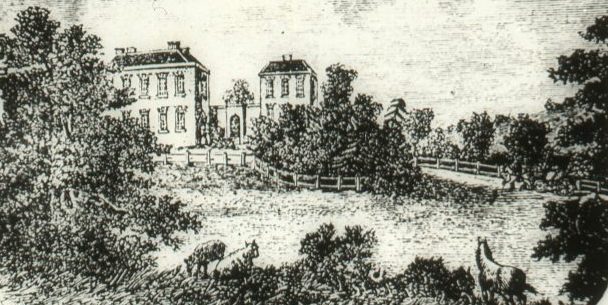
Smithfield Hall, which is shown above, was built in 1791 by Burslem pottery manufacturer, Theophilus Smith. In 1793, he built an industrial hamlet called Smithfield near the hall. Theophilus was declared bankrupt in 1800. He attempted to murder John Wainwright and was remanded to Stafford prison to await trial. When his wife and daughter visited him there, he murdered them and committed suicide. In 1801, the hall was bought by Jesse Breeze, who renamed it Greenfield Hall.
A Description of the Country From Thirty to Forty Miles Round Manchester, is a book published in 1795, compiled by Dr John Aikin. It describes Newcastle-under-Lyme and North Staffordshire’s pottery towns and villages as they were in the 1790s.
This edited extract from the book tells us what Newfield and Smithfield, two hamlets in the Township of Tunstall, were like in the 1790s.Newfield
Newfield is well situated for manufacturing purposes because there is plenty of coal nearby.
The hamlet belongs to Admiral Smith Child. He has a handsome estate there and lives at Newfield Hall. Smith Child owns Newfield Pottery. He is unlikely to allow more factories to be built in the hamlet in the foreseeable future.
Smithfield is the best place in the Potteries to manufacture earthenware. There are several strata of coal and clay, which are needed to make pottery. Smithfield belongs to Theophilus Smith. He owns a pottery and coal mines there. It is unlikely that there will be further industrial development in the hamlet.
An aerial view of Stallington Hall Hospital
In the 19th century, Stallington Hall was the home of Sir Smith Child. He was born at Newfield Hall in Tunstall. During his long life, Smith Child gave financial support to the North Staffordshire Infirmary and charities in Tunstall. He became North Staffordshire’s most generous philanthropist. The clock tower in Tunstall’s Tower Square was erected to make sure that his generosity would not be forgotten. Smith Child died at Stallington Hall on 27 March 1896. He was buried in Fulford churchyard.
18th Century potters left North Staffordshire to work in Liverpool
My story begins with a journey from Burslem in Staffordshire to Toxteth in Liverpool in November 1796.
To read the post, press the title A Herculaneum Potter (above).
Jane Austen Writes About Wedgwood Ware
In her letters Jane writes of visiting the Wedgwood showrooms in London and in one gleeful missive to her sister Cassandra in June 1811, she writes ‘I had the pleasure of receiving, unpacking, and approving our Wedgwood ware’ and anticipates the arrival of a new Wedgwood breakfast set for their mother, ‘I hope it will come by the waggon to-morrow; it is certainly what we want, and I long to know what it is like’.
OatcakeWorld: Staffordshire Oatcakes
Staffordshire oatcakes are a traditional British food from the Potteries. They differ from Scottish or Irish oatcakes, which are more biscuit-like. The Staffordshire oatcakes are like pancakes or crepes. They are made from batter that includes oatmeal, which gives them their unique texture and flavour. Other ingredients include whole wheat or plain flour, salt, sugar, yeast, warm water, and warm milk. These ingredients are mixed to form a batter. The batter is cooked like pancakes in a frying pan on a griddle or a bakestone.
Staffordshire oatcakes were originally a staple food for the working class in the Staffordshire region. They were traditionally eaten by workers in the pottery and mining industries. Oatcakes can be eaten hot or cold. Popular fillings include cheese, bacon, sausage, and eggs. When they want a quick snack, many people spread butter and jam on them.
Conserving the Clough Hall Estate Plan
Conservation volunteer Janet Wheeler, working with Lisa Williams, the Conservator at Staffordshire’s Archives and Heritage Service, conserved a plan of the Clough Hall Estate.
Their aim was to make the plan accessible for public use.
The paper was very soft and friable, particularly along the folds. The edges, showed significant damage from handling and ingress of water as well as previous storage conditions. Cleaning the document before repair was a key stage in the process. It allowed the surface fibres to open and release as much dirt as possible. This was done very carefully with a soft brush and a Smoke sponge.
Sir Smith Child (1808-1896)
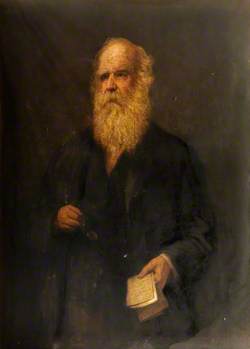
A portrait of Sir Smith Child painted by John Nash Peake.
During the 19th century, Sir Smith Child was the most generous philanthropist in North Staffordshire. He used his vast wealth to support hospitals, build schools and churches, fight poverty and help handicapped children.
Although many historians think that his family name was Smith Child, it wasn’t. Smith was his Christian name and Smith was his surname. Smith Child was born at Newfield Hall, Tunstall, on 5 March 1808. His grandfather was Admiral Smith Child, who was a partner in Child & Clive. The firm owned Newfield Pottery and Clanway Colliery, where it mined coal and ironstone.
Smith’s parents were John George and Elizabeth Child, née Parsons. When his father died in 1811, he became heir to the Newfield estate and other estates owned by his grandfather.
Smith was educated at St. John’s College, Cambridge.
On 28 January 1835, he married Sarah Hill, an heiress, at Fulford Church. The couple had three children – two boys and a girl. The family lived at Newfield Hall until 1841, when they moved to Rownall Hall, Wetley. Sarah’s father, Richard Clarke Hill, who owned Stallington Hall, died in 1853, and the Childs went to live there.
Smith took a keen interest in politics. He was a Conservative. In 1851, he became the Member of Parliament for North Staffordshire and held the seat until 1859.
In 1868, Smith was made a baronet.
He stood for Parliament again. He won the election and was returned to Westminster as the Member for West Staffordshire. A seat he held until 1874, when he retired from politics.
Smith was a philanthropist who took a keen interest in the welfare of disadvantaged individuals. He used his wealth to support local charities that were helping those in need.
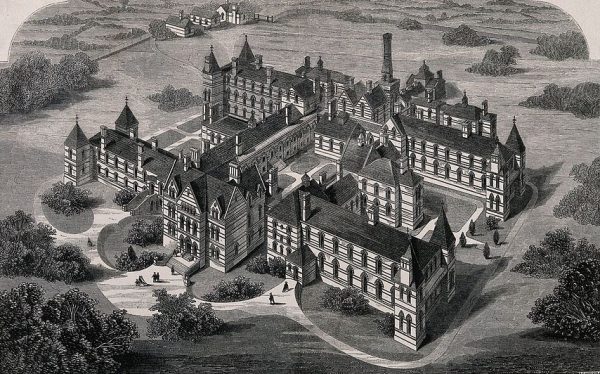
He provided financial assistance to the North Staffordshire Infirmary at Etruria and made an annual donation to its general fund. Smith was a member of the hospital’s management committee and served as its president on three occasions. As well as making an annual donation, he contributed to the infirmary’s special funds. The management committee decided to close the infirmary at Etruria and build a new one at Hartshill. It launched a public appeal to raise money to finance the project. A building fund was created, and Smith contributed £1,500. When the Victoria Wards were being erected, he gave £250 towards the cost.
After one of his sons died, Smith built and endowed the Smith Hill Child Memorial Hospital. The hospital, erected in the grounds of the infirmary, was designed to care for patients who were incurable. The infirmary did not have the resources to care for incurable patients, and the project was abandoned. The building was used as a nurses’ home until 1877, when it was converted into a children’s hospital.
In 1875, Smith founded a charity that sent patients who were convalescing to convalescent homes. He endowed the charity with £6,500. The money was invested in securities. The income from these securities was used to send hundreds of men, women and children to seaside convalescent homes.
Smith realised that the pottery industry’s future depended on vocational training.
He was one of the founders of the Wedgwood Institute and organised competitions that awarded prizes to industrial designers. To encourage sales representatives to study foreign languages, he gave prizes to those learning to speak French, German or Spanish.
Although he left Newfield Hall in 1841, Smith retained an interest in Tunstall and its citizens’ welfare. He always referred to people living there as his friends and neighbours.

His first gift to Tunstall was £100, which was given to help finance the construction of Christ Church. He gave £50 when the church appealed for money to build a National School. The appeal was successful, and the school was built in King Street (Madison Street). When St. Mary’s Church launched an appeal to raise money to build a school, he gave £100.
Smith built the church schools in Goldenhill and created a charity to support all church schools in Tunstall and Goldenhill. He helped finance the construction of St. John’s Church in Goldenhill and endowed it with £1,000.
During the 1880s, he made donations to help regenerate Christ Church and St. Mary’s Church. In 1884, he established a workingman’s temperance club at Calver House in Well Street (Roundwell Street).
Six years later, in 1890, he founded the Tunstall Nursing Association. The association was a charity. It employed trained community nurses, who provided free medical care to patients being treated at home.
Tunstall publicly recognised Smith’s generosity in 1893. The clock tower in Market Square (Tower Square) was erected to make sure that he would never be forgotten.
Smith was to ill to attend the tower’s unveiling ceremony. His health continued to decline. He died three years later and was buried in Fulford churchyard
If you and your family worshipped at St. Mary’s or you were at pupil at the school, please use Comments to share your memories with us.
Sir Smith Child (1808-1896) was written by Betty Martin before she died in 2023. More articles she wrote will be posted periodically.
Goldenhill in the 1790s
A Description of the Country From Thirty to Forty Miles Round Manchester, a book published in 1795, was compiled by Dr John Aikin. The book tells us about Newcastle-under-Lyme and North Staffordshire’s pottery towns and villages in the 1790s.
This edited extract from the book describes Goldenhill as it was in the 1790s.
One would imagine from its name that Goldenhill is a large, splendid place. But names can be deceptive. In fact, Goldenhill is the smallest village in the Potteries.
Nonetheless, the valuable coal mines, which gave the village its name, make ample amends for its deficiencies.
At the upper [North] end of the village is Green Lane, which commands an extensive view of the surrounding areas. On one side of the lane, the Cheshire Plain can be seen with the Welsh Hills in the distance. On the other side, there is the best view of the Potteries and the countryside beyond it.
Victory from Home: How we Helped Win the War
The Second World War ended eighty years ago in 1945. Victory from Home: How we Helped Win the War is an exhibition at Newcastle-under-Lyme’s Brampton Museum.
The exhibition examines life on the home front. It highlights the vital role that those who stayed at home played in helping the Allies win the war. The exhibition closes on 16 September.
Admission to the museum and the exhibition is free.
 North Staffordshire Heritage