The Churnet Valley Railway is a popular tourist attraction. It will help make North Staffordshire’s Heritage Landscape a World Heritage Site.
Category: North Staffordshire
The Gladstone Pottery Museum
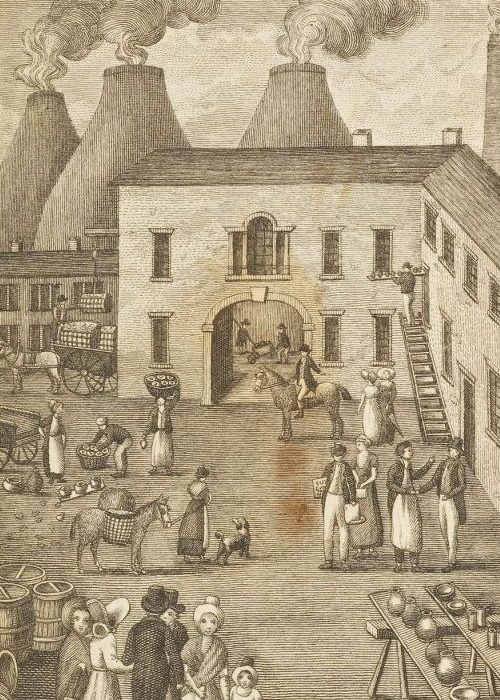
The Gladstone Pottery Museum is one of Stoke-on-Trent’s heritage assets. It will help make North Staffordshire’s Industrial Landscape a World Heritage Site.
North Staffordshire’s Industrial Landscape Merits World Heritage Site Status

There are no historical reasons to prevent North Staffordshire’s Industrial Landscape from becoming a World Heritage Site.
In the 18th century, North Staffordshire helped to make England “the workshop of the world.” Local entrepreneurs, like Wedgwood and Adams, transformed a group of small towns into an industrial area of international importance.
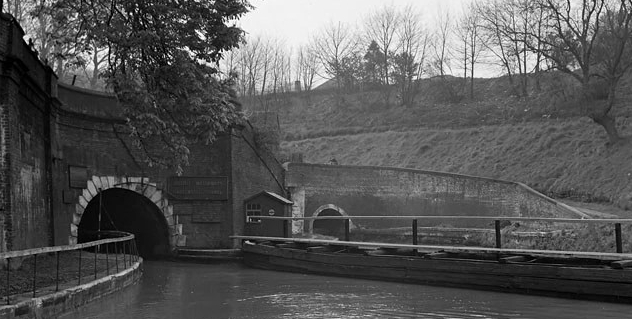
James Brindley’s Trent & Mersey Canal “kick-started” the Industrial Revolution, which made Britain “the Workshop of the World. The canal and railway tunnels between Kidsgrove and Chatterley are significant feats of civil engineering. They merit World Heritage Site status in their own right.
The Primitive Methodist Church was founded in North Staffordshire by Hugh Bourne and William Clowes. It gave the Potteries its unique culture and a way of life that Arnold Bennett vividly portrayed in his novels.
Burslem’s “old town hall” is one of the finest examples of Victorian civic architecture. The Wedgwood Institute’s terracotta facade is an inspiring tribute to the men, women and children who worked in local industries.
The former colliery at Chatterley Whitfield should have been made a World Heritage Site many years ago.
Making North Staffordshire’s Industrial Landscape a World Heritage Site would encourage economic regeneration and create new employment opportunities.
Daimler buses ran from Mow Cop to Tunstall
After the First World War, former soldiers and sailors set up small bus companies and ran bus services from towns and villages on the North Staffordshire Coalfield to Tunstall.

In 1914, the Potteries Electric Traction Company started running bus services from Biddulph and Mow Cop to Tunstall, using forty-horsepower Daimler Buses.
During the First World War (1914-1918), the government requisitioned the buses and services were suspended. The buses were sent to France, where they were used to take troops to the front line. When the war ended, the buses were returned to the company, and the services resumed.
After the First World War, former soldiers and sailors formed bus companies. The companies ran services to Tunstall that competed with those run by the Potteries Motor Traction Company.
Rowbotham’s was a bus company with a garage in Sands Road, Harriseahead. The firm ran a service from The Bank, a hamlet in South Cheshire, to Tunstall. Its buses ran through Mount Pleasant, Dales Green, The Rookery, Whitehill, Newchapel Packmoor, Chell and Pitts Hill.
The Potteries Electric Traction Company operated another service from The Bank to Tunstall. Its route ran through Mount Pleasant, Dales Green, The Rookery, Whitehill, Kidsgrove, Goldenhill and Sandyford.
Stanier’s was a bus company based in Newchapel. It ran a service from Mow Cop to Tunstall via Harriseahead, Newchapel, Packmoor, Chell and Pitts Hill.
The Corda Well
During the 19th century, there were numerous springs, called wells, on the slopes of Mow Cop from which local people obtained their water supply.
In his book “Mow Cop and its Slopes” published in 1907, W. J. Harper describes the Corda Well – a spring that never ran dry.
Not far from Mow Cop is a little well, about 2ft in diameter, which was never known to be dry. The water always bubbles up in summer or winter, seedtime or harvest.
About 30 years ago, there was a drought. The cows were moaning in the fields, and the sheep were bleating in the mountain meadows for want of water. This little well, all the while, supplied the inhabitants with water for many miles around. At three o’clock in the morning, people came for water bringing buckets, tubs and various utensils to carry the precious liquid. Although a small well, its water supply was never exhausted but flowed on and continues to flow.
Edited by David Martin
Self-Service Stores Revolutionised Shopping
In the 1950s and 60s, self-service stores replaced local shops in town centres throughout North Staffordshire and South Cheshire.
If your family used self-service stores, please share your memories of shopping there with our readers. Tell them how self-service stores differed from High Street and corner shops.
To read the full post, click on “How England’s First Self-Service Store Heralded the Birth of the Modern Supermarket” below the photograph.
Women’s contribution to the war effort
Women from North Staffordshire were “called up” for military service or war work during the Second World War. Some served in the armed forces. Others built Spitfires at Castle Bromwich or worked in munitions factories at Swynnerton and Radway Green.
To read about women’s contribution to the war effort, click “Women Work and War” below.
Memory Lane – Hanley Woolworths
There was something for everyone at Woolworths, a chain store found on High Streets in England and Wales.
Affectionately known as “Woolies”, Woolworths stocked a wide range of goods. These included toys and games, sweets and chocolate, and record players.
They also sold portable radios, car accessories, household paint, stamps, stationery, electric fires and fan heaters. The larger stores sold garden furniture and plants. If you and your family shopped at Hanley Woolworths, tell us about the shop and the things it sold. Email, northstaffordshireheritage@outlook.com
To learn about Hanley Woolworths, click “Woolies Buildings-Then and Now” at the top of the extract.
NSH.2024
Woolies Buildings - Then and Now
7-9 Upper Market Square, Hanley, Stoke-on-Trent, Staffs ST1 1PY
In 1915, World War One did not stop Woolworth expanding and they opened their 55th store on Upper Market Square in Hanley, Stoke-on-Trent. As with many war-time stores, it had a similar design to Kingston-upon-Thames (Store 43), with an open pediment and a Venetian window.
Hanley Woolworths 1920s
Source: Historic England
In 1937 the store had a makeover, and as it was a long-store, the design was Art Deco with a centrepiece at the top.
Hanley Woolworths 1950s
Source: ThePoterries.org
Hanley Woolworths 1950s
Hanley Woolworths 1958
Hanley Woolworths 1960s
Source: Pinterest
In the 1970s the store was modernised along with the conversion to self-service. A typical frontage design was to have long narrow brick sections alternating with aluminium panels. As for the entrance, the display windows were moved to the sides and a panel of doors installed across the centre.
View original post 63 more words
Memory Lane – Uttoxeter Woolworths
Woolies Buildings - Then and Now
16 – 18 High Street, Uttoxeter, Staffordshire ST14 7HY
Woolworths opened in Uttoxeter in 1932 in a purpose-built store on the High Street.
Uttoxeter Woolworths c1955
The store manager from 1933 was Mr Slade, and this photo was sent in by Richard Northover who actually met him many decades later. He shares his memories with us below.
Uttoxeter Store Manager 1930s
“His name is Mr R J Slade known as ‘Jim’ who retired from Store 60 Cheltenham in the early 1960s. I met him in 1979 when I was a trainee manager at Store 60. I got to know him when another trainee manager at the store was going out with a couple of the girls who worked in the store, one of whom was his granddaughter Vanessa who later married the other trainee. We used to talk when he came into the store, a kindly old gentleman talking to…
View original post 267 more words
Memory Lane – Stone Woolworths
Woolies Buildings - Then and Now
32 High Street, Stone, Staffs ST15 8AW
Woolworths opened in Stone in 1934. It opened in an existing building on the High Street.
Stone Woolworths 1965
Source: Francis Frith
They traded from this location for 74 years until the end in December 2008. The pillar at the front looks really thin.
Stone Woolworths 2009
It became a Heron Foods.
Stone Former Woolworths