Sir Smith Child: Stallington Hall, The Country House That Became a Mental Hospital

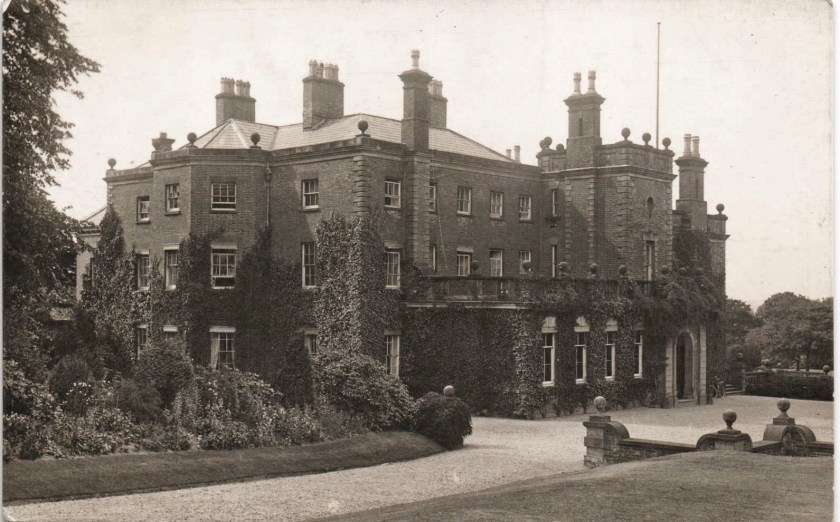
Surrounded by woods and parkland, Stallington Hall, near Blythe Bridge, was a country house that became a mental hospital.

Stallington Hall was a Queen Anne-style mansion built in the 18th century. It was the home of landowner Richard Clarke Hill. His daughter, Sarah, married Smith Child, who lived at Newfield Hall in Tunstall. The couple were married at St Nicholas’ Church, Fulford, in 1835. They lived at Newfield Hall until 1841, when they moved to Rownall Hall, Wetley.

In 1853, Richard Clarke Hill died, and Smith Child and his family went to live at Stallington Hall.

Smith Child, who was a magistrate, became a Member of Parliament. He became a baronet in 1868. His full title was Sir Smith Child, Baronet of Newfield and of Stallington in the County of Stafford, and of Dunlosset (Dunlossat), Islay, in the County of Argyll.

Sir Smith Child died at Stallington Hall on 27th March 1896. His grandson, Sir Smith Hill Child, inherited the estate.

Sir Smith Hill Child was educated at Eton and Christ Church College. He became a professional soldier and fought in the Boer War. In 1910, he became the commanding officer of the 2nd North Midland Brigade (Royal Field Artillery.

On 3 August 1914, Germany declared war on France. German troops invaded Belgium, a country Britain had promised to defend against German aggression. On 4 August, Britain declared war on Germany. The First World War had begun, and the brigade was sent to France. where it fought at Loos and on the Somme.

Sir Smith Hill Child was mentioned three times in dispatches. He was awarded the Distinguished Service Medal and made a Companion of the Order of St Michael and St George. Promoted to Brigadier General, he was given command of the Royal Artillery’s 46th Division. On 29 September 1918, the Division crossed the St Quentin Canal and broke through the Hindenburg Line, taking 4,000 prisoners. The French Government awarded him the Croix de Guerre.

When he returned home, Sir Smith Hill Child stood for Parliament. His election campaign was successful, and he represented Stone from 1918 to 1922. In 1925, he married Barbara Villiers. Shortly after their marriage, they left Stallington Hall. The couple had two daughters, Teresa and Mary.

The hall and its grounds were sold to the City of Stoke-on-Trent, which converted it into a mental hospital.

The conversion cost £20,000. Lady Aspinall opened the hospital on 18 September 1930. Miss M. A. Cahill was the matron. The hospital accommodated 81 patients and possessed an operating theatre and a dental surgery.
NewsDesk: Potteries Museum Launches Appeal to Keep Ellastone Fastener in Staffordshire


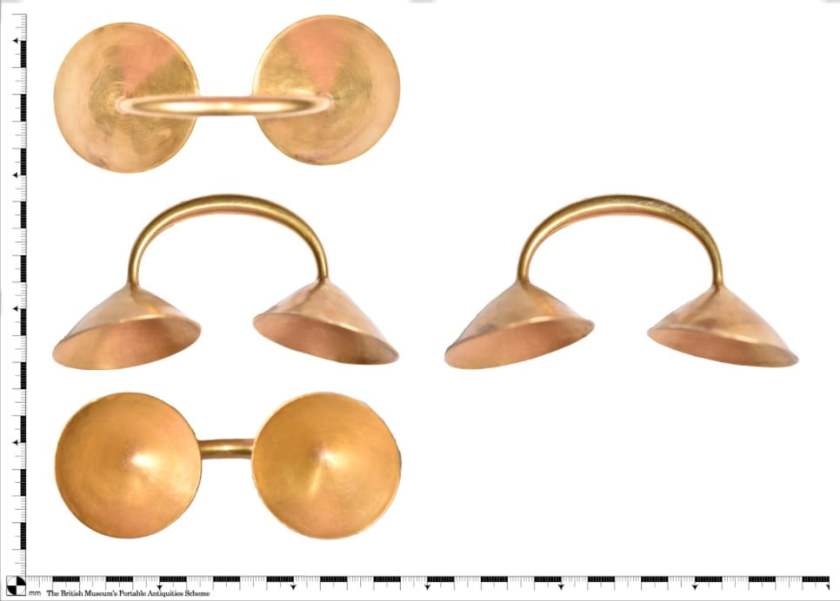
The Potteries Museum and Art Gallery has launched a £150,000 appeal to keep the Ellastone Fastener in Staffordshire.

A Bronze Age treasure, the gold fastener was discovered in the region.

To keep it here, the museum needs your help.

For more information and to donate, please visit www.stokemuseums.org.uk/pmag/help-save-the-ellastone-fastener/.
Visit the Potteries Museum and Art Gallery website and discover the City of Stoke-on-Trent’s unique history and heritage.

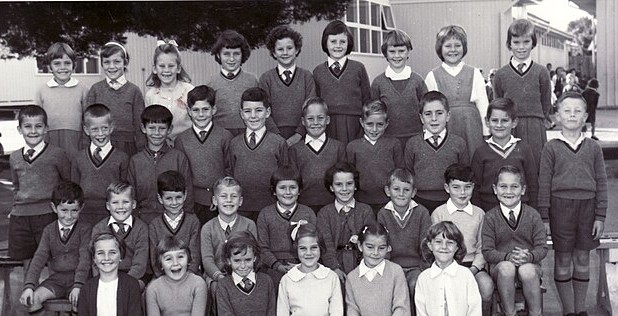
Share Your Story: Who Was Your Favourite Teacher?

We all remember that one teacher who made a lasting difference – the one who inspired us, encouraged us, or simply made school a little brighter. Maybe they sparked your love of a subject, believed in you when you doubted yourself, or had a way of making lessons fun.

We’d love to hear your stories. Tell us about your favourite teacher and what made them special. Was it their kindness, their humour, their passion for teaching, or something they did that you’ve never forgotten?

Your memories can help celebrate the people who shaped our lives and remind us of the power a great teacher can have.

If you went to school in North Staffordshire, you can share your story in Leave a Comment below. Alternatively, you can email it, with or without images, to northstaffordshireheritage@outlook.com

We are sure everyone will enjoy reading your memories of your favourite teacher.

The National Fairground Museum Has Moved to Statfold Country Park

Roll Up, Roll Up, Come on and enjoy the fun.

The National Fairground Museum is now at Tamworth’s Statfold Country Park.

Visitors to the museum can ‘roll up’ and enjoy all the fun of the fair. They can travel on the Ghost Train, ride on a roundabout, play vintage arcade games and have a bite to eat in the Cafe Carousel.

For more details, please telephone 01827 830398 or email info@statfold

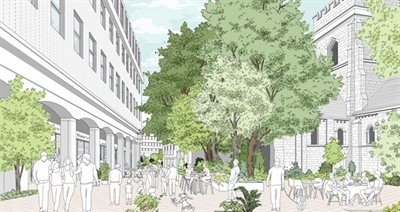
Major Regeneration Schemes Will Transform Stafford

Major regeneration projects will transform Stafford town centre.

Staffordshire County Council and Stafford Borough Council are working on schemes to ensure that Stafford will be a place where people want to live and work.

Their projects complement each other and will encourage investment and support the tourist industry.

Stafford’s Market Square and the approach to the Railway Station have already been refurbished.

The borough council is working on major high street regeneration projects including the Guildhall shopping centre.

Staffordshire County Council has started work on its Eastgate regeneration scheme to create leisure facilities and homes in former council buildings.

Both councils are working in partnership to deliver the Stafford Station Gateway scheme which will redevelop land near the railway station.

Lichfield and Burntwood may have to finance Stoke-on-Trent

The government says any proposals to reform local government in Staffordshire must identify and address the financial challenges facing Stoke-on-Trent City Council.

British Newspaper Archive Available in Staffordshire Libraries

People with a Staffordshire Library Card can visit their local library to use its public access PCs to view the British Newspaper Archive. The archive holds over 50 million articles from regional and national newspapers. Using the archives will tell you about national and local newsworthy events as they happened.

Stoke-on-Trent’s Remaining Bottle Ovens

About half of Stoke-on-Trent’s remaining bottle ovens are featured in this short video.

A bottle oven or bottle kiln was a type of kiln used in the ceramic industry. For many years, Stoke-on-Trent’s bottle ovens and kilns symbolised our industrial heritage.

Some were built in the late 18th century. Many were built in the 19th century and a few in the 20th. They remind us that Stoke-on-Trent was once the centre of the world’s pottery industry.

Only 47 bottle ovens are left. They are all listed buildings. Longton has more than any town in the Potteries. Stoke-on-Trent’s remaining bottle ovens will help to make North Staffordshire’s Industrial Landscape a World Heritage Site.

Free Access to Ancestry at Staffordshire Libraries

Family Historians who are members of Staffordshire Library can grow their family tree at their local library.

Ancestry, the leading genealogy resource on the internet, is ‘packed full of records’. It can help you trace by giving you hints and tips to guide your research.

For more information, contact your local library.

Staffordshire History Festival

Staffordshire History Festival celebrates the county’s rich and diverse heritage. During the two-month festival, which ends on October 31, local history talks and exhibitions will be held at libraries and heritage sites throughout Staffordshire.

Councillor Hayley Coles, Cabinet Member for Communities and Culture said:

The Staffordshire History Festival is a brilliant chance to explore the stories that shape our communities. Whether you are interested in exhibitions, film screenings or hands-on workshops, there’s something for everyone. No matter where you are in the county, history is just around the corner – so get involved and discover what makes Staffordshire so truly special.

An exhibition, Staffordshire and Slavery, opens on September 16 at the Staffordshire History Centre. A film about the life of Fanny Deakin will be shown at Newcastle Kidsgrove and Biddulph Libraries. For more details of these and other events, please contact the Staffordshire History Centre or your local library.