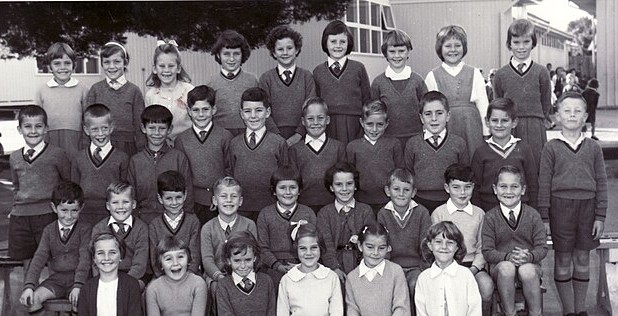
We all remember that one teacher who made a lasting difference – the one who inspired us, encouraged us, or simply made school a little brighter. Maybe they sparked your love of a subject, believed in you when you doubted yourself, or had a way of making lessons fun.
We’d love to hear your stories. Tell us about your favourite teacher and what made them special. Was it their kindness, their humour, their passion for teaching, or something they did that you’ve never forgotten?
Your memories can help celebrate the people who shaped our lives and remind us of the power a great teacher can have.
If you went to school in North Staffordshire, you can share your story in Leave a Comment below. Alternatively, you can email it, with or without images, to northstaffordshireheritage@outlook.com
We are sure everyone will enjoy reading your memories of your favourite teacher.
Major regeneration projects will transform Stafford town centre.
Staffordshire County Council and Stafford Borough Council are working on schemes to ensure that Stafford will be a place where people want to live and work.
Their projects complement each other and will encourage investment and support the tourist industry.
Stafford’s Market Square and the approach to the Railway Station have already been refurbished.
The borough council is working on major high street regeneration projects including the Guildhall shopping centre.
Staffordshire County Council has started work on its Eastgate regeneration scheme to create leisure facilities and homes in former council buildings.
Both councils are working in partnership to deliver the Stafford Station Gateway scheme which will redevelop land near the railway station.
The Staffordshire History Centre in Stafford has a collection of military records, personal letters, photographs and regimental histories. If your ancestor served in the armed forces, the centre could help you to trace them.
On the first day, I was placed with the Monday Volunteer Group to create boxes and envelopes that will be used in future to store documents. Later in the week, I was also allowed to meet some of the volunteer group that works on the transcription of records in the archive. These helped me understand the importance of volunteers and how they contribute to the centre and finish tasks that the staff can’t focus on. The experiences also allowed me to gain a deeper understanding of the importance of working with volunteers and how vital it is to run a history/archive centre, as without them, many tasks would take far too long to finish.
I am a new volunteer. I have loved local history since I was a child. This place is my idea of a haven. From Lotus Shoes and Evode to William Palmer in the main exhibition space, through to the beautiful rooms of the William Salt Library, our collection spans many centuries, highlighting how Staffordshire has contributed to the UK and the wider world over and over again.
“I enjoy history on every level imaginable, and this experience has only enhanced my adoration. This work experience was everything I hoped it would be and more, it showed me the ins and outs of running a history centre whilst giving me hands-on experience with actual artifacts and interacting with customers.”
A Halifax Bomber like the one that crashed on Grindon Moor.
The winter of 1946-47 was long and hard. There were heavy snowfalls and gale-force winds. Temperatures fell to below freezing, and icicles hung from the roofs of houses.
Mainline railway lines were kept open, but frozen points on branch lines prevented coal trains from leaving collieries. The National Coal Board did not thaw the points. They stockpiled coal at the pit head. This created a fuel shortage, and British industry was forced to introduce short-time working.
Between Sunday, February 2nd and Tuesday, February 4th, 1947 a blizzard lasting forty-eight hours swept across Staffordshire and Cheshire. More than ten inches of snow fell. Roads became impassable and motorists abandoned their vehicles.
Villages in the Staffordshire Moorlands were isolated by snowdrifts five or six feet deep. Over a hundred snowploughs and bulldozers fought to keep Staffordshire’s main roads open. German prisoners of war helped to clear the snow from roads leading into Burton-on-Trent. A working party from Stafford prison cleared snow blocking the road from Stafford to Stone.
In the Potteries, roads blocked by snowdrifts were reopened by Polish troops stationed at Keele. A bus fitted with a snowplough opened the road to Leek, but surrounding villages remained cut off.
Power stations producing electricity were running out of coal and output fell. Supplies of electricity were disrupted. Householders were asked not to use electricity between 9.00am and noon and between 2.00pm and 4.00pm. These savings were not enough to keep hospitals supplied with electricity. On February 7th, the government ordered companies to stop using electricity.
Industry throughout the country was hard hit. Factories were forced to close. At Stafford, English Electric dismissed its 5,000 employees. In the Potteries 44,000 men and women were made redundant.
At a meeting in Stoke, the National Political Union condemned the Labour government. It blamed the government for creating a fuel crisis. The crisis also caused widespread unemployment.
A few shopkeepers in Stafford continued to use electric spotlights to highlight displays in their shop windows. Lights and heating were turned off at the Guildhall where the Magistrates’ Court sat. It was so cold in the courtroom that Justices of the Peace wore their overcoats.
Many shops were lit by candlelight. Old gas mantles were used to light offices throughout the region. The Midland Bank at Crewe was lit by oil lamps and hurricane lamps were used to light Stoke town hall.
Blizzards prevented rescue teams from reaching Longnor, Butterton, Grindon and Ilam, isolated villages where 3,000 people were trapped.
The Royal Air Force was asked to help. At RAF Fairford in Gloucestershire, Halifax Bombers were loaded with food supplies for the villagers.
On February 12th, despite adverse weather conditions and low clouds, a bomber dropped thirteen canisters containing food near Longnor. Volunteers helped Police Sergeant Davenport carry the canisters to the village hall. They contained margarine, lard, sugar, cheese, bread and jam for the villagers and people living in neighbouring hamlets.
The next day, another Halifax, piloted by Squadron Leader McIntyre, took off from Fairford with food for Butterton. Weather conditions had deteriorated overnight. Visibility was poor. People on the ground, who were waiting for the food canisters to be dropped, heard the aircraft’s engines. They could not see the plane.
Squadron Leader McIntyre flew low hoping to find the dropping zone. The plane’s engines cut out. There was an explosion, and the Halifax crashed near Sheldon Farm on Grindon Moor. Eight men were on board. Only one survived the impact. He was unconscious when rescuers pulled him out of the cockpit and died shortly afterwards.
Among the dead was twenty-four-year-old Sergeant William Sherry from Clews Street, Burslem. Educated at Middleport School, he had been an army glider pilot before transferring to the Royal Air Force. William served with the 1st Airborne Division. He fought at Arnhem, where he was wounded and captured by the Germans.
Note: A Hard Winter (1946-1947) is one of a series of articles written by Betty Martin before her death. Other articles from the series will be posted from time to time.
Between 1842 and 1870, law and order in Hanley was maintained by Staffordshire’s county police force.
Although Hanley and Shelton, the two largest townships in the Potteries, amalgamated in 1857 to form the Borough of Hanley, the borough did not obtain its own police force until 1870.
Stanford Alexander was appointed chief constable. He had 35 police officers to maintain law and order in a town that had a population of 41,000. His officers worked three overlapping shifts, two 12-hour shifts during the day and one nine-hour shift at night. Despite the long hours worked, pay was low. Constables earned 21 shillings a week. Sergeants were paid 25 shillings, and inspectors received 30 shillings.
When Alexander retired in 1875, Herbert Windle was made chief constable. Windle improved pay and working conditions for his officers. He persuaded the town’s Watch Committee to give them a library and a recreation room, with a billiard table, where they could relax when they came off duty.
By the late 1870s, Hanley had become the Potteries’ commercial and cultural centre. Trains and trams brought people from neighbouring towns to its shops and markets, music halls and theatres.
On Saturday nights, Henley’s criminal fraternity made its way to the town centre. Children begged outside shops or stole from market stalls. Drunken brawls broke out in public houses. Gangs roamed the streets looking for a fight. Prostitutes accosted men in Piccadilly. Pickpockets mingled with the crowds in Fountain Square, and robbers lurked in dark alleys waiting to pounce on their victims.
Robbery and theft were indictable offences. They had to be tried in Stafford before the Assize Court or at Quarter Sessions.
Police officers and witnesses were forced to travel to Stafford. They had to wait outside the courtrooms in the Shire Hall until called to give evidence. Unwilling to make the journey, many victims of crime refused to prosecute offenders.
Law and order in Hanley were breaking down. The borough council requested Queen Victoria to grant the town its own Quarter Sessions. She granted the request. The borough’s Quarter Sessions held its first sitting on January 19, 1881. There were eight defendants, three of whom were illiterate.
Note: Law Enforcement in Hanley is one of a series of articles written by Betty Martin before her death. Other articles from the series will be posted from time to time.



 North Staffordshire Heritage