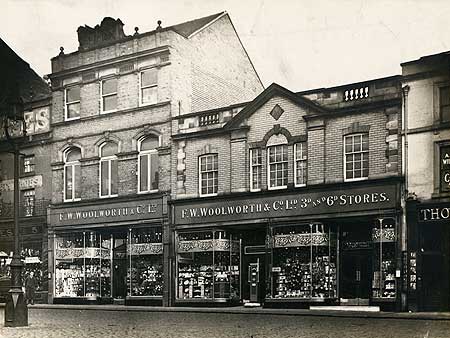
Law Enforcement in Hanley

Between 1842 and 1870, law and order in Hanley was maintained by Staffordshire’s county police force.

Although Hanley and Shelton, the two largest townships in the Potteries, amalgamated in 1857 to form the Borough of Hanley, the borough did not obtain its own police force until 1870.

Stanford Alexander was appointed chief constable. He had 35 police officers to maintain law and order in a town that had a population of 41,000. His officers worked three overlapping shifts, two 12-hour shifts during the day and one nine-hour shift at night. Despite the long hours worked, pay was low. Constables earned 21 shillings a week. Sergeants were paid 25 shillings, and inspectors received 30 shillings.

When Alexander retired in 1875, Herbert Windle was made chief constable. Windle improved pay and working conditions for his officers. He persuaded the town’s Watch Committee to give them a library and a recreation room, with a billiard table, where they could relax when they came off duty.

By the late 1870s, Hanley had become the Potteries’ commercial and cultural centre. Trains and trams brought people from neighbouring towns to its shops and markets, music halls and theatres.

On Saturday nights, Henley’s criminal fraternity made its way to the town centre. Children begged outside shops or stole from market stalls. Drunken brawls broke out in public houses. Gangs roamed the streets looking for a fight. Prostitutes accosted men in Piccadilly. Pickpockets mingled with the crowds in Fountain Square, and robbers lurked in dark alleys waiting to pounce on their victims.

Robbery and theft were indictable offences. They had to be tried in Stafford before the Assize Court or at Quarter Sessions.

Police officers and witnesses were forced to travel to Stafford. They had to wait outside the courtrooms in the Shire Hall until called to give evidence. Unwilling to make the journey, many victims of crime refused to prosecute offenders.

Law and order in Hanley were breaking down. The borough council requested Queen Victoria to grant the town its own Quarter Sessions. She granted the request. The borough’s Quarter Sessions held its first sitting on January 19, 1881. There were eight defendants, three of whom were illiterate.

Note: Law Enforcement in Hanley is one of a series of articles written by Betty Martin before her death. Other articles from the series will be posted from time to time.

Edited: 4th June 2025

Hanley and Shelton in the 18th century

During the 18th century, Hanley and Shelton became the most important towns in the Potteries.

Between 1762 and 1801, their populations increased from 2,000 to 7,940. Hanley’s first church, St. John’s, was erected in 1738 and enlarged in the 1760s. Stage coaches called at the Swan Inn. Horse-drawn wagons carried pottery to the Weaver Navigation at Winsford and returned carrying ball clay and household goods.

A covered market, designed by architect James Trubshaw, was built on Town Road in 1776.

The Trent and Mersey and the Caldon Canals stimulated economic expansion. Entrepreneurs opened factories, collieries and ironworks. Families from the surrounding countryside flocked to Hanley and Shelton looking for work. New houses were built to accommodate them.

In 1791, a trust was formed to manage the market and build a town hall. The trustees leased land in Market Square, where they erected a town hall. Markets were held on Wednesdays and Saturdays. A fortnightly cattle market was established at the beginning of the 19th century. In 1813, Parliament gave the trustees the power to regenerate Market Square. They demolished the town hall, replacing it with a poultry market. A lockup was also built where those arrested were held before being brought to court.

Revised 04.06.2025

Memory Lane – Hanley Woolworths

There was something for everyone at Woolworths, a chain store found on High Streets in England and Wales.

Affectionately known as “Woolies”, Woolworths stocked a wide range of goods. These included toys and games, sweets and chocolate, and record players.

They also sold portable radios, car accessories, household paint, stamps, stationery, electric fires and fan heaters. The larger stores sold garden furniture and plants. If you and your family shopped at Hanley Woolworths, tell us about the shop and the things it sold. Email, northstaffordshireheritage@outlook.com

To learn about Hanley Woolworths, click “Woolies Buildings-Then and Now” at the top of the extract.

NSH.2024

sabrina's avatarWoolies Buildings - Then and Now

7-9 Upper Market Square, Hanley, Stoke-on-Trent, Staffs ST1 1PY

In 1915, World War One did not stop Woolworth expanding and they opened their 55th store on Upper Market Square in Hanley, Stoke-on-Trent. As with many war-time stores, it had a similar design to Kingston-upon-Thames (Store 43), with an open pediment and a Venetian window.

Hanley Woolworths 1920s Hanley Woolworths 1920s
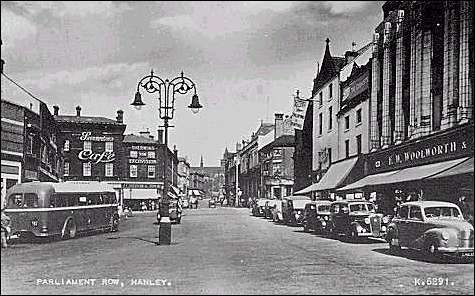
Source: Historic England

In 1937 the store had a makeover, and as it was a long-store, the design was Art Deco with a centrepiece at the top.

Hanley Woolworths 1950s Hanley Woolworths 1950s
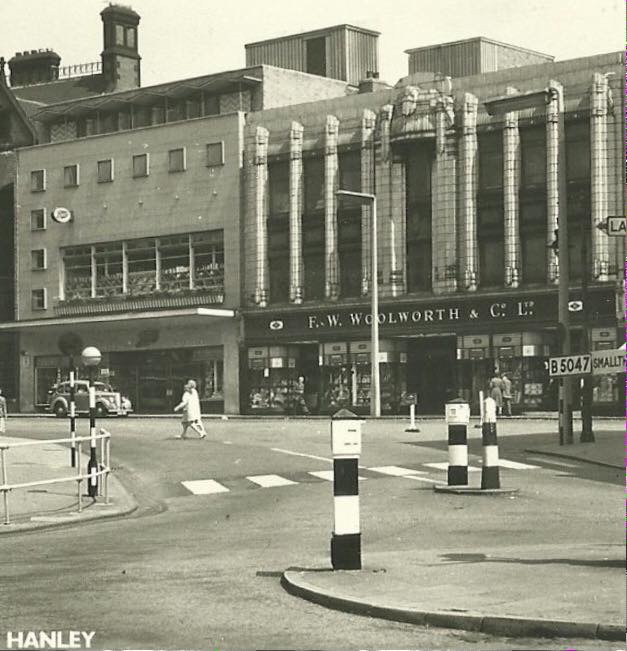
Source: ThePoterries.org

Hanley Woolworths 1950s Hanley Woolworths 1950s

Hanley Woolworths 1958 Hanley Woolworths 1958
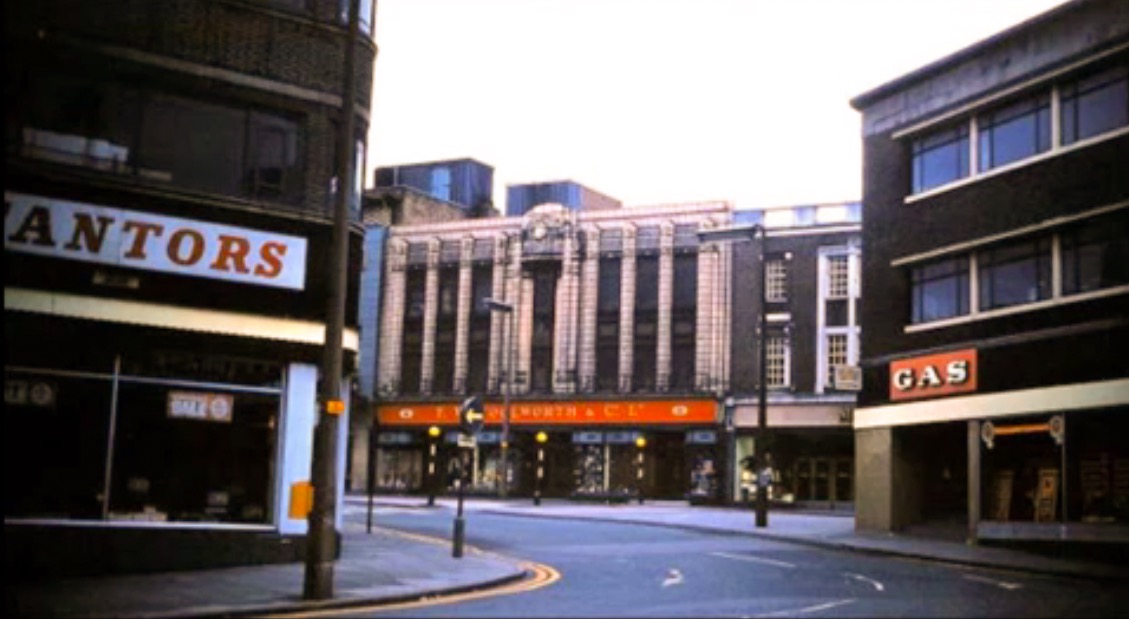
Hanley Woolworths 1960s Hanley Woolworths 1960s

Source: Pinterest

In the 1970s the store was modernised along with the conversion to self-service. A typical frontage design was to have long narrow brick sections alternating with aluminium panels. As for the entrance, the display windows were moved to the sides and a panel of doors installed across the centre.

View original post 63 more words