Tunstall in the 1790s

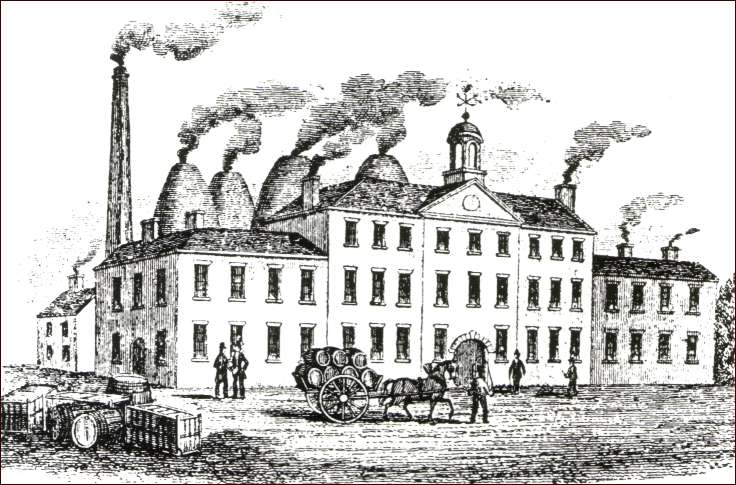
The sketch above shows William Adams’ Greengates Pottery in Tunstall. The factory built between 1779 and 1781 was one of the largest in the Potteries. It manufactured tableware, stoneware and jasper ornaments for the luxury market. William Chaffer, the author of ‘Marks and Monograms on Pottery and Porcelain’, said some of the jasper made at Greengates was ‘equal to, if not superior’ to that produced by Josiah Wedgwood at Etruria.

A Description of the Country From Thirty to Forty Miles Round Manchester, a book published in 1795, was compiled by Dr John Aikin. The book tells us about Newcastle-under-Lyme and North Staffordshire’s pottery towns and villages in the 1790s.

This edited extract from the book describes Tunstall as it was in the 1790s.

Tunstall is the pleasantest village in the Potteries. It stands on high ground, commanding extensive views of the surrounding countryside. Pottery manufacturers in the village produce good-quality ware and do considerable business. There was a church here, and human bones have been dug up. But such is the effect of time that no trace of either the church or the bones remains today. A small chapel has recently been built here. There is a considerable number of brick and tile works. They use local clay to make blue bricks, which look as well on the roofs of houses as moderate slate. Tunstall is four miles from Newcastle-under-Lyme and nine miles from Congleton. The turnpike road from Lawton to Newcastle-under-Lyme runs through Tunstall, where the turnpike road to Bosley in Cheshire begins [near the Wheatsheaf Inn].

Friday NewsDesk

Friday NewsDesk is a new regular weekly post that will tell you about North Staffordshire Heritage’s activities.

Worldwide interest has been shown in Chatterley Whitfield’s future. The creation of a circular heritage tourist trail linking Burslem, Ford Green Hall, Chatterley Whitfield and Biddulph Grange with Mow Cop and Kidsgrove.

North Staffordshire Heritage is continuing to research Mercia and its legal system. This is a long-term project, which is expected to last for eight or nine months.

Our new series of posts about the Township of Tunstall starts in September, and we will give you more details at the end of August.

We hope you all have a relaxing and enjoyable weekend. Take care and stay safe. We’ll see you again on Tuesday.

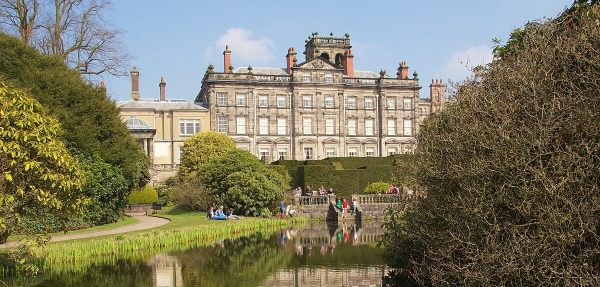
Image of Biddulph Grange Creative Commons Attribution-Share Alike 4.0 International license. Photograph by Mike Peel (www.mikepeel.net)

Drama high in the sky above North Staffordshire

Something had indeed gone badly wrong. High in the sky above North Staffordshire, a scene of high drama was unfolding. It was away from the eyes of the assembled spectators. Even the excitement and danger of a normal parachute drop paled in comparison.

The Big Feast 2025

The Big Feast is NOT a Food Festival. It’s a weekend of amazing arts, curious culture and outdoor spectacle. Visitors to the Feast will see some of the UK’s best artists performing on Hanley’s streets. The two-day event takes place in Hanley/City centre on Friday 22 and Saturday 23rd August.

It’s Friday again…

Another working week is almost over. It will soon be time to close the office for the weekend.

North Staffordshire Heritage welcomed the news that the Heritage at Risk Fund has given £1.5 million to help save Bethesda Church and Burslem’s Indoor Market.

We are still concerned about the future of the former colliery at Chatterley Whitfield.

If Chatterley Whitfield had been on the South Wales Coalfield, it would have been made a World Heritage Site many years ago.

It is not too late to save Chatterley Whitfield and make it an international tourist attraction. Regenerating the site and breathing new life into its derelict buildings would revitalise Tunstall, Burslem, Biddulph and Kidsgrove.

With imagination and initiative, Chatterley Whitfield can be the starting point of a North Staffordshire Tourist Trail. A circular trail linking Middleport Pottery, Burslem’s Historic Town Centre, Ford Green Hall and Biddulph Grange with Mow Cop, the Trent & Mersey Canal and the Harecastle Tunnels at Kidsgrove.

We hope you have an enjoyable weekend. Take care and keep safe. See you again on Monday.

£1.5 million given to help save city’s historic buildings

Regeneration experts in the Potteries are delighted that the Heritage at Risk Fund has given £1.5 million to help save Burslem’s Indoor Heritage Market and historic Bethesda Church in the City Centre.

The money will be used to repair the buildings.

If these buildings can be saved, they will make a significant contribution to the growth of North Staffordshire’s heritage tourist economy.

Molly Albin – Hanley’s Town Crier Who Terrified Married Men

In the 1820s, married men living in Hanley who spent their time drinking in ale houses feared Molly Albin.

Molly, who lived in Tontine Street, was Hanley’s town crier. She used her job to publicly shame men who went drinking during working hours or neglected their families.

Men who frequented ale houses were terrified when they heard Molly ringing her bell and calling out their names. Large crowds gathered to listen to what she had to say about them.

She told the crowd everything she knew about a man she had named.

Molly pulled no punches when she described a man’s character. She listed all his defects. She told the crowd how much he earned each week and how much he spent on drinks. It heard how much money he gave his wife to buy food and clothing for herself and the children. All aspects of his life were made public. If a man had borrowed money that he hadn’t repaid, she gave details of the amount he owed.

Sometimes, a man whose lifestyle she was describing threatened her with violence. Molly was not afraid. It was unlikely that he would assault her. She was physically fit and capable of defending herself.

She knew that a man who attacked her would be arrested and brought before the Petty Sessions (Magistrates’ Court). The court sat in a room at the Swan Inn. It had the power to fine him, put him in the stocks or send him to prison. Men who attacked women were usually sentenced to two or three weeks’ imprisonment with hard labour.

Chatterley Whitfield

Chatterley Whitfield is a former colliery facing an uncertain future. We believe it merits World Heritage Site Status. Can this historic site be saved? Using the Comments section below, tell us what you think should happen to Chatterley Whitfield.

Another Busy Week is Nearly Over

Another busy week is coming to an end.

During the week, we began learning how to use our new portable photocopier. This will allow us to visit people at home to copy their treasured photographs from bygone days.

A new series of posts tracing Tunstall’s history and architectural heritage will start in the autumn. The series is based on images in the film strip The Township of Tunstall, made by Highgate School in 1960. Posts in the series will trace the history of Tunstall from Anglo-Saxon times to the 21st century. These posts will introduce you to Tunstall’s heritage buildings. They will tell you about its unique Victorian Civic Centre, which includes the former Town Hall, Tower Square, Market Hall, the Jubilee Buildings, Tunstall Pool, the Drill Hall and the Memorial Gardens.

Have a relaxing and enjoyable weekend. Take care, and we’ll see you again on Monday.

The Fowlea Brook Valley Looking Towards Burslem in the 1860s

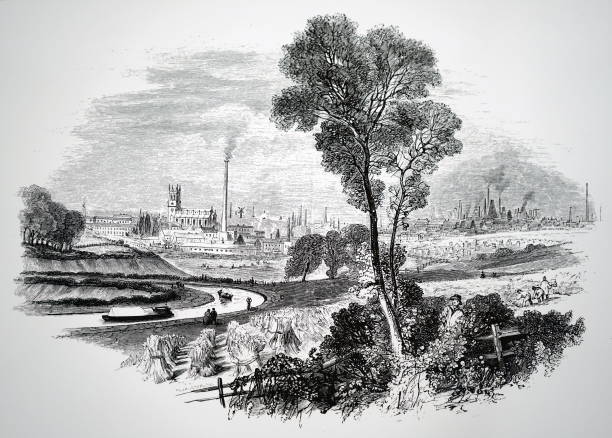
This engraving of the Fowlea Brook Valley looking towards Burslem was made in the 1860s. Note the sheaves of corn and the Trent & Mersey Canal in the foreground. In the background, you can see Burslem and St. Paul’s Church, Dalehall, where John Ward, who published The Borough of Stoke-upon-Trent in 1843, was churchwarden.