High Energy Costs Could Kill the Pottery Industry

High energy costs are threatening the Pottery industry’s future.

Local firms are paying £875 million a year for the energy they use. An analysis by Nottingham Trent University indicates that Britain’s ceramic industry spends 70% of its turnover on energy and 14% on government and regulatory levies.

Energy costs for the pottery industry in America and China have not risen since 2020.

The analysis examined a company based in Stoke-on-Trent with 49 employees and a turnover of approximately £630,000. This year, the firm will be paying £443,000 for the energy it uses.

Pottery worker Sharon Yates said to delegates attending the Labour Party Conference: “I am a proud pottery worker – just like my dad before me. The most highly skilled potters make ceramics in my town and we export the round the globe. But the industry we rely on is dying.

Tell us what you think. Do you agree with Sharon? Is the pottery industry dying, or can it survive the high cost of energy? If the industry is on its last legs, what does the future hold for Stoke-on-Trent? Have your say and tell us what you think.
Burslem and Cobridge in the 1790s

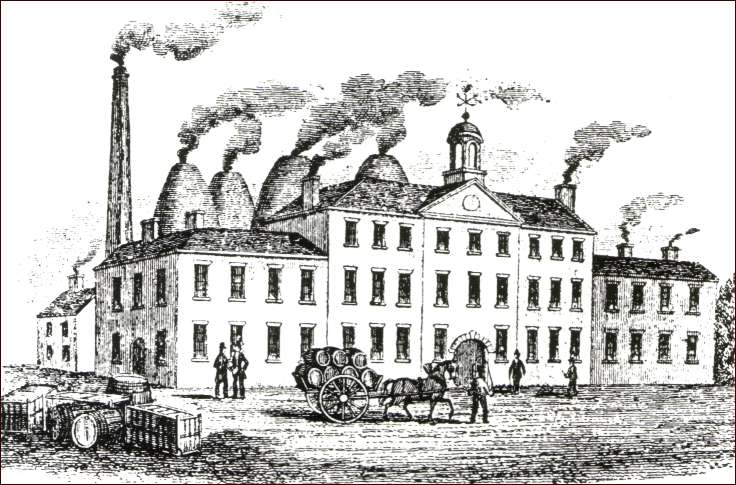
This image shows Wood & Caldwell’s Fountain Place Works in Burslem. In the 1790s the company made Staffordshire figures, earthenware and stoneware. Enoch Wood and James Caldwell were partners in the firm. The firm owned Bycars Colliery, where it mined coal to fire the factory’s bottle ovens and kilns.

A Description of the Country From Thirty to Forty Miles Round Manchester, a book published in 1795, was compiled by Dr John Aikin. The book tells us about Newcastle-under-Lyme and North Staffordshire’s pottery towns and villages in the 179os

This edited extract from the book describes Burslem and Cobridge as they were in the 1790s.

Burslem

Burslem is the home of North Staffordshire’s pottery industry. Earthenware has been made there for many centuries. Dr Plot, in his History of Staffordshire, written in 1686, said that the factories making pottery in Burslem were the largest in the district…

The town has two weekly markets. A large market is held on Monday, and a smaller one is held on Saturday. Four or five years ago, cattle markets were established. These markets are well attended by cattle dealers and butchers.

Burslem is a parish in its own right. The parish church, St John’s, has a good organ. The church has recently been enlarged and regenerated.

There are a large number of [Wesleyan] Methodists in the district. The Methodists have built a large chapel in Burslem and erected chapels in several pottery towns and villages. There are many other religious sects in the Potteries. Few areas have such a great diversity of sincerely held religious opinions.

Cobridge

Cobridge is an industrial village where earthenware is made. It is partly in Burslem Parish and partly in Stoke Parish.

Moorcroft Pottery Reopens

Moorcroft Pottery in Cobridge, which closed in April, has reopened. Will Moorcroft, who bought the firm and saved it from liquidation, has restarted production. Will, whose grandfather William Moorcroft founded the company, said he was “quite emotional” when the factory started making ware again.

Memory Lane: Longton’s Historic Beerhouses

This community-made film takes a light-hearted look at historic Beerhouses in Longton and their links with the Pottery Industry.

When you have watched the video, please use our Comments Section below to share your memories of Longton’s Beerhouses and Public Houses with us. Tell us the stories your father and your grandfather told you about them. Let us know which was your favourite public house. Tell why you liked it and the traditional games you played there with your friends.

Stoke-on-Trent’s Remaining Bottle Ovens

About half of Stoke-on-Trent’s remaining bottle ovens are featured in this short video.

A bottle oven or bottle kiln was a type of kiln used in the ceramic industry. For many years, Stoke-on-Trent’s bottle ovens and kilns symbolised our industrial heritage.

Some were built in the late 18th century. Many were built in the 19th century and a few in the 20th. They remind us that Stoke-on-Trent was once the centre of the world’s pottery industry.

Only 47 bottle ovens are left. They are all listed buildings. Longton has more than any town in the Potteries. Stoke-on-Trent’s remaining bottle ovens will help to make North Staffordshire’s Industrial Landscape a World Heritage Site.

Two Film Shows at the Brampton Museum

Two Film Shows at the Brampton Museum in September, telling the story of North Staffordshire’s Pottery and Textile Industries.

There are two film shows at Newcastle-under-Lyme’s Brampton Museum in September.

The first film, The Pottery Industry – 20th Century to Today, will be shown on Sunday, 14 September at 2.00 pm. Admission Free.

The second film, Leek and the Story of Silk Twisting, will be shown on Thursday, 18 September at 2.30 pm. Admission £5. The film marks the start of an autumn programme called Textile Take Over at the Brampton Museum. The programme will include exhibitions, talks and events relating to North Staffordshire’s textile industry.

Tunstall in the 1790s

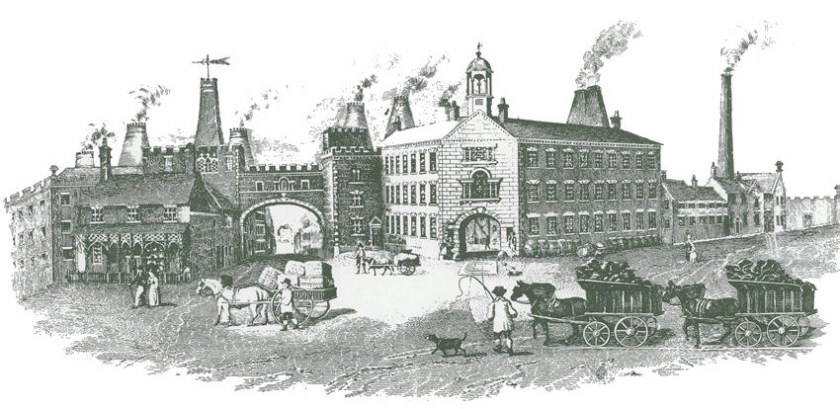
The sketch above shows William Adams’ Greengates Pottery in Tunstall. The factory built between 1779 and 1781 was one of the largest in the Potteries. It manufactured tableware, stoneware and jasper ornaments for the luxury market. William Chaffer, the author of ‘Marks and Monograms on Pottery and Porcelain’, said some of the jasper made at Greengates was ‘equal to, if not superior’ to that produced by Josiah Wedgwood at Etruria.

A Description of the Country From Thirty to Forty Miles Round Manchester, a book published in 1795, was compiled by Dr John Aikin. The book tells us about Newcastle-under-Lyme and North Staffordshire’s pottery towns and villages in the 1790s.

This edited extract from the book describes Tunstall as it was in the 1790s.

Tunstall is the pleasantest village in the Potteries. It stands on high ground, commanding extensive views of the surrounding countryside. Pottery manufacturers in the village produce good-quality ware and do considerable business. There was a church here, and human bones have been dug up. But such is the effect of time that no trace of either the church or the bones remains today. A small chapel has recently been built here. There is a considerable number of brick and tile works. They use local clay to make blue bricks, which look as well on the roofs of houses as moderate slate. Tunstall is four miles from Newcastle-under-Lyme and nine miles from Congleton. The turnpike road from Lawton to Newcastle-under-Lyme runs through Tunstall, where the turnpike road to Bosley in Cheshire begins [near the Wheatsheaf Inn].

Newfield and Smithfield in the 1790s

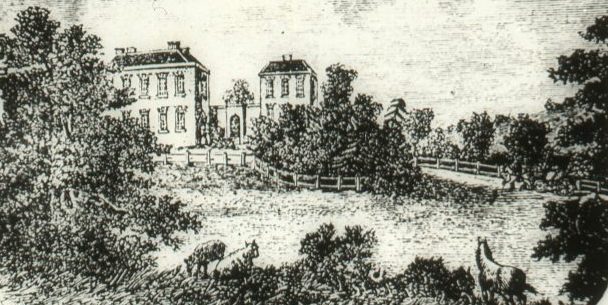
Smithfield Hall, which is shown above, was built in 1791 by Burslem pottery manufacturer, Theophilus Smith. In 1793, he built an industrial hamlet called Smithfield near the hall. Theophilus was declared bankrupt in 1800. He attempted to murder John Wainwright and was remanded to Stafford prison to await trial. When his wife and daughter visited him there, he murdered them and committed suicide. In 1801, the hall was bought by Jesse Breeze, who renamed it Greenfield Hall.

A Description of the Country From Thirty to Forty Miles Round Manchester, is a book published in 1795, compiled by Dr John Aikin. It describes Newcastle-under-Lyme and North Staffordshire’s pottery towns and villages as they were in the 1790s.

This edited extract from the book tells us what Newfield and Smithfield, two hamlets in the Township of Tunstall, were like in the 1790s.Newfield

Newfield is well situated for manufacturing purposes because there is plenty of coal nearby.

The hamlet belongs to Admiral Smith Child. He has a handsome estate there and lives at Newfield Hall. Smith Child owns Newfield Pottery. He is unlikely to allow more factories to be built in the hamlet in the foreseeable future.

Smithfield is the best place in the Potteries to manufacture earthenware. There are several strata of coal and clay, which are needed to make pottery. Smithfield belongs to Theophilus Smith. He owns a pottery and coal mines there. It is unlikely that there will be further industrial development in the hamlet.

Child’s Tea Set made in Tunstall by Plex Street Pottery

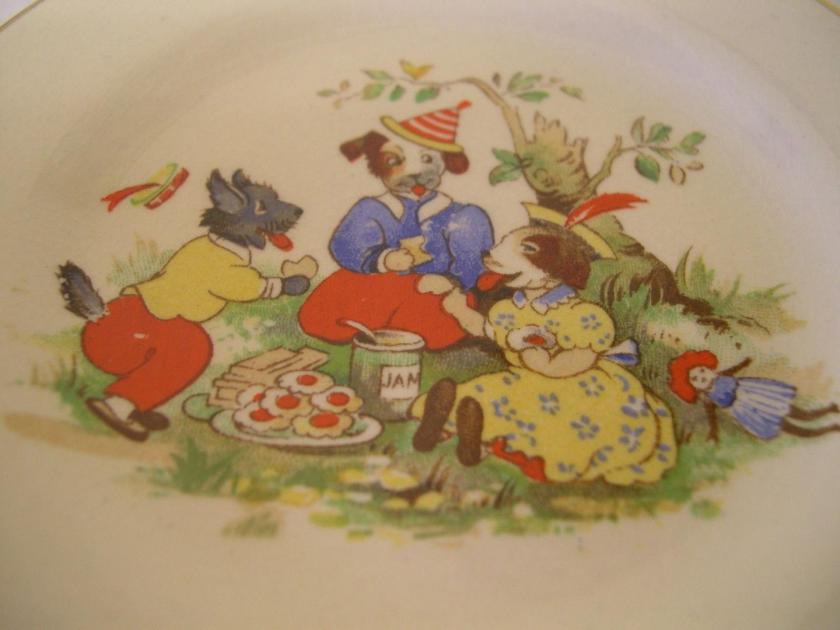
This delightful child’s tea service was made in the 1950s at the Staffordshire Tea Set Company’s Plex Street Pottery in Tunstall. We discovered this factory while researching the history of education in the Potteries.

18th Century potters left North Staffordshire to work in Liverpool

My story begins with a journey from Burslem in Staffordshire to Toxteth in Liverpool in November 1796.

To read the post, press the title A Herculaneum Potter (above).