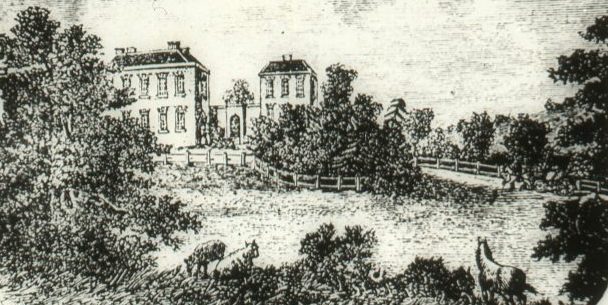
Smithfield Hall, which is shown above, was built in 1791 by Burslem pottery manufacturer, Theophilus Smith. In 1793, he built an industrial hamlet called Smithfield near the hall. Theophilus was declared bankrupt in 1800. He attempted to murder John Wainwright and was remanded to Stafford prison to await trial. When his wife and daughter visited him there, he murdered them and committed suicide. In 1801, the hall was bought by Jesse Breeze, who renamed it Greenfield Hall.
A Description of the Country From Thirty to Forty Miles Round Manchester, is a book published in 1795, compiled by Dr John Aikin. It describes Newcastle-under-Lyme and North Staffordshire’s pottery towns and villages as they were in the 1790s.
This edited extract from the book tells us what Newfield and Smithfield, two hamlets in the Township of Tunstall, were like in the 1790s.Newfield
Newfield is well situated for manufacturing purposes because there is plenty of coal nearby.
The hamlet belongs to Admiral Smith Child. He has a handsome estate there and lives at Newfield Hall. Smith Child owns Newfield Pottery. He is unlikely to allow more factories to be built in the hamlet in the foreseeable future.
Smithfield is the best place in the Potteries to manufacture earthenware. There are several strata of coal and clay, which are needed to make pottery. Smithfield belongs to Theophilus Smith. He owns a pottery and coal mines there. It is unlikely that there will be further industrial development in the hamlet.
The Poor Law Acts were passed in 1597 and 1601 towards the end of the reign of Elizabeth I. These laws required every parish to care for its own poor. Poor relief for each parish was the responsibility of the Overseers of the Poor. They who were elected every year and were answerable to the Justices of the Peace at Quarter Sessions. The Overseers of the Poor were unpaid officers who were often local farmers and craftsmen. The overseers had the right to raise money from local rates or ‘assessments’, to relieve the poor. They had to balance the requests from the poor with pressure from the ratepayers to keep costs down.
On the first day, I was placed with the Monday Volunteer Group to create boxes and envelopes that will be used in future to store documents. Later in the week, I was also allowed to meet some of the volunteer group that works on the transcription of records in the archive. These helped me understand the importance of volunteers and how they contribute to the centre and finish tasks that the staff can’t focus on. The experiences also allowed me to gain a deeper understanding of the importance of working with volunteers and how vital it is to run a history/archive centre, as without them, many tasks would take far too long to finish.
In the 19th century, Stallington Hall was the home of Sir Smith Child. He was born at Newfield Hall in Tunstall. During his long life, Smith Child gave financial support to the North Staffordshire Infirmary and charities in Tunstall. He became North Staffordshire’s most generous philanthropist. The clock tower in Tunstall’s Tower Square was erected to make sure that his generosity would not be forgotten. Smith Child died at Stallington Hall on 27 March 1896. He was buried in Fulford churchyard.
Become a time traveller. Go to Longton Park’s Centenary Carnival on 10th August and turn the clock back to 1925.
You will see what the park was like when Stoke-on-Trent was granted city status. There will be fun for you and your family. You can listen to music from the roaring twenties or play hopscotch and other children’s games. Take your children to a funfair. Watch a Punch and Judy show and see a collection of vintage vehicles. It will be a great day out for all the family.
The event takes place from 11:00 a.m. to 4:00 p.m. Admission is free.
This year’s Three Counties Open Art Exhibition is being held in the ballroom at Fenton Town Hall. The exhibition runs from Saturday, August 9th, until Saturday, August 30th. It will be open on Tuesdays, Wednesdays, Thursdays, Fridays and Saturdays.
Artists from Staffordshire, Shropshire, and Cheshire are exhibiting their work, which includes paintings, drawings, sculptures, and moving images.
The cafe in the town hall will be open for refreshments and light bites.
It’s late Friday afternoon. We have come to the end of a busy week. New apps have been installed on the computer, and specialist scanners have been acquired for the office. A major new research project starts on Monday. It will look at life in the Middle Ages, with special reference to the administration of justice. Have a relaxing and enjoyable weekend. Stay safe.
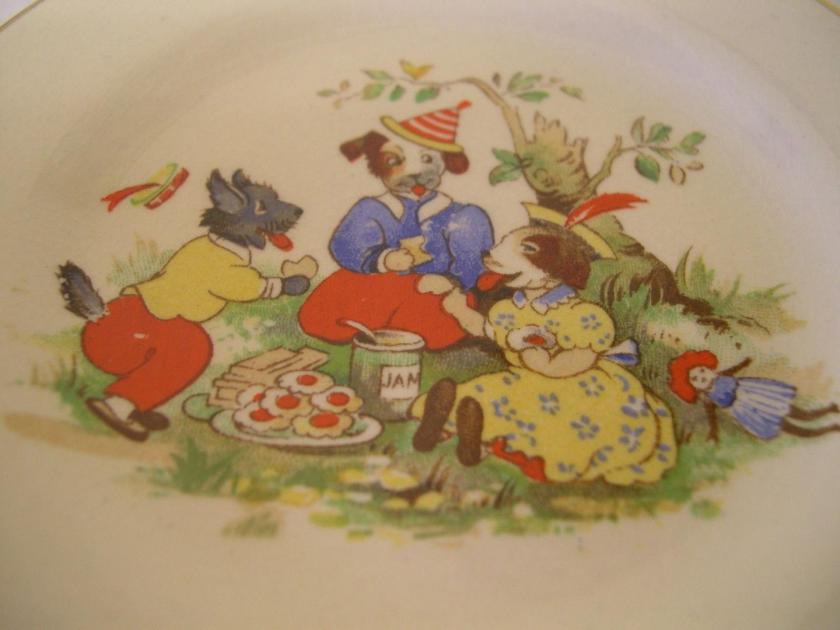
This delightful child’s tea service was made in the 1950s at the Staffordshire Tea Set Company’s Plex Street Pottery in Tunstall. We discovered this factory while researching the history of education in the Potteries.
This postcard shows Tunstall High Street at the end of the 19th century. Notice the tram line and the tram in the middle of the road. In the distance, you can see Lawton’s Tile Works at the Haymarket, where Roundwell Street joins High Street.




 North Staffordshire Heritage