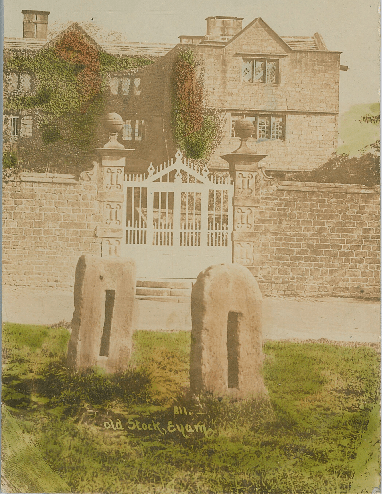
There were two sets of stocks in Tunstall in the 1840s. One set was in front of the steps leading to the market hall on the ground floor of the Courthouse in Market Square (Tower Square). The other set of stocks was outside the Police Station in High Street.
As a Museum Assistant who once got sent outsideof her primary school classroom for making a full stop too big, I am well-versed with just and fair punishment. With this in mind, this blog will be exploring the past use of stocks in towns and villages near Buxton to deter misbehaviour and facilitate punishment.
Derbyshire is home to several village stocks,scattered throughout its picturesque villages. The stocks at Chapel-en-le-Frith, for instance, are said to date from the Cromwellian period and are located on the town’s historic Market Place. The stocks currently viewable to visitors and residents, however, date from the eighteenth century. As the stocks are made from woodthey are naturally subject to decay and rotting, thus have been replaced overtime.
Photograph of the Old Stocks at Chapel-en-le-Frith. Acc. No. DERSB : PC 436.
Since the medieval period to the nineteenth century, stocks have been used to…
A bookseller, James Strapham, opened Hanley’s first library in 1790.
Called the Pottery Subscription Library, the library was a commercial venture which James ran from his bookshop. He charged customers two guineas to join the library and a guinea a year to borrow books.
In 1796, James sold the bookshop and the library to John Allbut, whose son Thomas acquired them at the beginning of the 19th century. Thomas ran the library until he retired on December 31st, 1852 when its books were transferred to the Mechanics Institution’s library in Gitana Street.
Shortly afterwards, the Mechanics Institution left Gitana Street and moved to new premises in Pall Mall.
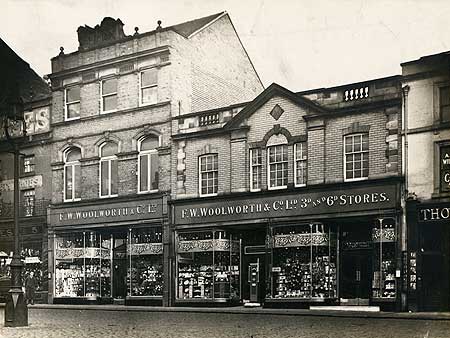
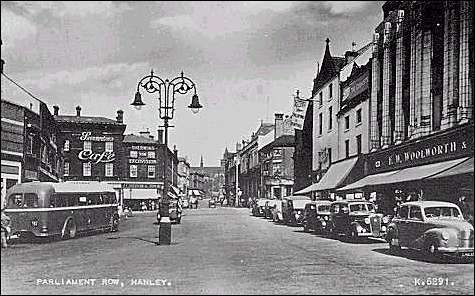
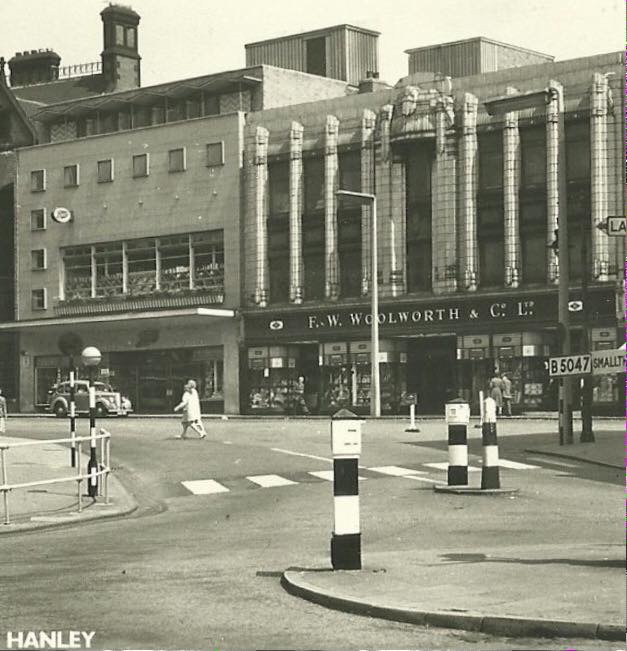
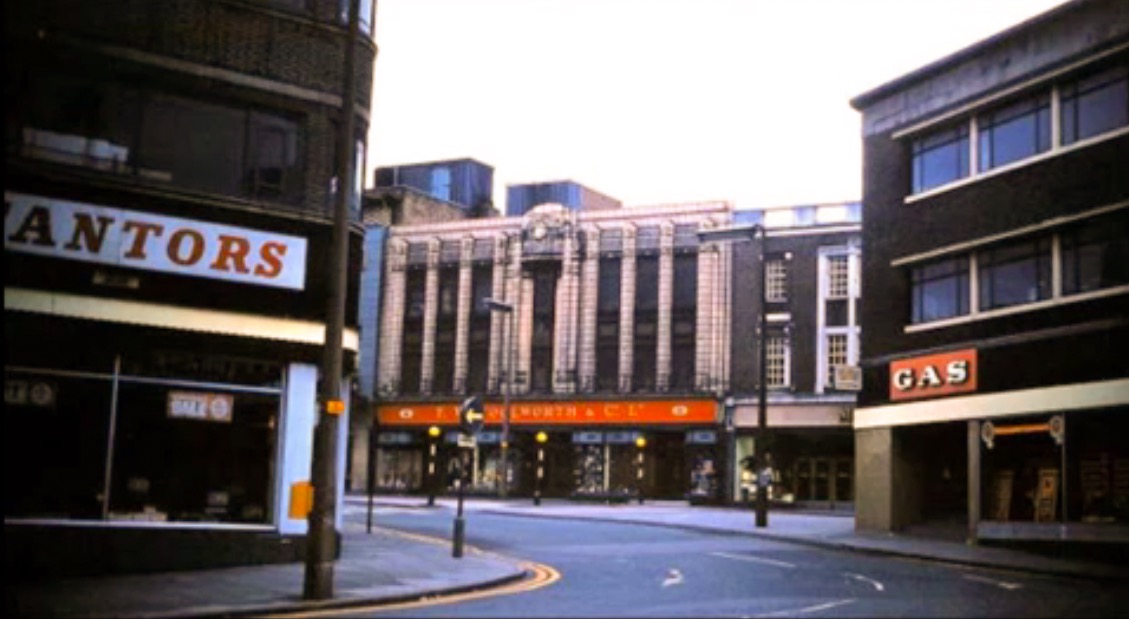
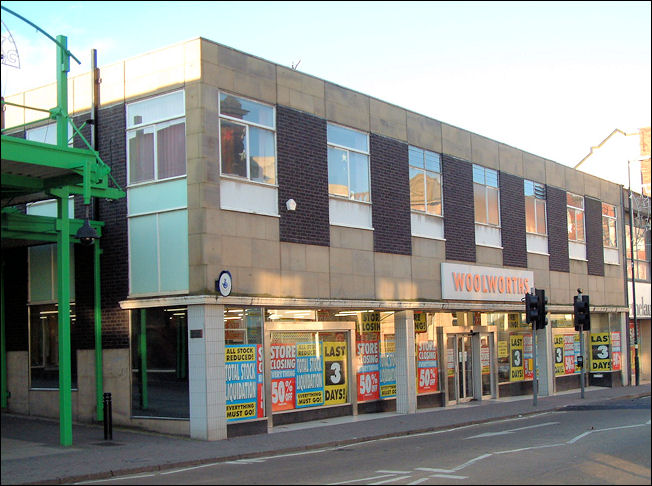
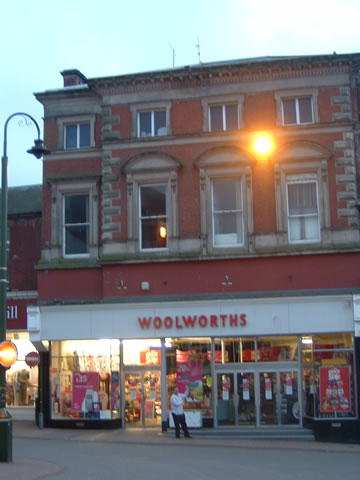
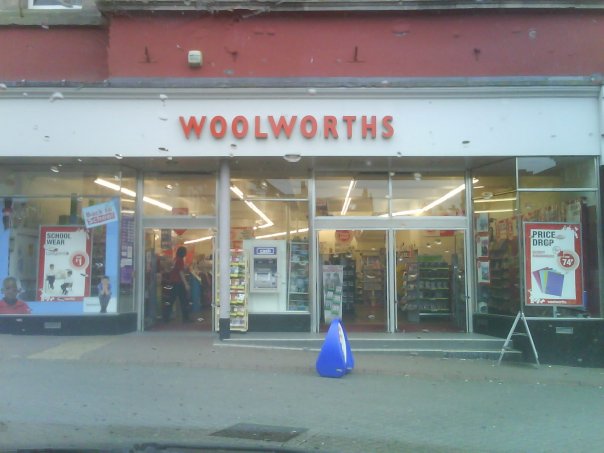
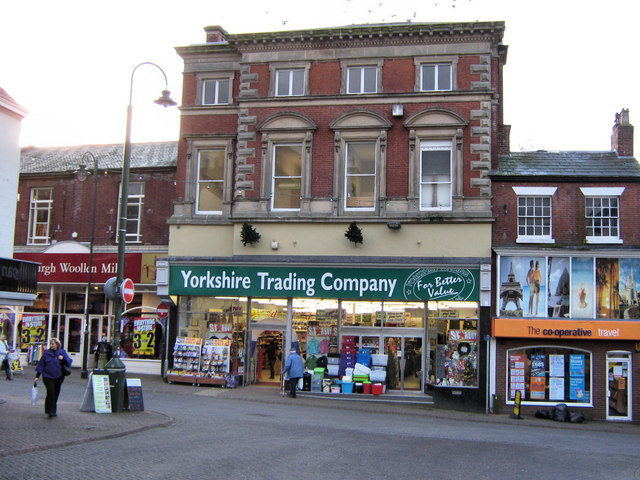
Until they closed in 2009, Woolworths stores dominated the High Street in Britain’s small towns and cities.
Affectionately known as “Woolies”, they sold a wide range of goods ranging from children’s toys and sweets to tins of paint and cutlery. Prices were reasonable and Woolworths attracted customers from all walks of life. If you and your family went shopping at Woolworths in Tunstall, please share your memories of shopping there with us. We look forward to hearing from you. Our email address is northstaffordshireheritage@outlook.com
George Gilbert Scott (1811-1878) was an English architect. He began his career designing workhouses. Between 1835 and 1845, George and his partner, William Moffatt, designed over 40 workhouses including the one at Newcastle-under-Lyme.
One of Victorian England’s leading architects, George Gilbert Scott, designed Newcastle-under-Lyme’s workhouse.
Born at Gawcott in Buckinghamshire on July 13th, 1811, George was the third son of the Rev. Thomas Scott and his wife, Euphemia.
Educated at home by his father, George became an architect. He went into partnership with William Bonython Moffatt. The firm specialised in building workhouses, and George designed Newcastle-under-Lyme workhouse. which accommodated 300 inmates.
The workhouse opened in 1840. An Elizabethan-style building in Keele Road, it cost £6,000. The workhouse was enlarged a few years later when an infirmary, workshops and a laundry were erected. Casual wards for vagrants were constructed in 1878.
During the 1880s, a hospital was built on land behind the workhouse.
The Parson’s Well, near the Methodist Church at Mow Cop, was one of the springs on Mow Hill that were given a stone surround in the 19th century. After erecting stone surrounds around the springs, local people started calling them wells. The two inscriptions on The Parson’s Well read, “The Parson’s Well A S 1858” and “Keep Thyself Pure”.
Ambitious plans have been made to save “Burslem’s new town hall”, a listed heritage building that houses the Queen’s Theatre and the Prince’s Hall.
The proposals made in a report prepared for Stoke-on-Trent City Council by architectural consultants Affinity Design and Management would cost over 12 million pounds to implement.
The theatre and the hall were abandoned many years ago, and it will cost about £320,000 to make the building safe.
If the council accepts them, the proposals could make the theatre a conference centre, an exhibition hall or a venue for Asian weddings and the foyer could become a bar or restaurant.
The Prince’s Hall would be turned into retail shops or become one or two-bedroom flats with a shared roof garden.
While researching Mow Cop’s heritage, we came across this old print of Mow Cop Castle, indicating there may be more truth than we realise in the many legends surrounding its building history.
We think the print is one of a series of local views painted by an artist whose nom de plume was Jotter. North Staffordshire Heritage is trying to trace the publisher, Picturesque Staffordshire. Please get in touch if you can tell us more about the castle or help identify Jotter.
Since our post was written, we have been told that the view of Mow Cop, which is on a postcard, was painted by Walter William Young (1868-1920). Can anyone give us more information about him?
Sandra, who grew up in Tunstall during the 1970s, remembers Pickle Onion Entry. The entry ran on the north side of a pottery factory in Scotia Road to Wardle Street, a cul-de-sac leading to The Boulevard.
Sandra can’t remember the factory’s name. She recalls that Barbers Palace backed onto the north side of the entry which was long and straight with high walls on either side. If you can remember the entry or know how it got its name, please get in touch and share your memories.
Like Sandra, we should like to know how the entry got its name and look forward to receiving your emails.
Note: Sandra contacted us a year ago. Although people can remember the entry no one has been able to tell us how it got its name. Can you solve the mystery?
Labour claims the government undervalues the importance of cultural education. It asserts that the government’s policies are reducing the number of people qualified to work in Britain’s expanding cultural industries.
Last year, Sheffield Hallam University suspended its degree course in English Literature.
The government believes the “arts and humanities” are low-level courses. They think these courses do not lead to employment. As a result, universities have reduced the number of students taking these subjects.
Since 2010, the number of students taking arts GCSEs has fallen by 40%. The music industry contributed £4bn to Britain’s economy in 2021. Nevertheless, the number of students taking music has fallen by 27%.
Commenting on the government’s policy, the shadow arts minister, Barbara Keeley, is reported as saying:
“The government’s squeeze on arts, culture and creative subjects is self-defeating. The arts clearly help young people and the creative economy. Despite this, arts subjects and experiences have been systematically excluded. They have been downgraded within the state-funded education system.”
She stated that the government was denying young people the opportunity to reach their full potential. It was not right that these subjects were reserved for children whose families afford fee-paying schools.