Fighting dogs were aggressive. When they fought, there was no stopping them.
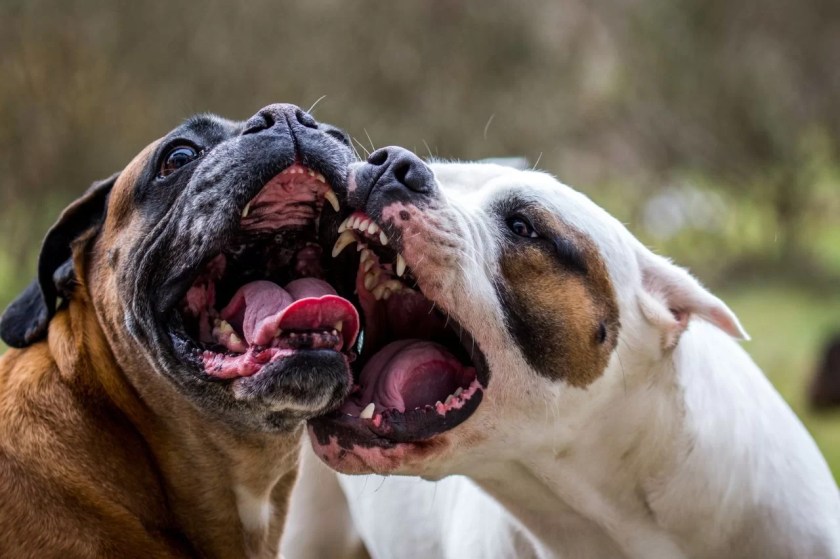
In his book Old Times in the Potteries, published in 1906, William Scarratt shares his memories of a dog fight.
Although dog fighting declined in the 1840s and 50s, there were still dog fights in Tunstall.
Bull terriers, or fighting dogs, had large yellow and white patches. They also had brindle and white patches on their bodies, over their eyes and on their ears. Their coats were course, and their tails were thick.
Fighting dogs were aggressive, although they were quiet and affectionate at home. They had to be forced to fight, and when they fought, there was no stopping them.
I saw a dog fight when I was a schoolboy. It was between two dogs and took place at dinnertime. One dog was a white bullterrier that weighed 24 lbs. The other was a cross-breed that weighed 28 lbs.
The struggle continued for several rounds until both dogs were exhausted. When the next round started, the dogs had to crawl to each other before starting to fight again.
At the end of each round, the dogs were picked up and taken out of the arena. The hairs caught in their mouths were removed before the next round.
The fight lasted a long time. The dogs continued to fight. To end the contest, their owners reached a compromise. They agreed that the dog entering the arena first would be the winner when the next round started.
The dogs fought for about an hour. When it ended, both dogs were too weak to walk. The men picked them up and carried them to the Grapes Inn. They took the dogs to an outhouse and weighed them.
Edited by North Staffordshire Heritage 2024
 North Staffordshire Heritage