Newfield and Smithfield in the 1790s

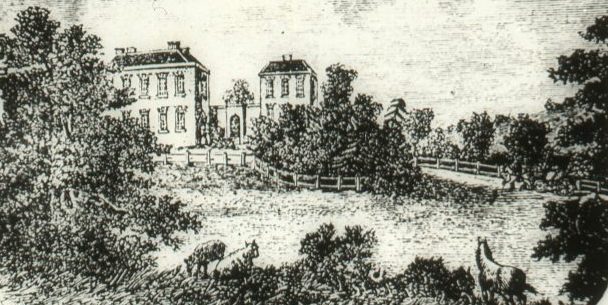
Smithfield Hall, which is shown above, was built in 1791 by Burslem pottery manufacturer, Theophilus Smith. In 1793, he built an industrial hamlet called Smithfield near the hall. Theophilus was declared bankrupt in 1800. He attempted to murder John Wainwright and was remanded to Stafford prison to await trial. When his wife and daughter visited him there, he murdered them and committed suicide. In 1801, the hall was bought by Jesse Breeze, who renamed it Greenfield Hall.

A Description of the Country From Thirty to Forty Miles Round Manchester, is a book published in 1795, compiled by Dr John Aikin. It describes Newcastle-under-Lyme and North Staffordshire’s pottery towns and villages as they were in the 1790s.

This edited extract from the book tells us what Newfield and Smithfield, two hamlets in the Township of Tunstall, were like in the 1790s.Newfield

Newfield is well situated for manufacturing purposes because there is plenty of coal nearby.

The hamlet belongs to Admiral Smith Child. He has a handsome estate there and lives at Newfield Hall. Smith Child owns Newfield Pottery. He is unlikely to allow more factories to be built in the hamlet in the foreseeable future.

Smithfield is the best place in the Potteries to manufacture earthenware. There are several strata of coal and clay, which are needed to make pottery. Smithfield belongs to Theophilus Smith. He owns a pottery and coal mines there. It is unlikely that there will be further industrial development in the hamlet.
Tunstall’s First Market

John Henry Clive founded an unincorporated company that gave Tunstall a market hall and a Market Place (Tower Square).

He was born at Bath on 29 March 1781. After his father’s death, John and his mother, Sarah, came to live in Longton.

On 28 May 1793, Sarah married earthenware manufacturer Charles Simpson at St. Giles’ Church, Newcastle-under-Lyme.  

John served an apprenticeship in the pottery industry. He married Lydia Cash on 30 September 1805 at St. Bartholomew’s Church, Norton-in-the Moors.

Shortly after John’s wedding, his stepfather, Charles Simpson, started making pottery at a factory in Sandyford.

Sarah and Charles left Longton and moved to Tunstall, where they lived at Newfield Hall. John and Lydia came to live with them. John managed the Newfield Estate for its owner, Admiral Smith Child, and went into partnership with him. They formed a company, Child & Clive. The firm mined coal and ironstone at Clanway Colliery and made earthenware at Newfield Pottery. 

John was an astute entrepreneur. He realised Tunstall was a growing industrial town. A town that needed shops, a market square and a civic building containing a covered market and a courtroom, where Justices of the Peace could hold Petty Sessions (Magistrates’ Courts) and try minor criminal cases.

John formed a company to finance the project and sold its shares to local businesspeople. The company leased a plot of land, on a field called Stony Croft, for 500 years at an annual rent of £5 from Walter Sneyd, the Lord of the Manor, who lived at Keele Hall. Shares in the company cost £25 each. John bought one share. Walter bought eight, and Ralph Hall, the company’s treasurer, bought two.  

Between 1816 and 1817, the company created Market Place, a market square surrounded by shops and erected a civic building. The building had two names until it became known as the Town Hall in the 1840s. The company called it the Courthouse, and the Sneyd family called it the Market Hall. In the late 1830s, Market Place’s name was changed to Market Square.

NSH-2o24(F) 

Tunstall’s 18th Century Pottery Industry

Some jasper made at Adams’ Greengates Pottery in Tunstall was equal to, if not superior to, jasper made by Wedgwood at Etruria

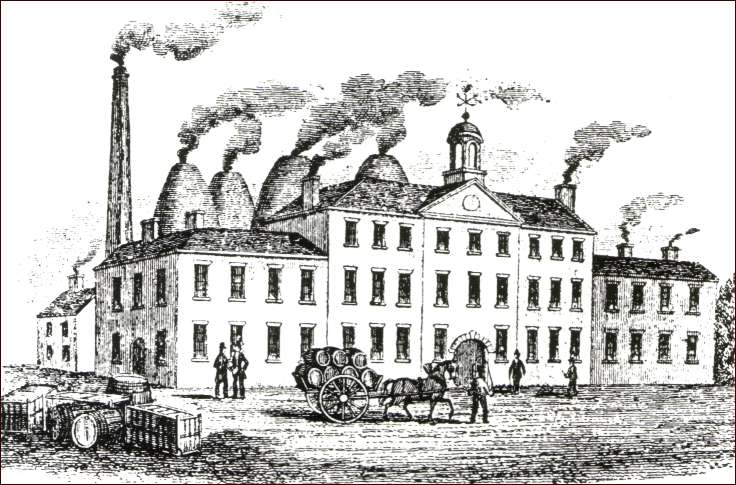
William Adams’ Greengates Pottery in Tunstall.

During the 18th century, the Industrial Revolution changed the face of Britain, making it the ‘workshop of the world’. 

Earthenware factories were built in Tunstall, a township that included Sandyford, Newfield and Furlong. At the end of the 18th century, there were seven factories making pottery. Small coal and ironstone mines were scattered throughout the district. Blue bricks and tiles were made in the Chatterley Valley. 

As early as 1735, William Simpson was making earthenware in the township. By 1750, Enoch Booth had a factory near a field called Stony Croft. The factory made cream coloured ware glazed with a mixture of lead ore and ground flint. 

In 1763, Admiral Smith Child built Newfield Pottery, where he produced earthenware. By the 1780s, two brothers, Samuel and Thomas Cartlich, were making pottery and mining coal at Sandyford. There were brick kilns, coal mines, a flint mill and a crate maker’s workshop at Furlong. 

During the 1740s, George Booth and his son Thomas leased a pottery factory. on an estate called Will Flats, next to Furlong Lane. In 1779, Burslem pottery manufacturer William Adams rented the factory and part of the estate.

On 1 March 1784, William purchased the factory and the land he had been renting. He changed the estate’s name from Will Flats to Greengates and demolished the old factory.

William built Greengates Pottery (shown above), where he made high-quality stoneware and jasper ornaments for the luxury market. He employed Swiss modeller Joseph Mongolot. Joseph helped him create models for moulds to produce the bas-reliefs for jasper and stoneware. 

Pottery produced by William was sold to wealthy customers. Some purchased ware from his showrooms in Fleet Street, London. Others visited the Greengates factory’s showrooms where they bought tea sets, dinner services, jasper, and stoneware ornaments.  

In his book, Marks and Monograms on Pottery and Porcelain, William Chaffer mentioned the quality of Adams’ jasper. He said some of it was “equal to, if not superior to” jasper made at Etruria by Wedgwood.

Revised: July 2025