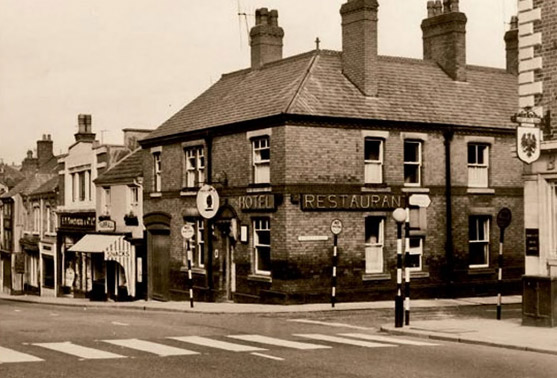
Tom Brown’s Journey to Rugby

At three o’clock on a cold, frosty February morning in 1834, his father put him on an express stagecoach bound for Rugby. Thomas had an outside seat next to the guard who looked after him during the journey.
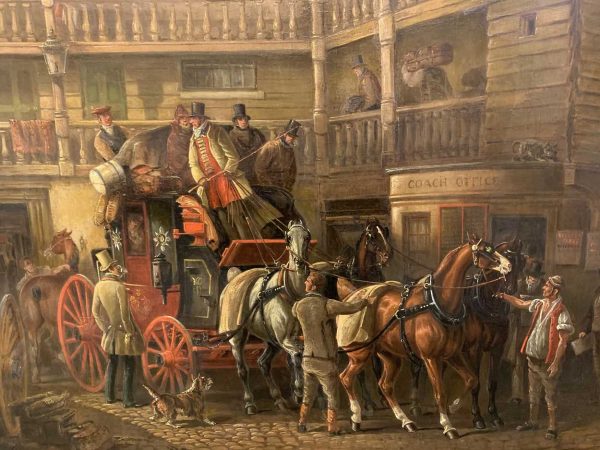
A typical scene at a 19th Century Coaching Inn

Judge Thomas Hughes, who wrote Tom Brown’s Schooldays, presided over County Courts in South Cheshire. The book is an autobiographical novel about his early life.

His father sent him to Rugby School when he was eleven. In the book, he describes his first journey to school.

At three o’clock on a February morning in 1834, his father put him on an express stagecoach bound for Rugby. Thomas had an outside seat next to the guard who looked after him during the journey. It was a bitterly cold and frosty morning. He was given a glass of hot beer and rum to keep out the cold. Yet, he was still half-frozen when the coach stopped for breakfast at a coaching inn.

“Twenty minutes here, gentlemen,” says the coachman as they pull up at half past seven at the inn door.

Have we not endured nobly this morning, and is not this a worthy reward for much endurance? We enter a low, dark, wainscoted room whose walls are hung with sporting prints. A hatstand is by the door, with a whip or two in it. They belong to commercial travellers who are still snug in bed. The room has a blazing fire, casting a warm and inviting glow. There is quaint old glass over the mantelpiece… The table is covered with the whitest of cloths and china dishes full of food. There is a pigeon pie, a ham, cold beef cut from a mammoth ox and a large loaf of bread. The stout head waiter comes, puffing under a tray of hot viands. On the tray are kidneys, roast beef, rashers of bacon, poached eggs, buttered toast, muffins, tea and coffee. The table can never hold it all. The cold meats are taken off the table and put on the sideboard. They were there for show and to give us an appetite. And now fall on gentlemen all.

“Tea or coffee sir?” says the head waiter coming round to Tom.

“Coffee, please,” says Tom, with his mouth full of muffins and kidneys. Coffee is a treat to him; tea is not.

Our coachman has breakfast with us. He eats cold beef and drinks a tankard of ale brought to him by the barmaid.

For breakfast, Tom had kidney and pigeon pie. He drank coffee, and his little skin became ‘as tight as a drum.’ After breakfast, he paid the head waiter and boarded the stagecoach to continue his journey.

Edited by The History Factory (2024)
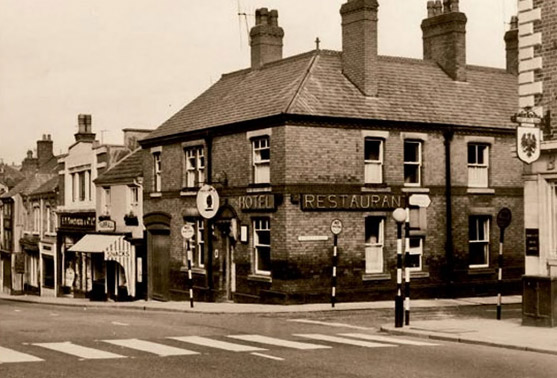
Self-Service Stores Revolutionised Shopping

In the 1950s and 60s, self-service stores replaced local shops in town centres throughout North Staffordshire and South Cheshire.

If your family used self-service stores, please share your memories of shopping there with our readers. Tell them how self-service stores differed from High Street and corner shops.

To read the full post, click on “How England’s First Self-Service Store Heralded the Birth of the Modern Supermarket” below the photograph.

Memory Lane – Woolworth’s Stores

Until they closed in 2009, Woolworth’s stores dominated the High Street in many towns and cities.

Affectionately known as “Woolies”, they sold a wide range of goods. These included children’s toys, ladies’ clothes, chocolate, tins of paint, and cutlery. Prices were reasonable and Woolworth’s attracted customers from all walks of life. Did you and your family shop at a Woolworth’s’ store in North Staffordshire or South Cheshire? Please share your memories of shopping there with us.

Email us at northstaffordshireheritage@outlook.com

To read the whole post, click on “8 Classic Features To Help You Recognise an Old Woolworth’s Store.” You will find it below the photograph.

Memory Lane – Congleton Woolworths

There was something for everyone at Woolworth stores. They were located on the High Street in major towns and cities throughout England and Wales.

Affectionately known as “Woolies”, these stores were like Aladdin’s Cave. They were stocked with a wide range of goods. These goods attracted customers of all ages from diverse backgrounds. Among the items Woolworths stocked were toys and games, as well as chocolate and sweets. They also sold pop records, portable radios and car accessories. Other stock included household paint, stationery, and stamps. All stores sold electric fires and fan heaters. The larger ones stocked garden furniture and plants. The list is endless…

Everyone who shopped at Woolworths will have memories of the store they bought from. They will remember its staff and the things they sold. If you and your family shopped at “Woolies”, please share your memories with us and tell us what you bought. Email, northstaffordshireheritage@outlook.com

To learn more about Congleton Woolworths, click “Woolies Buildings-Then and Now” at the top of the extract.

sabrina's avatarWoolies Buildings - Then and Now

35 – 37 High Street, Congleton, Cheshire CW12 1AX

Woolworths opened in Congleton in 1927. It was a small store with a typical Woolworths look to the first floor – see below.

Congleton Woolworths 1956 Congleton Woolworths 1956

Source: Congleton Through Time, Alcock J.

In 1968 Woolworths bought The Bears Head Hotel and Farrell’s Sweet Shop next door. They were demolished along with Banks Car Garage on Market Street to build a Woolworths superstore. At the time Mr. G. Lamb was the store manager, pictured below with his staff.  These photos were in The New Bond (The House Journal of F. W. Woolworth and Co. Limited) June/July 1970 – kindly sent in by Richard Northover. He says “This was the forerunner of Woolworths/Woolies News, which was all about people and stores – not the political rag that was Woolies News!! It was named after the original head office in New Bond Street London…

View original post 152 more words