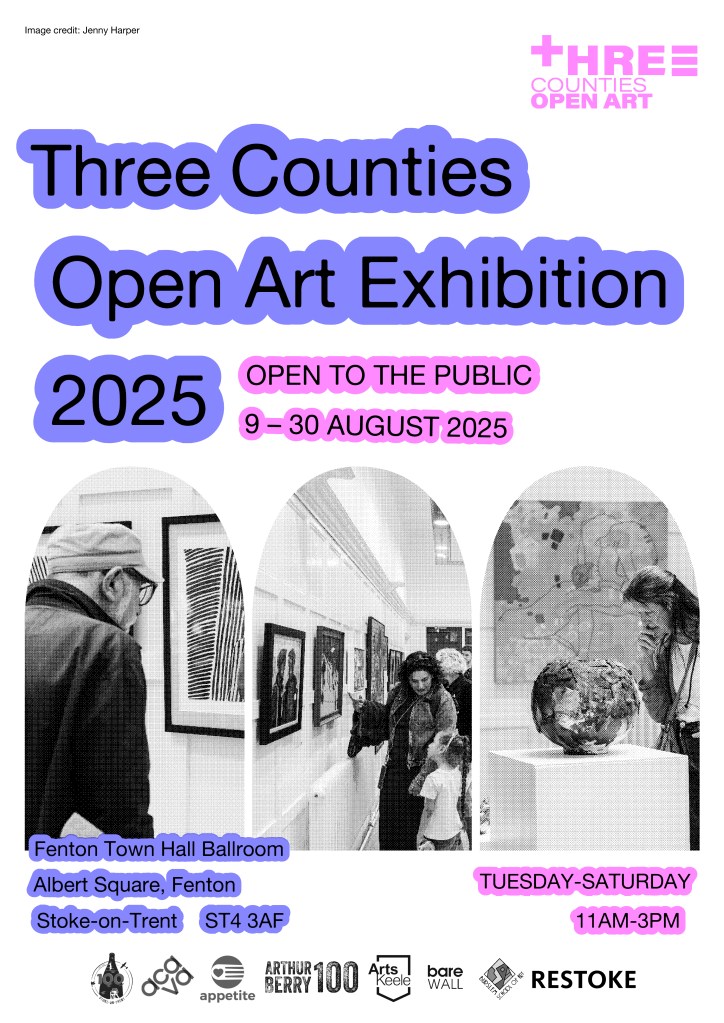
This year’s Three Counties Open Art Exhibition is being held in the ballroom at Fenton Town Hall. The exhibition runs from Saturday, August 9th, until Saturday, August 30th. It will be open on Tuesdays, Wednesdays, Thursdays, Fridays and Saturdays.
Artists from Staffordshire, Shropshire, and Cheshire are exhibiting their work, which includes paintings, drawings, sculptures, and moving images.
The cafe in the town hall will be open for refreshments and light bites.
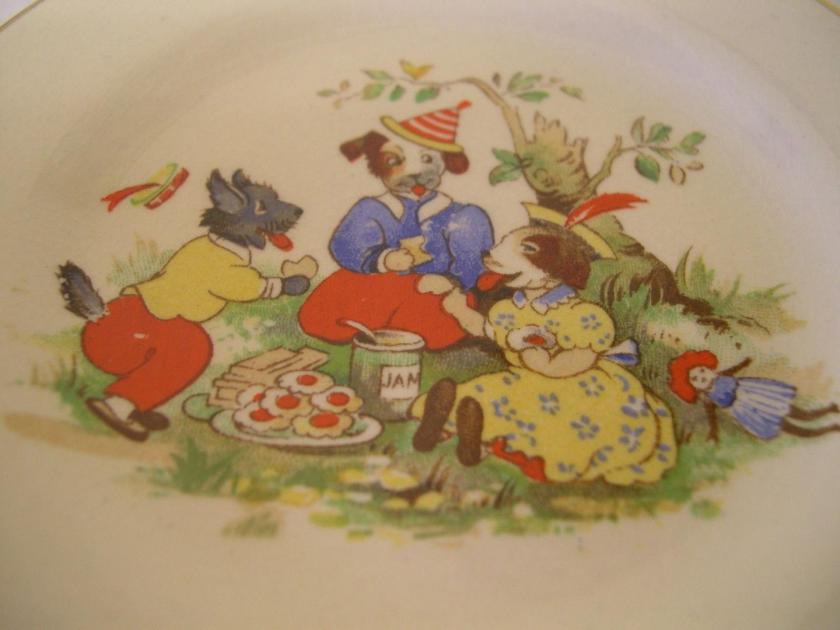
This delightful child’s tea service was made in the 1950s at the Staffordshire Tea Set Company’s Plex Street Pottery in Tunstall. We discovered this factory while researching the history of education in the Potteries.
This postcard shows Tunstall High Street at the end of the 19th century. Notice the tram line and the tram in the middle of the road. In the distance, you can see Lawton’s Tile Works at the Haymarket, where Roundwell Street joins High Street.
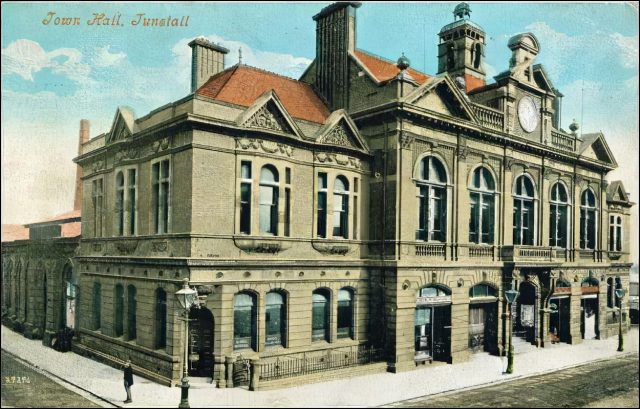
Tunstall Town Hall is part of Tunstall’s unique late Victorian Civic Centre. It was designed by Absalom Reade Wood and opened by John Nash Peake on 29 October 1885.
John Nash Peake, after whom Nash Peake Street is named, was one of Tunstall’s most flamboyant characters. Born in Tunstall on 13 April 1837, he was the son of Thomas Peake.
Thomas owned Tunstall Tileries, in Watergate Street. He was the town’s Chief Bailiff (Chief Constable) and Chairman of the Board of Health from 1858 to 1861.
John, whose Christian names were John and Nash, was educated at the North London Collegiate School. At school, he showed considerable artistic ability. When he left school, John became a student at the Royal Academy, where he studied under Millais, one of England’s leading artists.
One of John’s paintings, Alpine Monks Restoring a Traveller, was exhibited at Burlington House when he was 18 years old. A year later, he showed another painting, The Last Hours of the Condemned, which portrayed a soldier awaiting execution.
Although he could have stayed in London and become a professional artist, John returned to Tunstall in the 1850s. He joined his father’s company, which made bricks, tiles, water pipes and ornamental garden pottery. John managed the firm after Thomas’s death in 1881. Under his management, the works doubled in size. It became one of the largest tileries in the world. There were 35 ovens producing more than 250,000 tiles a week.
John had a strong personality. He was a man with a keen intellect and a commanding presence, who was eloquent, versatile and persevering.
A devout Christian, John was an evangelist and a member of the Church of England. He opposed the Oxford Movement’s attack on the Reformation and its plan to make the Pope head of the Church of England.
His views on the activities of the Oxford Movement were shared by Sir Smith Child and Tunstall’s leading Methodists.
John spoke out against the movement’s growing influence and the introduction of Roman Catholic dogma and rites into Potteries’ churches. The Wesleyan Methodists invited him to lay one of King Street Methodist Church’s* four foundation stones.
The stones were laid on 20 October 1873. During the ceremony, John said he was sure that the Wesleyan Methodist Church would defend the Protestant faith. He was grieved to see the Church of England abandoning its traditions and embracing the doctrines of Roman Catholicism. John advised the Wesleyans to adhere to their faith and not allow anyone to interfere with it. He told them that the doctrines being introduced into the established church would destroy the Reformation.
John was a member of the Liberal Party. In 1869, he became a member of Tunstall’s Board of Health. His energy and determination led to the creation of the town’s Victorian civic centre. This centre included a new town hall and a public library as well as a school of art and science, a museum, a fire station, public baths, a drill hall and a recreation ground.
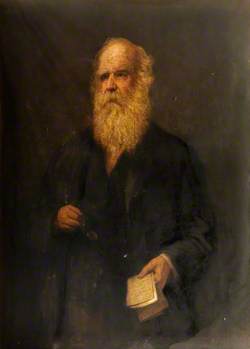
Despite his busy commercial and political life, John retained his interest in art. He painted portraits of Queen Victoria, Lord Roberts, and his father (Thomas Peake). He also painted Sir Smith Child and civic leaders, including Alfred Meakin, George Wilks, Henry Smallman, and Thomas Booth. These portraits hung in the town hall. A self-portrait which he painted was hung in the museum. Other examples of his work displayed there included Bosley Reservoir and Cloud End, The Fishing Fleet at Tenby, Menai Suspension Bridge, The Isle of Arran and The Matterhorn.
He designed the Free Library sign that hangs outside the Jubilee Building and Victoria Park’s main gates, which were erected in memory of his father.
On 15 October 1903, John gave Tunstall a mahogany cabinet with drawers to store the town’s records. One of his portraits of Queen Victoria is incorporated into the cabinet. The cabinet remains in the council chamber of the former town hall. Its doors open to reveal a list of the main events in the town’s history. There are also photographs of the chief bailiffs (Chief Constables), clerks, and surveyors from 1855 to 1909.
A bronze portrait bust of John was unveiled in the council chamber. He was given an illuminated address to thank him for his services to the town.
John, who was 66 years old, said: “I know well that day by day, I come nearer to a time when I shall be forever absent from the council chamber and the streets. Think, then, what it means to me this surprising tribute of yours that I shall not be forgotten: that I shall be with you, dwelling among my own people in imperishable bronze.”
He died three years later on 29 April 1905. The bronze bust disappeared many years ago. So far, all attempts to trace it have failed.
*King Street is now Madison Street.The church was demolished in the 1970s.
Note: John Nash Peake (1837-1905) is one of a series of articles Betty Martin wrote before she died in 2023. More articles from this series will be posted periodically.
Another week is coming to an end. We have been busy preparing a series of posts about Tunstall’s heritage. The posts will tell you about the people who created the town we know today. They will introduce you to the town’s historic buildings. You will learn the history of its churches and chapels. Readers of these posts will discover Tunstall’s unique Victorian civic centre. Other posts will tell you about stagecoaches and coaching inns. They will cover working conditions in factories and mines, as well as local government and the administration of justice.
It’s time to close the office. Enjoy your weekend. We’ll be back on Monday. See you then.
This video showcases Etruria Industrial Museum. The museum is housed in a 19th century steam powered potter’s bone and flint mill. Built in 1857, the mill is a Grade II* listed building.
The museum is at Etruria Junction, where the Caldon Canal joins the Trent & Mersey Canal.
There is a statue of James Brindley (1716–1772) at the junction, which was the site of Etruria Wharf. A tramway ran from the wharf to Hanley/City Centre. The site of Stoke-on-Trent’s first public hospital is near the museum. Built in 1803, the hospital was called the Dispensary and House of Recovery.
During the 19th century, Sir Smith Child was the most generous philanthropist in North Staffordshire. He used his vast wealth to support hospitals, build schools and churches, fight poverty and help handicapped children.
Although many historians think that his family name was Smith Child, it wasn’t. Smith was his Christian name and Smith was his surname. Smith Child was born at Newfield Hall, Tunstall, on 5 March 1808. His grandfather was Admiral Smith Child, who was a partner in Child & Clive. The firm owned Newfield Pottery and Clanway Colliery, where it mined coal and ironstone.
Smith’s parents were John George and Elizabeth Child, née Parsons. When his father died in 1811, he became heir to the Newfield estate and other estates owned by his grandfather.
Smith was educated at St. John’s College, Cambridge.
On 28 January 1835, he married Sarah Hill, an heiress, at Fulford Church. The couple had three children – two boys and a girl. The family lived at Newfield Hall until 1841, when they moved to Rownall Hall, Wetley. Sarah’s father, Richard Clarke Hill, who owned Stallington Hall, died in 1853, and the Childs went to live there.
Smith took a keen interest in politics. He was a Conservative. In 1851, he became the Member of Parliament for North Staffordshire and held the seat until 1859.
In 1868, Smith was made a baronet.
He stood for Parliament again. He won the election and was returned to Westminster as the Member for West Staffordshire. A seat he held until 1874, when he retired from politics.
Smith was a philanthropist who took a keen interest in the welfare of disadvantaged individuals. He used his wealth to support local charities that were helping those in need.
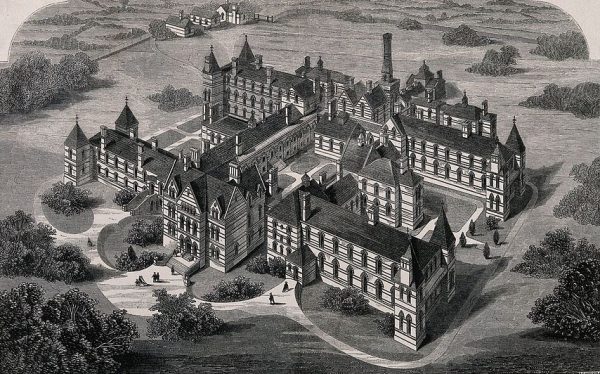
North Staffordshire’s new infirmary at Hartshill. Smith Child gave £1,500 towards the cost.
He provided financial assistance to the North Staffordshire Infirmary at Etruria and made an annual donation to its general fund. Smith was a member of the hospital’s management committee and served as its president on three occasions. As well as making an annual donation, he contributed to the infirmary’s special funds. The management committee decided to close the infirmary at Etruria and build a new one at Hartshill. It launched a public appeal to raise money to finance the project. A building fund was created, and Smith contributed £1,500. When the Victoria Wards were being erected, he gave £250 towards the cost.
After one of his sons died, Smith built and endowed the Smith Hill Child Memorial Hospital. The hospital, erected in the grounds of the infirmary, was designed to care for patients who were incurable. The infirmary did not have the resources to care for incurable patients, and the project was abandoned. The building was used as a nurses’ home until 1877, when it was converted into a children’s hospital.
In 1875, Smith founded a charity that sent patients who were convalescing to convalescent homes. He endowed the charity with £6,500. The money was invested in securities. The income from these securities was used to send hundreds of men, women and children to seaside convalescent homes.
Smith realised that the pottery industry’s future depended on vocational training.
He was one of the founders of the Wedgwood Institute and organised competitions that awarded prizes to industrial designers. To encourage sales representatives to study foreign languages, he gave prizes to those learning to speak French, German or Spanish.
Although he left Newfield Hall in 1841, Smith retained an interest in Tunstall and its citizens’ welfare. He always referred to people living there as his friends and neighbours.
St. Mary’s Church and School in Lime Street, Tunstall. Both the church and the school were demolished many years ago.
His first gift to Tunstall was £100, which was given to help finance the construction of Christ Church. He gave £50 when the church appealed for money to build a National School. The appeal was successful, and the school was built in King Street (Madison Street). When St. Mary’s Church launched an appeal to raise money to build a school, he gave £100.
Smith built the church schools in Goldenhill and created a charity to support all church schools in Tunstall and Goldenhill. He helped finance the construction of St. John’s Church in Goldenhill and endowed it with £1,000.
During the 1880s, he made donations to help regenerate Christ Church and St. Mary’s Church. In 1884, he established a workingman’s temperance club at Calver House in Well Street (Roundwell Street).
Six years later, in 1890, he founded the Tunstall Nursing Association. The association was a charity. It employed trained community nurses, who provided free medical care to patients being treated at home.
Tunstall publicly recognised Smith’s generosity in 1893. The clock tower in Market Square (Tower Square) was erected to make sure that he would never be forgotten.
Smith was to ill to attend the tower’s unveiling ceremony. His health continued to decline. He died three years later and was buried in Fulford churchyard
If you and your family worshipped at St. Mary’s or you were at pupil at the school, please use Comments to share your memories with us.
Sir Smith Child (1808-1896) was written by Betty Martin before she died in 2023. More articles she wrote will be posted periodically.
Once again, Hanley Park has won the prestigious Green Flag Award. The park has received the award for five consecutive years. This confirms its status as one of the best parks in the UK.
Councillor Amjid Wazir OBE, the city council’s cabinet member for city pride, enforcement and sustainability, said:
“This is a fantastic achievement and a massive credit to the team who care for Hanley Park all year round. They always keep the highest standards. The Green Flag award is a clear sign of their dedication.
“Parks like Hanley are vital places where communities can come together. Congratulations to everyone involved. Your pride in our city can be seen by everyone.”





 North Staffordshire Heritage