John Lloyd, whom Sir Morien Morgan, the Director of the Royal Aircraft Establishment at Farnborough, said was “one of the 20th century’s leading aeronautical engineers”, is Stoke-on-Trent’s forgotten aircraft designer.
His most important contribution to aviation history was research into laminar flow and the creation of experimental Flying Wings that helped to create the V Bomber force and Concord.
Born near Swansea in 1888 into a Welsh-speaking family, four-year-old John could not speak English when they moved to the Potteries. An intelligent child, he quickly mastered the English language and won a scholarship to Hanley High School. Leaving school at sixteen, he became an apprentice at Shelton Bar, an iron and steel works at Etruria and studied engineering at Stoke Technical School.
Fascinated by the Wright brother’s attempts to build a petrol-engine-powered glider, he designed and built model flying machines in his spare time.
Before the First World War (1914-1918) aeroplanes had wooden frames covered with canvas. Having studied aerodynamics, John believed that an all-metal aircraft could be built. When war broke out, he was employed by the Royal Aircraft Factory to design composite wood, metal and canvas fighter planes.
Coventry-based aircraft manufacturer Armstrong Whitworth made him its chief designer in the 1920s, and he designed the Siskin fighter bomber.
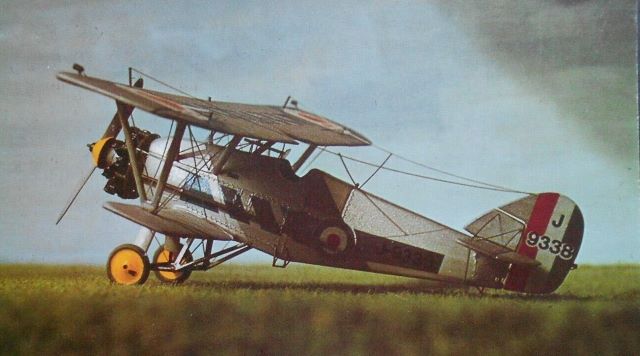
The Siskin
In 1923, a specially built two-seater Siskin 11 won the King’s Cup Air Race, reaching a speed of 149 miles per hour. Shortly afterwards, he modified the aircraft’s design and constructed the Siskin 111, the Royal Air Force’s first all-metal framed biplane.
Armed with two Vicker’s machine guns, the aircraft could carry four small bombs. It had an open cockpit and was powered by an Armstrong Siddely Jaguar radial piston engine.
This post is taken from a series of articles about John Lloyd written by Betty Martin when she was researching Aviation History. Copyright: North Staffordshire Heritage 2024.
Civil Aviation developed rapidly after the First World War.
In March 1924, the government set up Imperial Airways to carry passengers and mail throughout the British Empire.
New routes were established linking England with South Africa, India, Australia, New Zealand and Hong Kong. Short-range planes made the journey in stages, flying to airports spaced out along the route.
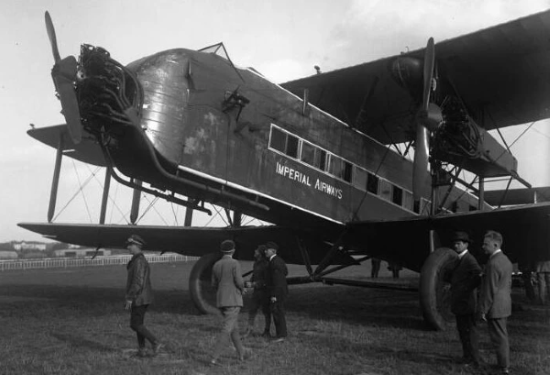
Aircraft manufacturers were asked to build bigger more powerful planes. In 1925, John designed the Argosy a three-engined biplane big enough to carry 20 passengers. Imperial Airways ordered seven Argosys which flew from Croydon to Basle Brussels and Cologne.
An airmail service opened between England and India in 1929 and Imperial Airways asked Armstrong Whitworth to build a four-engined monoplane capable of carrying passengers and mail.
John designed the Atalanta, a commercial transport plane with a range of 540 miles that could carry 17 passengers. The Atalanta made its first flight on 6 June 1932 and appeared at the Hendon Air Display three weeks later. Imperial Airways bought eight aircraft, and the first went into service on 26 September.
The company assigned four Atalantas to its base in South Africa. The other four were sent to India, flying from Karachi to Calcutta, Rangoon and Singapore.
During the 1930s, three Atalantas crashed, and in 1939, the remaining aircraft were transferred to British Overseas Airways. They were requisitioned by the Royal Air Force in 1941 and given to the Indian Air Force, which used them for coastal reconnaissance.
End of Part Two
This post is taken from a series of articles about John Lloyd written by Betty Martin when she was researching Aviation History. Copyright: North Staffordshire Heritage 2024.
Photograph of the Argosy from Bundesarchiv, Bild 102-00921A / CC-BY-SA 3.0. Imperial Airways’ Advertisement is in the Public Domain.
The Whitley Bomber before it was fitted with Rolls Royce Merlin Engines.
Realising that Germany was preparing for war, the government decided to modernise the Royal Air Force. It asked the aviation industry to build fast heavily armed monoplane fighter aircraft and long-range bombers to replace the air force’s old-fashioned biplanes.
John designed the Whitley (pictured above), a long-range two-engined heavy bomber. It was originally powered by two Armstrong Siddeley Tiger IX radial engines that were later replaced by Rolls Royce Merlin Engines.
The Whitley’s maximum speed was 230 miles per hour. It had a range of 2,400 miles and could carry bombs weighing up to 7,000 lbs.
A front-line aircraft from 1939 to 1942, the Whitley played a major role in the Royal Air Force’s bombing offensive against Germany and Italy. During the Battle of Britain, it bombed Belin and Italian aircraft factories, munitions works and railway marshalling yards.
The Whitley’s last operational flight was on 30 May 1942 when it took part in the first 1,000 bomber raid on Germany. The target was Cologne, and for almost 90 minutes over 3,000 tons of bombs rained down on the city.
After designing the Whitley, John built the Albemarle, a twin-engined transport plane flown by both the Royal Air Force and the Soviet Air Force.
The Albemarle
Flying from bases in North Africa, the Albemarle took part in the invasion of Sicily. On D-Day, it dropped paratroopers into Normandy and, during Operation Market Garden, towed gliders carrying airborne forces to Arnhem.
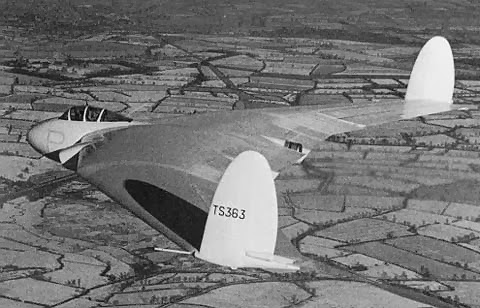
Between 1942 and 1949, John worked on the Flying Wing, an experimental tailless jet aircraft. Hoping he would be able to design a tailless airliner, John built a two-seater tailless glider that flew successfully.
Impressed by the glider’s performance, the government allowed him to build two jet-powered Flying Wings. One crashed. The other was sent to the Royal Aircraft Establishment at Farnborough where it was used in tests that helped develop the V Bomber force and Concorde.
In the 1950s, John created the Seaslug Missile for the Royal Navy which was undoubtedly the best ship-to-air guided missile in the world.
Retiring in 1959, John went to live with his daughter in London. A modest man who never boasted about his achievements, John died aged 90 at Kingston-on-Thames on 16 November 1978.
These posts about the life of John Lloyd are from a series of articles about Aviation History written by Betty Martin. Copyright: North Staffordshire Heritage 2024. More articles by Betty will be posted from time to time.
Starting on Friday, 2nd February 2024, Miranda Goodby, the former head of ceramics at the Potteries Museum and Art Gallery, is running a six-week course exploring the social history of the pottery industry.
The course at Newcastle’s Brampton Museum costs £80. Students will learn about Newcastle’s forgotten pottery industry, the growth of the Staffordshire Potteries in the 18th and 19th centuries, working conditions in the industry and the dramatic changes that took place in the 20th century.
More details can be obtained from the Brampton Museum.
Re-Form Heritage, a Stoke-based charity that owns Middleport Pottery, is getting money to help save dilapidated buildings in Stoke-on-Trent.
The money from the Architectural Heritage Fund’s Heritage Development Trust will help to preserve historic buildings and kick-start the regeneration of key heritage sites in the Potteries.
Not far from Leek, the Cheddleton Asylum, later called St Edward’s Hospital, was the third County Asylum to be built in Staffordshire. This vast institution, initially designed to accommodate 618 patients in 16 wards, was intended to relieve chronic overcrowding at the Stafford and Burntwood Asylums. The site at Bank Farm, Cheddleton, near Leek, was decided upon in preference to the original proposal of land at Bramshall Park Farm, Uttoxeter, because it was on elevated land; a criteria considered essential to provide a healthy environment for the patients.


 North Staffordshire Heritage