The two people from different backgrounds who had the greatest influence on my life were Miss Wood, the headmistress, and Mr Williams, the caretaker.
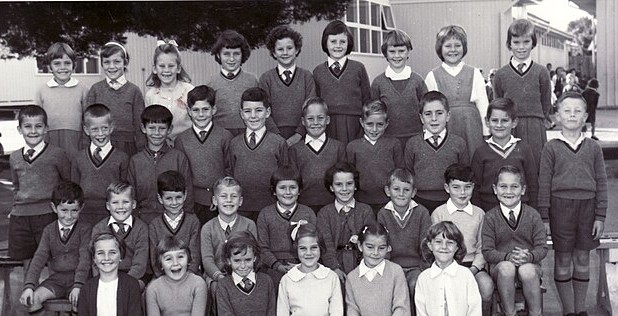
David Martin, North Staffordshire Heritage’s chief executive, remembers his school days in Tunstall, Stoke-on-Trent.
During the 1950s, I went to Central County Mixed School in Tunstall.
Mr Williams was the caretaker, and Miss Wood was the headteacher.
The school’s cellars, where Mr Williams had a table and chair, fascinated me. They were dark and dismal, with cobwebs hanging from the ceilings. I visited the cellars most dinner times. While I was sitting on a pile of coke drinking Tizer and eating potato crisps, Mr Williams told me about Medieval Tunstall and its courthouse in the market square. He vividly described the markets and fairs held there when the court was sitting.
Mr Williams showed me two large rooms, each housing a small Robin Hood boiler. He said these rooms had been the condemned cells beneath the courthouse, where men and women were held before being hanged in the square on market days. I sat enthralled as he told me about the cases heard by the court, and I decided to become a barrister.
My visits to the cellar ended when Miss Wood saw me walking across the playground covered in soot.
Despite giving the impression that she was a strict disciplinarian, Miss Wood was a person who loved and cared for children.
To keep me out of mischief, Miss Wood persuaded me to help her in the library after dinner. She shared her passion for history and classical literature with me. One afternoon, she took me to a second-hand book stall in Tunstall Market. I liked the stall and visited it on Saturday mornings to buy two or three books. The stall’s owner always gave me a discount, and I quickly acquired a collection of children’s classics and history books.
Miss Wood was an inspiring teacher whose passion for literature fired my imagination. Under her watchful eye, historical figures and characters from novels jumped off the pages and came to life in my mind’s eye. Her passion was infectious. I began to share her love of Shakespeare, Milton, Dickens and Hardy. My visits to the cellars were soon forgotten. I was now walking with Heathcliff on the moors surrounding Wuthering Heights, jousting with King Arthur and the knights of the Round Table, travelling around the world with Phileas Fogg and sailing to Treasure Island with Jim Hawkins and Long John Silver.
Most of my free time at home was spent reading. I lost interest in sports and rarely watched television. Looking back, it seems strange that two people from different backgrounds, whom I met at school, had such a significant influence on my life.
 North Staffordshire Heritage