Friday NewsDesk

Friday NewsDesk is a new regular weekly post that will tell you about North Staffordshire Heritage’s activities.

Worldwide interest has been shown in Chatterley Whitfield’s future. The creation of a circular heritage tourist trail linking Burslem, Ford Green Hall, Chatterley Whitfield and Biddulph Grange with Mow Cop and Kidsgrove.

North Staffordshire Heritage is continuing to research Mercia and its legal system. This is a long-term project, which is expected to last for eight or nine months.

Our new series of posts about the Township of Tunstall starts in September, and we will give you more details at the end of August.

We hope you all have a relaxing and enjoyable weekend. Take care and stay safe. We’ll see you again on Tuesday.

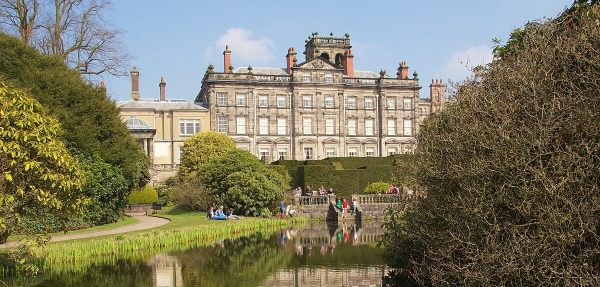
Image of Biddulph Grange Creative Commons Attribution-Share Alike 4.0 International license. Photograph by Mike Peel (www.mikepeel.net)
North Staffordshire’s Industrial Landscape Merits World Heritage Site Status

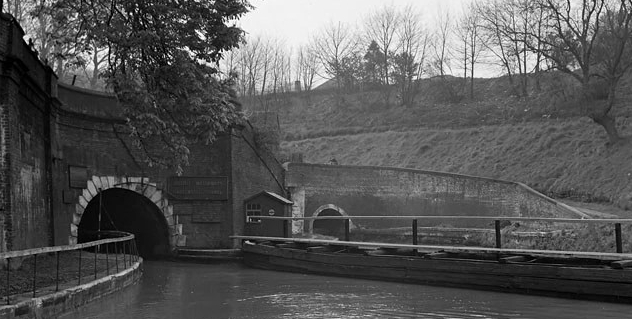
The Harecastle Tunnels on the Trent & Mersey Canal at Kidsgrove

There are no historical reasons to prevent North Staffordshire’s Industrial Landscape from becoming a World Heritage Site.

In the 18th century, North Staffordshire helped to make England “the workshop of the world.” Local entrepreneurs, like Wedgwood and Adams, transformed a group of small towns into an industrial area of international importance.

James Brindley’s Trent & Mersey Canal “kick-started” the Industrial Revolution, which made Britain “the Workshop of the World. The canal and railway tunnels between Kidsgrove and Chatterley are significant feats of civil engineering. They merit World Heritage Site status in their own right.

The Primitive Methodist Church was founded in North Staffordshire by Hugh Bourne and William Clowes. It gave the Potteries its unique culture and a way of life that Arnold Bennett vividly portrayed in his novels.

Burslem’s “old town hall” is one of the finest examples of Victorian civic architecture. The Wedgwood Institute’s terracotta facade is an inspiring tribute to the men, women and children who worked in local industries.

The former colliery at Chatterley Whitfield should have been made a World Heritage Site many years ago.

Making North Staffordshire’s Industrial Landscape a World Heritage Site would encourage economic regeneration and create new employment opportunities.

Daimler buses ran from Mow Cop to Tunstall

After the First World War, former soldiers and sailors set up small bus companies and ran bus services from towns and villages on the North Staffordshire Coalfield to Tunstall.
A forty-horsepower Daimler Bus

In 1914, the Potteries Electric Traction Company started running bus services from Biddulph and Mow Cop to Tunstall, using forty-horsepower Daimler Buses.

During the First World War (1914-1918), the government requisitioned the buses and services were suspended. The buses were sent to France, where they were used to take troops to the front line. When the war ended, the buses were returned to the company, and the services resumed.

After the First World War, former soldiers and sailors formed bus companies. The companies ran services to Tunstall that competed with those run by the Potteries Motor Traction Company.

Rowbotham’s was a bus company with a garage in Sands Road, Harriseahead. The firm ran a service from The Bank, a hamlet in South Cheshire, to Tunstall. Its buses ran through Mount Pleasant, Dales Green, The Rookery, Whitehill, Newchapel Packmoor, Chell and Pitts Hill.

The Potteries Electric Traction Company operated another service from The Bank to Tunstall. Its route ran through Mount Pleasant, Dales Green, The Rookery, Whitehill, Kidsgrove, Goldenhill and Sandyford.

Stanier’s was a bus company based in Newchapel. It ran a service from Mow Cop to Tunstall via Harriseahead, Newchapel, Packmoor, Chell and Pitts Hill.

Tunstall Was a Prosperous Town

In the 1830s, Tunstall was a prosperous industrial and market town.

There were 17 firms manufacturing pottery. Twelve made earthenware. Three produced earthenware and china. Two manufactured china figures and Egyptian blackware.

The Trent & Mersey Canal ran through the Chatterley Valley. In the valley, there were two brick and tile works. There was a factory making chemicals at Clayhills and a coal wharf on the banks of the canal. Coal and ironstone were mined at Newfield and Clanway.

The east side of Liverpool Road (High Street) from the Highgate Inn to the Old Wheatsheaf Inn had been developed. There were shops on Liverpool Road and in Market Place (Tower Square) where a market was held on Saturdays.

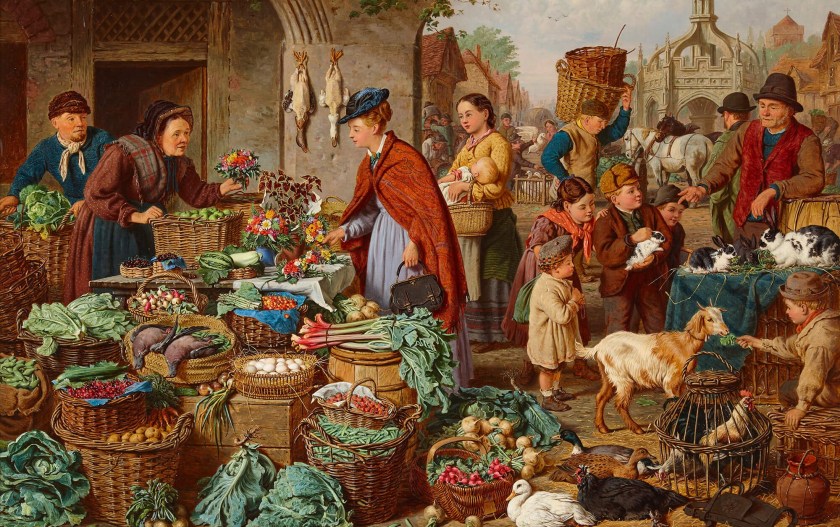
A typical 19th-century market where green grocers displayed fruit and vegetables in wicker baskets.

The market opened early in the morning and closed late at night. It was a bustling market with stalls selling a wide range of goods, including household items, furniture, shoes, and clothing. Green grocers sold fruit and vegetables. Farmers’ wives had stalls in the Market Hall, where they sold eggs, butter and cheese. Between the Market Hall and Liverpool Road were stalls selling meat, fish and poultry.

Saturday was the busiest day of the week for shopkeepers and innkeepers. The market attracted customers from Butt Lane, Kidsgrove, Mow Cop, Harriseahead, Packmoor, Biddulph, Chell and Goldenhill.

Copyright David Martin 2023

NSH2023/Revised2025